


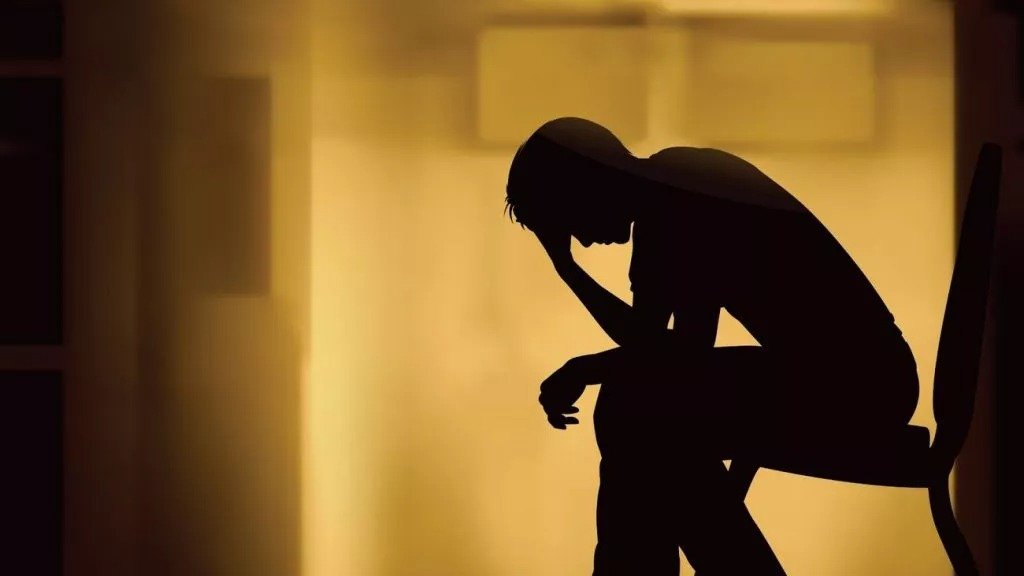
Understanding the Mind and the Path to Inner Balance
By Guru Rajesh Ananda
Adapted and Edited by Constandinos Tsindas
Editor’s Foreword
Haven’t got a lot to say really. Stress is encroaching on our space, lives, professional capacity and ultimately the quality of our daily relationships, interactions and personal experiences. Ultimately our health, as most symptoms are psychosomatic keeping our body in an exhausting constant state of alert.
My major concern really, after delving into the Guru’s analysis, is the fact that still don’t get the severity of the phenomenon or the repercussions on our backyard if we don’t do something to drown out the systemic disorder that is blocking our mental freedom, chaining our minds with fears and keeping us down with the constant noise of ‘fight or flight’.
The guru talks about the need for balance. The need to be aware, still (Stillness is the title of his book) and disconnect. Can we do it? Do we want to do it? If we’re looking for a healthy future, I guess there is no other way.
If we want to torture ourselves then we can keep going round in endless stress circles. Simple message. Know your enemy and fight its invisibility. It thrives on silence and spreads. So self-regulate. Quickly. This is a pressure we can’t see.
Watch out for the Burnout
In Cyprus today, beneath the warmth of the sun and the beauty of the Mediterranean, a quieter, less visible reality unfolds. It is not found in the streets or the landscapes, but within the minds and bodies of its people.
Nearly 40% of individuals are experiencing burnout, and even students—our future—are showing signs of profound stress and emotional strain.
Stress is no longer an occasional visitor. It has become a constant companion.
And yet, for all its familiarity, very few truly understand what stress is doing to us—medically, psychologically, and spiritually. Later, we’ll look at the disorders created when stress rules our lives.
Stress Is Not Just a Feeling — It’s a System
Modern medicine does not treat stress as a vague concept.
It is rigorously defined and classified within two major diagnostic frameworks: the American Psychiatric Association’s DSM-5-TR (Diagnostic and Statistical Manual of Mental Disorders) and the World Health Organisation’s ICDj-11 (International Classification of Diseases).
These are not philosophical texts. They are clinical maps of human suffering.
And within them, stress is not a single condition—but a spectrum of disorders, each reflecting a different way in which the human system responds when overwhelmed.
At its core, stress is the body’s attempt to protect you. But when that protective mechanism becomes chronic, it begins to harm the very system it was designed to preserve.
Trauma and Stress: When the System Is Overwhelmed
The DSM-5-TR identifies a category known as Trauma and Stressor-Related Disorders—conditions defined not just by symptoms, but by the presence of a triggering event.
These include:
Posttraumatic Stress Disorder (PTSD)
A deeply entrenched response to life-threatening or horrifying experiences. The mind becomes trapped in a loop—reliving the past through flashbacks, avoiding reminders, and remaining in a state of constant alertness.
From a neurological perspective, this involves hyperactivation of the amygdala (the brain’s threat detector) and reduced regulation by the prefrontal cortex—the area responsible for rational thought.
The system is no longer distinguishing between past and present.
Acute Stress Disorder (ASD)
This occurs in the immediate aftermath of trauma.
The system is flooded—emotionally, mentally, physiologically. Sleep is disrupted, thoughts are fragmented, and the sense of self becomes unstable.
It is important to understand: this is not a weakness. It is an overload.
Adjustment Disorders
Perhaps the most relevant to everyday life in Cyprus. These arise not from catastrophic trauma, but from common life events—job loss, relationship breakdowns, and financial strain.
Yet the response becomes disproportionate. Why?
Because the nervous system is already saturated. The cup is full. Even a small addition causes it to overflow.
Prolonged Grief Disorder
Grief is natural. But when it persists beyond the body’s ability to process and integrate loss, it becomes a condition of fixation—where the heart cannot release, and the mind cannot move forward.
Childhood Attachment Disorders (RAD & DSED)
These reflect early developmental stress, where inadequate care disrupts the formation of emotional security.
The effects often extend into adulthood, shaping relationships, trust, and identity.
The ICD-11 Perspective: A Deeper Layer of Stress
The ICD-11 expands our understanding further.
Complex PTSD (C-PTSD)
This is not just trauma—it is trauma layered over time. Repeated exposure leads to profound disturbances in self-identity, emotional regulation, and interpersonal relationships.
A person does not just feel fear—they begin to feel fundamentally unsafe in themselves.
Acute Stress Reaction
Interestingly, this is no longer classified as a disorder, but as a natural human response to extreme events.
This distinction is critical.
Not all stress is pathological. Some of it is simply the system doing its best to cope.
Stress Beyond Diagnosis: The Hidden Conditions
While the classifications above are clinically defined, stress extends far beyond them.
Anxiety Disorders
Persistent worry, restlessness, and a constant sense of impending danger. The brain becomes wired to anticipate threat.
Depressive Disorders
When stress becomes chronic, the system begins to shut down. Motivation drops, energy depletes, and life loses its colour.
Burnout
Recognised by the World Health Organisation as an occupational phenomenon, burnout is the result of sustained workplace stress without adequate recovery.
In Cyprus, this is not theoretical—it is a lived reality.
Psychosomatic Illness
Perhaps the most revealing category of all.
Stress does not stay in the mind. It moves into the body.
- Gastrointestinal disorders (such as IBS)
- Cardiovascular disease
- Chronic headaches
- Immune dysfunction
The body speaks what the mind cannot resolve.
The Neurobiology of Stress: What Is Really Happening?
To understand stress is to understand the brain.
When a stressor is perceived, the amygdala activates the fight-or-flight response.
This triggers the release of cortisol and adrenaline—preparing the body for action.
In short bursts, this is beneficial.
But when prolonged:
- Cortisol remains elevated
- The hippocampus (memory centre) becomes impaired.
- The prefrontal cortex loses efficiency.
- Emotional regulation declines
You begin to react rather than respond.
This is why under stress:
- We overthink
- We feel overwhelmed
- We struggle to make clear decisions.
It is not a failure of character. It is a shift in brain function.

Cyprus: A Society Under Pressure
When we consider the statistics—high burnout rates, increasing student stress—we must ask a deeper question:
What kind of environment are we creating?
A culture driven by performance, uncertainty, and constant stimulation places the nervous system in a state it was never designed to sustain.
And yet, within this same environment, there is also opportunity.
Because awareness is the first step toward transformation.
The Missing Dimension: Inner Regulation
Modern approaches to stress often focus on external solutions—medication, therapy, lifestyle adjustments.
These are valuable.
But they often overlook the most fundamental aspect:
The ability to regulate oneself from within.
This is where meditation becomes not a luxury—but a necessity.
Meditation and the Nervous System: A Scientific and Experiential Bridge
Meditation directly influences the same systems affected by stress.
Research shows that regular meditative practice:
- Reduces amygdala activity (less reactivity)
- Strengthens the prefrontal cortex (greater clarity)
- Enhances parasympathetic activation (deep relaxation)
- Lowers cortisol levels (reduced stress load)
But beyond the science, there is something more subtle.
Meditation allows us to observe the mind without being consumed by it.
And in that observation, a space emerges.
A space between stimulus and response.
That space is freedom.
The FISU Approach: Effortlessness and Individuality
Within the work of FISU Meditation, the emphasis has always been on effortlessness.
Not control.
Not suppression.
Not forcing the mind into silence.
But allowing the mind to settle naturally, like a lake returning to stillness when the wind ceases.
Each individual is different. Each nervous system carries its own patterns, its own history, its own sensitivities.
This is why individually prescribed practices are so powerful.
They do not impose—they align.
And when alignment occurs, the system begins to heal itself.
From Stress to Clarity: Understanding Motivation
One of the lesser-understood effects of meditation is clarity around motivation.
Stress distorts perception. It amplifies fear, insecurity, and external pressure.
We begin to act not from intention, but from reaction.
When meditation reduces this internal noise, something remarkable happens:
We begin to see clearly.
- Why do we make certain choices?
- What truly matters to us
- Where our fears originate
This clarity is not intellectual—it is experiential.
And it leads to a different quality of living.
A Story of Two States
Consider two individuals facing the same challenge—financial uncertainty.
One is stressed, overwhelmed, and reactive.
The other is calm, centred, and observant.
The external situation is identical.
But the internal state transforms the experience entirely.
The first sees a threat.
The second sees a possibility.
This is the power of inner regulation.
The Way Forward
We live in a time when stress is no longer optional—it is embedded in the fabric of modern life.
But suffering is not inevitable.
The classifications in the DSM-5-TR and ICD-11 provide a map of where stress can lead.
Meditation provides us with a way back.
Not by escaping life.
But by engaging with it from a place of stillness.
Prayer and Meditation: Two Pathways, One Intention
In a country like Cyprus, where faith and tradition run deep, it is important to approach this conversation with sensitivity, respect and clarity.
Prayer has long been a cornerstone of spiritual life.
When done sincerely, with focus and devotion, it can be profoundly healing.
In prayer, we express, we surrender, we reach outward—toward God, toward something greater than ourselves.
It brings comfort, guidance, and a sense of connection, especially in times of difficulty.
Many have found strength, hope, and even transformation through prayer alone.
Meditation does not stand in opposition to this. It complements it.
If prayer is the act of speaking, meditation is the act of listening.
In prayer, we articulate our thoughts, our desires, our gratitude.
In meditation, we become still enough to experience what lies beyond those thoughts.
It is not about belief—it is about direct experience. And this is where a subtle but important shift has occurred in modern society.
Previous generations were often able to accept through faith. There was a natural trust, a willingness to believe without questioning or validating through personal experience.
Today, the landscape has changed. The modern mind is more analytical, more questioning. It seeks understanding—not just intellectually, but experientially.
This creates what can feel like a gap—a space between what we are told, and what we actually feel.
Meditation becomes the bridge across that space.
It allows an individual not just to believe in peace, but to experience it.
Not just to understand stillness, but to enter it. Not just to speak of the divine, but to feel a deeper connection within themselves.
And importantly, this is not about replacing one path with another. It is about enriching the journey.
A person who prays and meditates is not divided—they are complete.
They express, and they receive. They reach outward, and they return inward.
In this way, meditation can gently support and deepen one’s existing faith, rather than challenge it.
It offers a direct, personal experience of the same peace, love, and presence that prayer has always pointed toward.
And perhaps, in a world where stress has become so pervasive, this combination—expression through prayer, and experience through meditation—may be exactly what is needed to restore balance, both individually and collectively.
Final Reflection: The Return to Balance
Stress is, in essence, a signal.
A signal that something within us is out of balance.
When ignored, it becomes disorder.
When understood, it becomes guidance.
In Cyprus today, we stand at a crossroads.
We can continue down the path of increasing pressure, disconnection, and burnout.
Or we can begin to cultivate a different relationship with our minds.
A relationship rooted in awareness.
In stillness.
In understanding.
Because ultimately, the greatest solution to stress is not found outside.
It is found in the quiet space within—where the mind settles, the body heals, and life begins to flow once more.

