


The initiative aims to remove financial and administrative barriers preventing Europeans from accessing treatment in other member states.
For patients who need specialist treatment unavailable in their home country, crossing a European border can be the beginning of another struggle: finding the money to pay upfront, navigating complex approval procedures and dealing with uncertainty over whether the costs will eventually be reimbursed.
The effort to revise the EU’s Cross-Border Healthcare Directive, adopted in 2011, is now approaching a decisive stage. A vote in the European Parliament’s Committee on Public Health is scheduled for 3 December, with a vote in the Parliament’s plenary expected in February 2027.
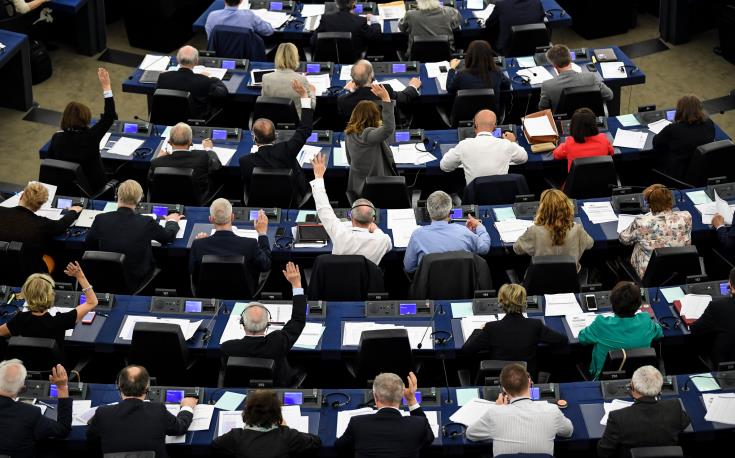
The initiative has support across different political groups, from the left to the right, reflecting a broader recognition that the current system does not work equally well for all Europeans.
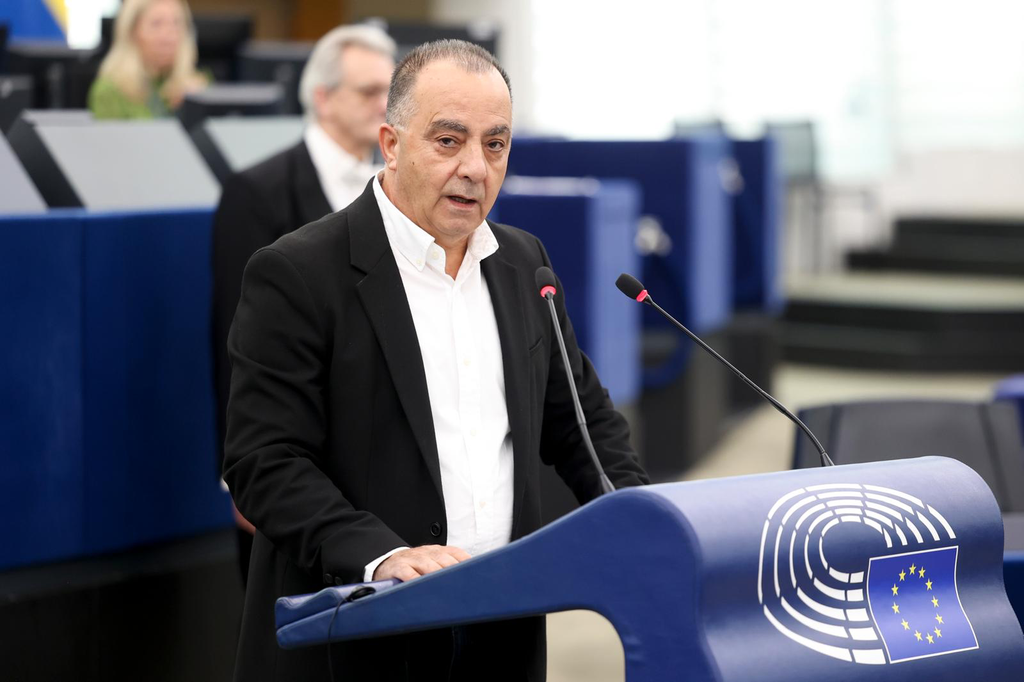
The proposals were discussed this week in an interview with MEP Giorgos Georgiou, who has been instrumental in advancing the parliamentary initiative. The central issue, however, extends well beyond any political group. It is whether the EU can make the right to seek medical treatment in another member state a practical reality, rather than a possibility that remains out of reach for many patients.
Speaking to en.philenews, Georgiou stated that “Though the directive has been in place for 13 years now, many Europeans continue to struggle with access to medical care beyond the borders of their country.”
“This then suddenly becomes an issue of socio-economical imbalance,” he added.
A right on paper, but not always in practice
The 2011 directive established a framework allowing EU citizens to seek healthcare in another member state and, under certain conditions, receive reimbursement from their home country.
However, significant obstacles remain. Patients may be required to pay the full cost of treatment upfront and then wait for reimbursement, according to Georgiou.
Administrative procedures and prior authorisation requirements can also make the process difficult to understand and slow to navigate. National Contact Points, which are supposed to provide information and guidance, do not always offer patients the support they need.
In practice, access to cross-border treatment can depend not only on medical need, but also on a person’s financial situation, their knowledge of the system and the country in which they live.
The proposed reform seeks to address that inequality with an underlying principle in that access to necessary healthcare should not depend on a patient’s ability to pay or navigate overcomplicated bureaucracy.
Removing the financial barriers
One of the key proposals is to move away from requiring patients to pay for treatment themselves before seeking reimbursement.
Instead, the initiative calls for direct financial arrangements between the healthcare authorities of member states, reducing the burden on patients and their families. It also seeks better coverage of travel and accommodation expenses, particularly for people who are vulnerable or need to travel long distances to receive specialised care.
Children requiring treatment abroad are a particular priority. The proposals call for faster access to care and practical support for families, recognising that the cost of travelling with a child can add significantly to an already difficult situation.
Specialist treatment and rare diseases
For patients with rare or complex conditions, crossing a border may be the only way to access the medical expertise they need.
The initiative therefore places emphasis on improving access to specialised centres, clinical trials and advanced treatments, including gene and cell therapies.
It also calls for stronger European Reference Networks (ERNs), which connect specialist medical teams and centres across different countries. The proposals seek stable funding and a clearer institutional framework for these networks, so that expertise can be shared more widely rather than remaining concentrated in a limited number of hospitals.
Better support for patients, especially children, and families is another part of the plan. National patient navigation services could help people understand their options, identify specialist centres and manage the practical steps involved in seeking treatment abroad.
“One of our main priorities is to have specialised units for children which will guarantee that they will be given access to innovative and modern medical procedures and treatments,” Georgiou stated.
Digital cooperation and stronger public healthcare
The proposed changes also include greater use of digital healthcare tools. Telemedicine, electronic prescriptions and the exchange of medical records between countries could make cross-border treatment more coordinated and reduce unnecessary administrative delays.
But the initiative is not limited to technology or administrative reform. It is also rooted in a wider political argument about the role of healthcare in Europe.
Geourgiou’s position, as set out in his speech when presenting the proposal, is that healthcare should be treated as a public and social good, rather than a commercial product.
European cooperation, he argues, should strengthen public health systems and help ensure that patients receive care based on their needs.
The cost of making healthcare fairer
Making these changes work will require funding. The initiative therefore calls for the mobilisation of additional European funding to help put its proposals into practice which is likely to be one of the central issues in the political negotiations ahead of the December vote.
While the proposals have attracted support across political groups, securing the resources needed for implementation may prove more difficult.
Geourgiou has warned that some conservative right-wing forces are seeking to obstruct efforts to mobilise new funding.
He further emphasised to en.philenews that “it was made clear by Commission President Ursula von der Leyen during her State of the Union speech that billions of euros in funds have become available for security and defence, which are of great importance, however, but this is evidently undermining other issues such as healthcare, education, the welfare state and the green transition.”
“The president spoke for over an hour in Strasbourg on that very day, but she did not even briefly mention healthcare in her speech,” he added.
What happens next?
The coming votes will be an important test of whether the European Parliament can turn broad political support for fairer cross-border healthcare into concrete proposals. The initiative now before the Commission and the Parliament is an attempt to close that gap between a right recognised by European law and a right people can actually exercise.
In closing Georgiou stated that due to the “humanitarian nature of this proposal, what has been proudly achieved is a close collaboration across the spectrum of political groups.”
(Sources: European Commission)
Read more:

