


*By Simos Simou and Panayiotis Tziongouros
The effective functioning of a tax system depends not only on legislation and tax rates, but also on the way disputes between taxpayers and tax administration are resolved. For businesses, the ability to resolve such disputes in a timely, fair and transparent manner is an important factor in their financial planning, resource management and investment decision-making.
The need for effective dispute resolution becomes even more pressing when tax cases remain pending for extended periods. Delays in their examination, combined with the increasing complexity of tax matters, can create additional financial uncertainty, affecting business operations and, in some cases, even their viability. Addressing these challenges requires stronger institutions, simplified procedures and the effective use of technology, with the aim of developing a tax justice system that responds to modern needs.
In Cyprus, the tax reform that came into effect on 1 January 2026 has created a new landscape for both the tax administration and taxpayers. Within this new environment, particular importance is placed on the role of the Tax Tribunal, which provides for the administrative examination of tax appeals without requiring taxpayers to resort to the courts from the outset.
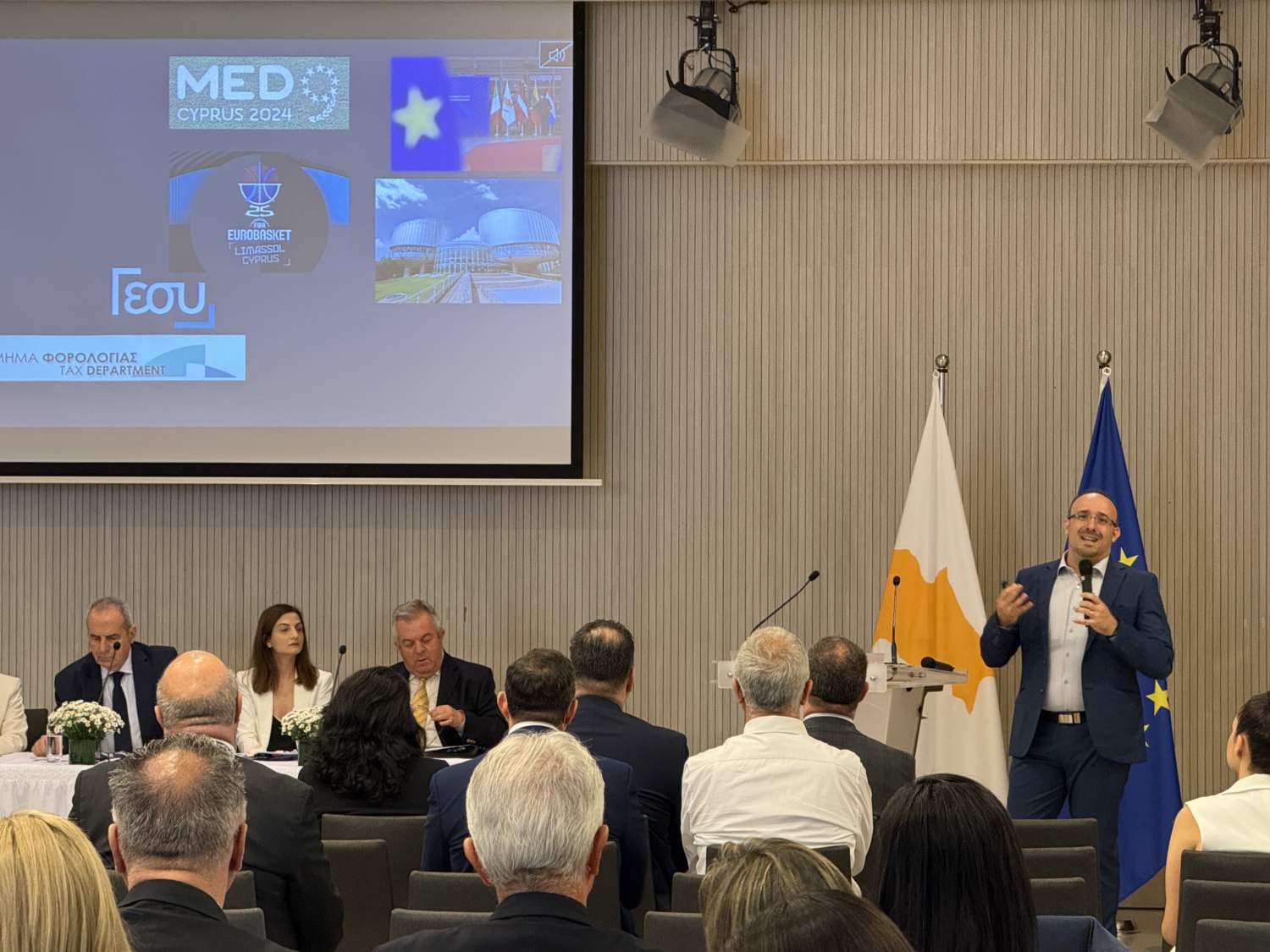
These needs were at the center of the conference “Tax Tribunal: Transformation 2027”, held on 9 October 2026 at the Presidential Palace under the auspices of the President of the Republic and organized by the Office of the Commissioner for the Citizen and the Tax Tribunal. The Nicosia Bar Association served as content supporter, while the conference brought together members of the judiciary, representatives of the government, the legislature and the tax administration, members of the legal community and international experts. The conference highlighted opportunities to strengthen the Tax Tribunal, with particular emphasis on enhancing its independence, expanding its remit, accelerating procedures, advancing digital transformation and drawing on good practices from other countries.
From planning to implementation: Objectives through 2030
A central focus of the conference was the Tax Tribunal’s strategic plan for 2026–2030, presented by the President of the Tax Tribunal, Mr Makis Georgiou, in his opening remarks. Key objectives include reducing the time required to examine appeals by 30%, cutting the number of pending cases by 50% and achieving the full digitalization of active case files. The plan also provides for a fully integrated electronic appeals submission process by 2028.
Makis Georgiou further highlighted the need to expand the Tax Tribunal’s jurisdiction to additional areas of taxation, as well as the prospect of considering a provision that would make hierarchical appeals to the Tax Tribunal mandatory before access to the Administrative Court, with the aim of accelerating dispute resolution and releasing tax amounts that remain pending either with the State or within the economy.
A specific implementation timetable has been established, providing for institutional and organizational strengthening in 2026, modernization of procedures in 2027 and the development of digital services in 2028. Mr Georgiou also highlighted actions already implemented by the Tribunal’s new composition, including the establishment of procedural rules, a decision-drafting guide and a code of ethics, as well as EU TSI support request. Full operational implementation of the changes is expected by 2029, followed in 2030 by an evaluation of the results and the development of a new strategy.
In a subsequent intervention, Tax Tribunal member Mr Giorgos Christodoulou noted that a key objective is the transition from paper-based procedures to a modern electronic case-management system, supported by digital records and the ability to monitor performance through specific indicators. Adequate staffing of the Tribunal, continuous staff training, scientific support and simplification of existing procedures are considered essential to achieving this transition.
Government support for strengthening the Tax Tribunal
Implementing these changes also requires the support of the State, as emphasized by Deputy Minister to the President Ms Irene Piki. During her remarks at the conference, she linked the strengthening of the Tax Tribunal with legal certainty and the competitiveness of the Cypriot economy, stressing the importance of reliable mechanisms for protecting taxpayers.
Beyond the opportunities offered by digitalization, Ms Piki referred to the need for improved organization and case management through systematic monitoring of examination times and pending cases, as well as the categorization of appeals according to their complexity. She also raised the prospect of publishing decisions, subject to the necessary protection of personal data, as a means of enhancing transparency and predictability.
Tax justice as a driver of trust
Equally important to the speed with which appeals are examined is taxpayers’ trust in the institutions responsible for resolving disputes with the tax administration. Commissioner for the Citizen Ms Irene Poyiatzi highlighted this point, noting that filing an objection or appeal not only serves to protect taxpayers’ rights but also contributes to the accountability of the administration and the improvement of its decisions.
For his part, the President of the Nicosia Bar Association, Mr Nicolas Koursaris, referred to the importance of access to tax justice, the issuance of adequately reasoned decisions within a reasonable timeframe and the equal treatment of parties. These conditions are directly linked to the credibility of the tax system and citizens’ trust in the administration.
He underlined the Nicosia Bar Association’s commitment to further contributing to the strengthening of tax justice in Cyprus, noting that the international distinctions achieved by members of the Association have facilitated strategic cooperation with Presidents of Courts in the United Kingdom, Ireland and Portugal, countries that currently demonstrate some of the leading practices in this field.
The substantive role of the Tax Tribunal
Trust in tax justice is directly linked to the effectiveness of dispute-resolution mechanisms. To explore this principle during the conference, three panel discussions were organized under the Nicosia Bar Association assigned coordination to Mr Simos Simou, Head of Tax Controversy at EY Law Cyprus, following his recent recognition by ITR Review as a Rising Star in Tax Controversy across Europe, the Middle East and Africa.
Following a brief presentation of the procedure before the Tax Tribunal by its adviser, Ms Sotiroulla Vorka, the first panel focused on the Tribunal’s role and powers as a higher-level hierarchical body, examining the opportunities it offers taxpayers for the substantive consideration of their appeals.
The discussion was moderated by Mr Simou. Panelists included retired Supreme Court Judge Mr Costas Pampallis, Principal Tax Officer Ms Clelia Papadopoulou, Tax Tribunal member Mr Kyriakos Psaras and Counsel of the Republic Ms Celia Charalambous.
As discussed, the review carried out by the Tax Tribunal is not limited to assessing the legality of a decision but also extends to the substance of the tax dispute. The Tribunal may uphold, annul or amend a decision of the Commissioner of Taxation, replace it with a new decision, or refer the case back for further examination.
A common conclusion among the speakers was that, given the technical nature of tax matters and the time required to complete judicial proceedings, the Tax Tribunal can play an important role in delivering high-quality and effective tax justice.
The relatively swift and flexible nature of the process was particularly highlighted by Tax Tribunal member Mr Kyriakos Psaras. A hierarchical appeal must be submitted within 45 days of the relevant notification, while the prescribed timeframe for the Tribunal to issue a decision is twelve months. The discussion highlighted the need to accelerate the examination of cases further, including the possibility of reducing this period to six months, provided that the necessary resources are secured and pending legislative proposals are enacted.
International good practices
The international dimension of the conference was of particular interest, with experiences from Ireland and Portugal highlighting good practices and different approaches to the effective resolution of tax disputes. The discussion was moderated by Mr Panayiotis Tziogouros, Partner in International Tax and Transaction Services at EY Cyprus, together with Mr Simos Simou.
Ireland provided a notable example of effective tax appeals management. According to Ms Marie-Claire Maney, Chairperson of the Irish Tax Appeals Commission, between 2016 and October 2026 the Commission received 15,762 appeals with a total value of €9.3 billion, of which 15,166, valued at €8.5 billion, had been resolved. As of October 2026, the number of outstanding cases stood at 596, compared with approximately 3,500 in 2020. In addition, 45% of hearings are conducted remotely, facilitating taxpayers’ access to the process.
From Portugal, Ms Tania Carvalhais Pereira, Head of Legal Affairs at the Portuguese Tax Arbitration Court (CAAD), presented the tax arbitration system established in 2011, which offers an alternative route for resolving tax disputes outside the state courts. Of particular interest is the average time required to issue decisions, which, according to the figures presented at the conference, is approximately four and a half months. The Portuguese model also places emphasis on the expertise and independence of arbitrators, as well as transparency through the publication of decisions.
With regard to Cyprus, Mr Andreas Kailas, a member of the Tax Tribunal, focused on the need to strengthen the Tribunal’s operational independence and staffing, accelerate the issuance of decisions and modernize procedures, expressing the new composition’s commitment to immediate improvements.
The exchange of experiences among the three countries demonstrated that, despite differences in the structure and responsibilities of their respective mechanisms, speed, accessibility and independence are common prerequisites for the effective resolution of tax disputes.
Towards a stronger Tax Tribunal
The discussion on the Tax Tribunal’s next chapter continued during the conference’s third panel, moderated by Ms Clelia Papadopoulou and Mr Simos Simou, with the participation of Ms Fotini Tsiridou, Ms Christiana Erotokritou and Mr Makis Georgiou.
A key direction for strengthening the Tax Tribunal is to enhance its institutional role while ensuring faster resolution of tax disputes. Building on the proposals presented during his opening remarks, Tax Tribunal President Mr Makis Georgiou addressed the establishment of the hierarchical appeal process as a mandatory stage before recourse to the Administrative Court, with the aim of reducing the courts’ caseload.
The Chairs of the Parliamentary Committees on Finance and Legal Affairs expressed their readiness to support greater use of the Tax Tribunal, including increased administrative and operational autonomy and modernization through faster procedures. Legislative proposals remain pending for discussion, including provisions for digitalization that could enable video hearings and modern methods for taking evidence on the substance of tax matters.
The challenge of tomorrow
The conference highlighted that the continued development of the Tax Tribunal has the potential to make a significant contribution to the administration of tax justice in Cyprus. With adequate human resources, clear procedures, institutional independence, digitalization, an expanded remit and substantive examination of tax disputes within a reasonable timeframe, the transformation of Cyprus’s Tax Tribunal could, within a few years, position it as a leading mechanism and example of good practice within the European Union.
The objectives for 2026–2030, combined with the institutional proposals and examples from other European countries, define the Tax Tribunal’s key priorities for the years ahead. The challenge now is to translate these priorities into measurable improvements, reducing the backlog of cases, strengthening taxpayers’ trust and creating a more stable and predictable environment, while further enhancing the reputation of Cyprus’s tax system.

*Simos Simou (left) is a Partner and Head of Tax Controversy at EY Law Cyprus – Panayiotis Tziongouros (right) is a Partner at the International Tax and Transaction Services at EY Cyprus

