


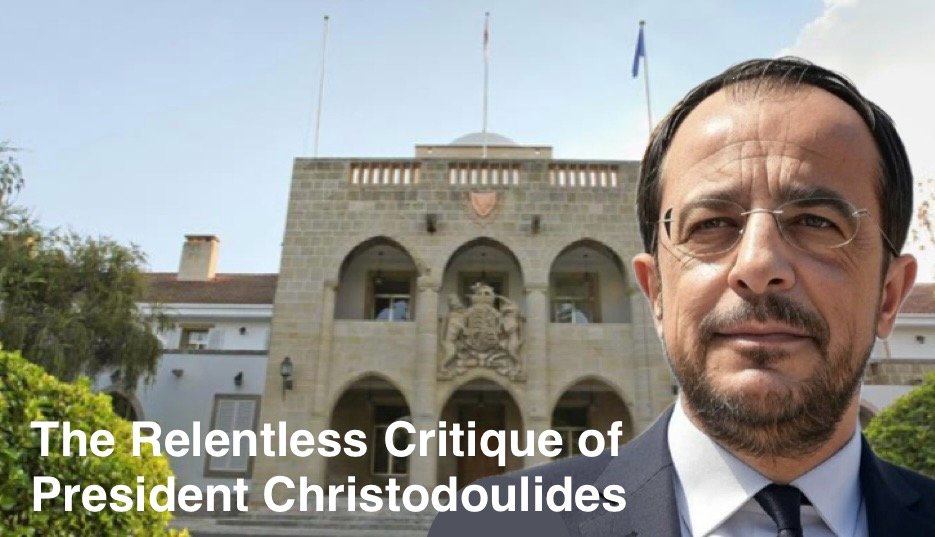
Cyprus has always been a place where politics gets personal, but what’s happening to President Nikos Christodoulides since his 2023 election win takes it to another level.
He prevailed over Andreas Mavroyiannis in the runoff with about 52% of the vote, running as an independent. Christodoulides, a former diplomat and foreign minister, campaigned as an independent, severing ties with the Democratic Rally (DISY) to appeal to a broad coalition of centrists and conservatives.
His campaign focused on eliminating corruption, fixing the economy, and holding a tough line on the Cyprus division issue without giving in too much to Turkish demands.
But ever since he won, it’s like the left-wing groups, like AKEL and left-leaning VOLT, his political rivals, and even some folks who seem sympathetic to the Turkish side in the north, just can’t let it go.
They’re constantly throwing shade at him over every little thing, from daily problems to big policy moves. I’ve followed my country’s news for years, and I don’t recall any other president getting hammered this hard; it’s relentless.
Think about it: Christodoulides was a diplomat and foreign minister before this, so he knows his way around international stuff. He got support from centrists and conservatives who wanted someone strong on national issues.
Andreas Mavroyiannis, although being backed by left-wing AKEL, the leader of the centre-right also pushed his loyal supporters to vote for Mavroyiannis. When Christodoulides won, it stung for them, and that bitterness shows up everywhere now.
AKEL keeps calling out his government for messing up on things like high energy bills or handling migrants, saying he’s out of touch or ineffective. On social media, especially X, you see all these posts from opponents mocking him, calling him a hardliner or just picking apart his every decision.
And then there are those who defend interests in the Turkish-occupied north, criticising his stance on property deals there as aggressive or blocking real progress toward peace.
It’s like they’re blending old election grudges with bigger geopolitical gripes. The opposition’s inability to move beyond electoral defeat fuels a cycle of polarisation, where every misstep is magnified, and every reform is scrutinised for ulterior motives.
Adding fuel to this fire is Cyprus’s strong relationship with Israel, which Christodoulides has leaned into as part of his foreign policy. Under his leadership, Cyprus has deepened its ties with Israel through energy partnerships, defence cooperation, and joint efforts in the Eastern Mediterranean, building on a relationship that’s been solid for years.
This makes sense for Cyprus, Israel’s a key ally for stability and economic projects like gas exploration. But for the left, especially AKEL, VOLT and its supporters, this is another stick to beat him with. They slam him for aligning too closely with Israel, accusing him of sidelining Palestinian issues or antagonising pro-Turkish factions who see Israel as a regional rival.
Another big part of why he’s under fire is his push against corruption. After those “Cyprus Confidential” leaks in late 2023 exposed how the island was helping Russian oligarchs dodge sanctions, Christodoulides didn’t just talk about it; he invited the FBI and U.S. Justice Department experts to come in and help investigate.
By spring 2024, they were on the ground working with local teams, and this year, Cyprus promised to follow through on their advice to tighten up the financial system. Internationally, people praised it as a smart move to fix Cyprus’s reputation.
But back home, not everyone’s thrilled. Some politicians and business types who benefited from the old, shady ways probably see this as a direct threat. Opposition voices, including from AKEL, brush it off as a distraction or not going far enough, while ignoring how it shakes up the system.
Looking back, other presidents dealt with scandals too, like Nicos Anastasiades with the banking mess in 2013, but the attacks weren’t this personal or constant.
Even Makarios, who founded the republic, faced huge crises like the invasion in 1974, but those were more about big events than daily sniping.
Today, with social media, every slip-up gets blown up online, and it feels like the critics are just venting their frustration from losing the election. They grab onto anything, migration issues, foreign policy tweaks to keep the pressure on.
To me, this says something sad about Cyprus: if you’re trying to run things honestly and without the usual backroom deals, you’re almost seen as an outsider.
Christodoulides is pushing for real change, standing firm against pressures from the north and cleaning house on corruption, but instead of support, he gets endless criticism.
The left and those leaning toward Turkish views can’t seem to move on from 2023, turning politics into a grudge match. It’s not helping the country, and honestly, it makes you wonder if the real problem is that he’s not playing the old games.
In the end, Christodoulides is holding his ground, which is impressive given the noise. In the future we might look back and see him as the guy who tried to make Cyprus better, while his critics just come off as sore losers.
If things keep going this way, though, it could deepen the divides we already have, between ideologies, between north and south, and between those who want reform and those stuck in the past.
History however, will likely judge not the volume of the mud slung but the resilience of the leader who stood firm amidst it.

