


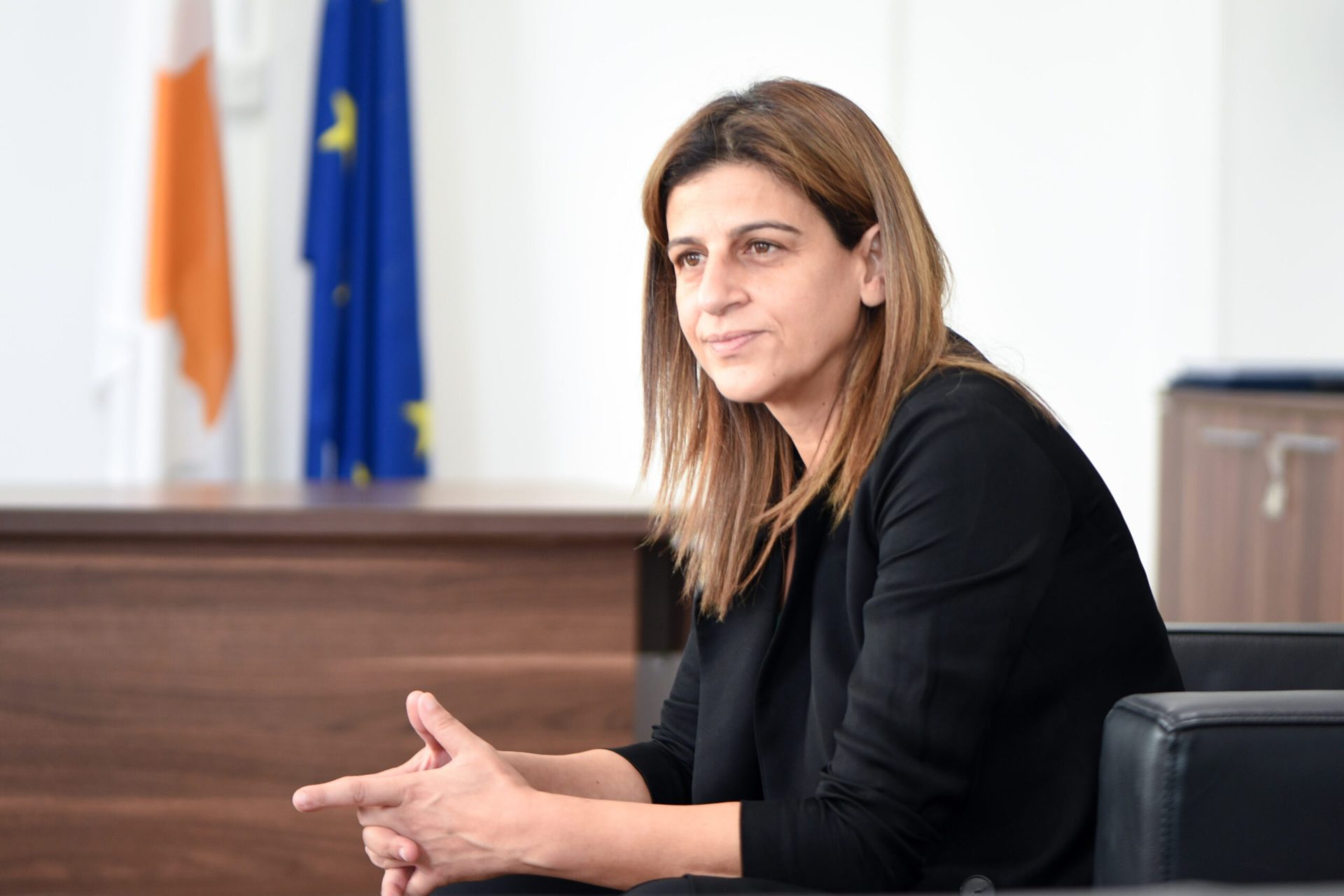
In an interview with in-cyprus, Commissioner for Gender Equality Josie Christodoulou outlines her vision for tackling Cyprus’s most pressing gender equality challenges.
From addressing the gender pay gap to combating gender-based violence and dismantling deep-rooted cultural stereotypes, Christodoulou reveals the strategies her office implements across government, education, business, and media sectors.
The Commissioner emphasises that while progress has been made, including legislation against femicide and new support structures for working parents, the path to substantial equality requires a collective effort to transform traditional mindsets.
Her office’s initiatives, from gender-responsive budgeting to media sensitivity training, offer a holistic approach to achieving gender equality in Cyprus.
How do inflation and the cost-of-living crisis disproportionately affect women’s economic well-being in Cyprus, particularly those in vulnerable groups such as single mothers and low-income households?
It is a fact that economic crises, including inflation and cost of living increases, affect women differently than men. This is a result of broader conditions of gender inequality.
Starting from the gender gap in salaries it is evident that women are paid less and are underrepresented in leadership roles.
According to data for 2022, women’s gross hourly earnings are on average 10.2% lower than men’s. Data from the Statistical Service for the year 2023 indicate that 18.1% of women and 15.3% of men are facing the risk of poverty or social exclusion.
Moreover, according to the Statistical Service for the year 2023, although 54.8% of women aged 25-64 years are tertiary education graduates and 42.7% of employed women work in highly-skilled occupations, only 2.2% of employed women hold managerial positions.
The disadvantaged financial status of women becomes worse in case of an economic upheaval or crisis. Women as well as men lose their jobs in times of crisis and for women, it is harder to regain them, as we saw happening during and in the aftermath of the COVID-19 pandemic.
On a European level, according to Eurostat, in 2023, 5.4 % of adult women aged 25-54 were single parents, against 0.9 % of adult men.
In Cyprus, we are in the process of collecting new gendered data on single-parent households, divorced parents and their financial status in collaboration with the statistical service. We are, however aware, based on previous statistics, that single parents are in their majority women. Both women and men single parents face difficulties.
To address the above, amongst others, in the National Strategy on Gender Equality, we have included targeted policies and actions to promote gender-equal participation in the labour market, a more balanced representation of men and women and, of course, equal pay.
We are proceeding, for example, with a qualitative analysis of the salary gap as well as with a study to assess the extent to which gender plays a role in pay inequality, mostly in those sectors considered either “male-dominated” or “female-dominated”.
At the same time, government measures such as the increase and upgrading of care structures for children and the elderly through the RRF support, the extension of maternity leave to 22 weeks for all, the planned extension of parental leave until the child reaches the age of 15 and the introduction of compulsory pre-elementary education from the age of 4 facilitate the reconciliation of family and professional life.
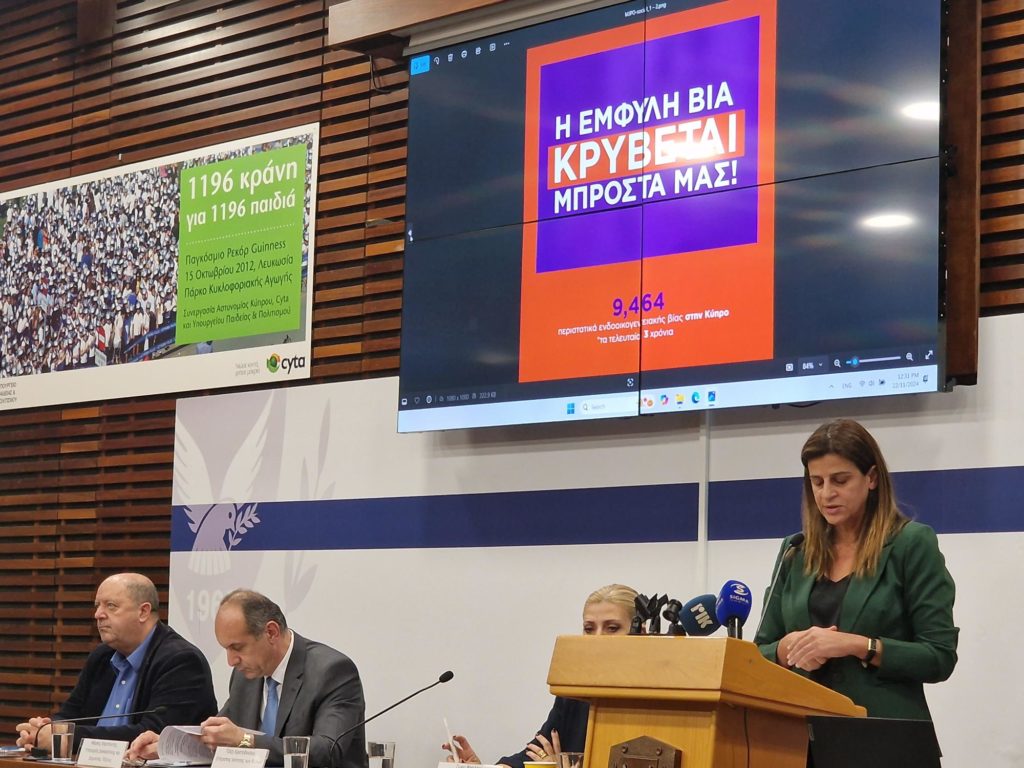
Given the alarming rates of domestic violence and femicides in Cyprus, what comprehensive strategies would you implement to prevent, respond to, and support survivors of gender-based violence?
Preventing and combating all forms of violence against women (VAW) and girls is among the highest priorities of the government. Gender-based violence is unfortunately a global phenomenon.
Cyprus adopted a comprehensive legislative framework, based on the CoE Convention, recognising that women are adversely affected by gender-based violence as a result of inequality.
In addition, since 2022, femicides have constituted a separate, specific offence and laws on combatting sexism and online sexism and stalking have also been enacted.
A National Strategy and an Action Plan on Preventing and Combating Violence Against Women are two government policy documents which provide concrete guidance on addressing the issue.
The implementation of the Strategy and Plan falls within the competence of the Ministry of Justice and Public Order. An important step forward towards the implantation of the aforementioned documents is the creation of a National Coordinating Body to Prevent and Combat Violence Against Women which consists of relevant government authorities and NGOs.
The coordinating body is also promoting the creation of a Unified Statistical Database that will collect, process, analyse and evaluate data on all forms of violence against women aiming to contribute substantially to the further planning of more targeted measures and policies, as well as to maximising the effectiveness of how the problem of gender-based violence is addressed on a national basis.
Other actions undertaken and coordinated by the Ministry in the context of combating VAW include training programs for government officials; the creation of specialised teams within the police force to handle cases of domestic violence; and funding NGOs and women’s organisations in order to work in collaboration and in more targeted ways towards prevention of violence and protection of victims.
As regards the protection of victims, the government supports the work of the Association for the Prevention and Handling of Violence in the Family (SPAVO), which operates 3 shelters for victims of domestic violence, in Nicosia, Limassol and Paphos, offering protection and support to victims and which can be reached at 1440.
Moreover, SPAVO runs the Women’s House, where all relevant front-line services and professionals (Police, Social Welfare Office, Lawyers, Psychologists, Social Workers etc.) are working under the same roof aiming to provide protection and specialised support to victims of violence.
I think that we have come a long way but there is a lot that needs to be done. We cannot talk about substantial equality as long as there is violence against women. We need to work more on and invest in prevention mechanisms.
According to the European Institute of Gender Equality (EIGE), the cost of violence is €366 billion a year.
The work of our Office mainly focuses on prevention. Given that VAW is the result of gender inequality, we direct our efforts to the elimination of those social perceptions, biases and stereotypes which enhance and preserve unequal power relations between women and men.
Topics such as respect, consent and healthy relationships are amongst the issues we frequently discuss with the youth. These are part of our prevention strategies which we promote holistically through health and education programs in schools.
At the same time, the Ministry of Justice and Public Order, in collaboration with our Office, is currently designing an online campaign for the prevention of all forms of violence against women and girls, including sexism.
What role do you believe traditional gender roles and stereotypes play in perpetuating gender inequality in Cyprus, and how would you work to challenge these norms?
Undoubtedly, they are the root of the problem perpetuating gender inequality and violence against women as discussed above.
The historic unequal power relations between women and men, gender stereotypes and established perceptions of male and female roles are the source of gender inequality and discrimination in all spheres of activity in private and professional life.
We need to change this cultural pattern and this is our most challenging task. This process requires a collective effort.
In this context, and to provide a few examples, we have been active in raising awareness and bringing the issue of gender equality in all areas of activity to the forefront.
Specifically, since my appointment, my colleagues and I have visited schools, universities, businesses regularly and held discussions with students, teachers and faculty and professionals in the private sector.
We have established collaboration with our country’s universities and are exploring practical ways of promoting gender equality in the academic and business environment.
An example of this collaboration is the training seminar titled “Setting up and implementing institutional policies to address gender-based violence in academia” co-organised by UNIsafe, the Yellow Window team in Brussels and our Office.
The aim of the seminar was for participants to develop abilities to understand concepts related to gender-based violence, and its effects in the academic community and decide on policies that will prevent gender-based violence including sexual harassment.
In our effort to eliminate stereotypes and biases, we launched an annual campaign under the umbrella title “HER Story” dedicated to promoting women role models in professions where women are underrepresented.
At the same time, the deconstruction of stereotypes is at the core of our strategy on gender equality, whose coordinated implementation is the responsibility of our Office.
Some examples of the actions we are implementing by mainstreaming gender horizontally in all Ministries and Deputy Ministries and other key stakeholders:
- The Ministry of Education, Sport and Youth, is implementing a comprehensive targeted plan on gender equality which goes beyond the national strategy. One of the actions included in our strategy which is currently implemented is training programmes for teachers and school career advisers on gender equality issues, including definitions of stereotypes and prejudices with the aim of deconstructing unconscious biases.
- We are also engaging the business community. With the Cyprus Chamber of Commerce and Industry, we recently formulated an action plan for gender equality in business organisations which is a set of recommendations to help companies create a gender-responsive corporate environment. With the Cyprus Employers & Industrialists Federation (OEB), we have also just agreed to jointly proceed with targeted actions such as awareness-raising campaigns on gender and labour and the engagement of women entrepreneurs as role models will be amongst the actions we will promote through our action plan.
- In the area of sports, we have started organising training programs for sports federations to inform participants of the advantages of increased participation of women in sports and also in decision-making processes in the field. I am pleased to see that our efforts have started bearing fruit. The Cyprus Basketball Federation last week decided that male and female basketball players of our national team receive equal financial benefits. This decision puts an end to long-standing gender discrimination in sports.
- Our office also collaborates with local authorities in creating a gender-responsive environment in municipalities. Designated parking areas for pregnant women and families with small children, breast-feeding rooms and baby changing tables in men’s restrooms in a number of city halls are examples of practical changes we have included in the annual action plan for the promotion of a culture of gender equality at the municipal level.
- The Ministry of Finance has started work on mainstreaming gender in the state budget, following the approval of our request for technical support from the EU. A long-term action that aims to assist officers responsible for budget-related matters in the process of taking into account the different ways budgetary provisions affect women and men and, as a result, in designing gendered state policies and actions The fact that women’s sanitary products are included in the items with 0% VAT is a case in point.
- With the Ministry of Defence, we are implementing training programmes on eliminating gender stereotypes for everyone working in the National Guard and the Ministry while we are in the process of conducting a study to map the different needs of women and men working at the Ministry and for the National Guard.
- Starting this month and in collaboration with the Ministry of Agriculture, we are launching entrepreneurship training programmes for women in rural areas and women farmers.
- With the Shipping Deputy Ministry, we are launching the mapping of the representation and the different needs of women and men in the shipping sector. The Statistical Service and the Deputy Ministries of Tourism and Shipping have already completed the recording of data on the participation of men and women in occupations related to tourism and the blue economy, respectively.
- With a view to promoting the visibility of women in the film industry, the Deputy Ministry of Culture has launched the cataloguing of Cypriot female directors and their work as well as Cypriot women professionally employed in technical sectors of the film industry.
How do media coverage of gender-based violence and other issues related to women’s rights reinforce or challenge gender stereotypes in Cyprus?
Traditional media was by men for men. In the past, newspapers were read by men sitting in coffee shops and discussing public life, politics and sports while women were home in private, taking care of children and doing domestic chores.
Access to media and access to public life (although women still in the majority are the carers of the family and home), have changed through time and as a result of the emergence of online media.
The role of the media in shaping and changing social perceptions is crucial. What they present, who they present and the angle they take on an issue influence the way the public processes facts and perceives reality. This is why we need the media to join us in the effort to promote gender equality at all levels.
There have been positive steps in the right direction and, I would like to take this opportunity to thank the media for our collaboration in raising awareness on the issue.
Indeed, the media played a significant role in changing the narrative, for example, when it comes to femicides and trafficking in human beings.
However, there is still room for more balanced and more gender-sensitive reporting. For example, while women engage in most sports, female athletes are significantly underrepresented in media stories compared to men, both quantitively and qualitatively.
It is important to provide information and motivation to girls to engage in sports and all fields by also promoting role models through the media.
Women should not be the exception in the news. Their visibility should come naturally. We should normalise equality and the presence of women in all areas of activity.
The use of sexist language and images also needs to be addressed.
The rule should be accuracy, not sensationalism, and reporting should not contain messages that directly or indirectly condone sexism, gender-based discrimination, or violence against women.
What steps would you take to promote responsible and gender-sensitive reporting in the media, and to encourage the inclusion of women’s voices and perspectives?
Recognising the power of the media to perpetuate or challenge social norms, we have included a special section on our collaboration with them in the Strategy.
Specifically, we are conducting workshops for journalists, to raise awareness of their important role in eliminating stereotypes and prejudices.
We have already started a collaboration with CyBC and are exploring practical ways of collaboration with the Union of Cyprus Journalists and the Cyprus Radiotelevision Authority.
The code of media ethics includes some important guidelines on gender-sensitive reporting.
The avoidance of direct or indirect references and language that constitute gender-based discrimination the reproduction of stereotypical and anachronistic notions of gender, and targeting, insulting and degrading people on that basis are practices that are condemned.
In addition to gender-sensitive reporting, it is also important to encourage media to have more gender-balanced panels when discussing issues of public interest, including political and economic matters, which are wrongly yet broadly still considered “a man’s business”.
We need both women and men as role models. Given the prevalence of the male narrative in the public sphere, they should seek to invite more women experts – and there are plenty in all fields – as they bring to the discussion different perspectives which contribute to a more comprehensive and balanced picture of an issue or a problem.
The French News Agency, AFP, has set a good example worth following. New guidelines on coverage of violence against women and increased use of women expert sources were among the initiatives launched in 2018 by the agency’s global news director, the late Michèle Léridon, who was also the first woman to hold that post.

