


Globally, 35% of women have experienced physical or sexual violence at some point in their lives. For many women, violence is an integral part of their entire life experience. 7% of women have experienced rape in their lifetime. About 13% of workers in the European Union reported experiencing some form of violence or harassment at work, with higher percentages in other countries.
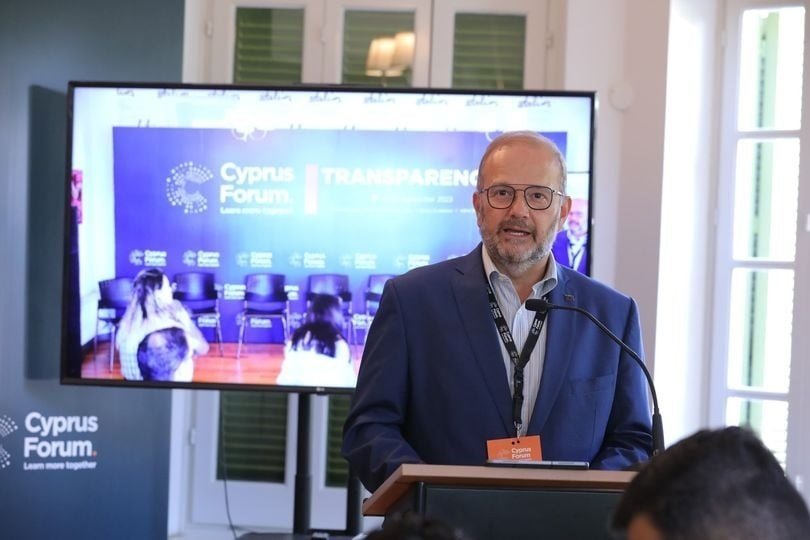
Tomorrow marks the International Day for the Elimination of Violence against Women. Statistics show that progress is moving at a snail’s pace, with some areas even seeing regression. Violence can take many forms, from domestic attacks to trafficking, from sexual abuse to child marriage, female genital mutilation, and femicide. The numbers are concerning – one in three women in the EU has experienced some form of violence, emphasised Nikolaos Isaris, Acting Head of the European Commission Representation in Cyprus, in his interview with Phileleftheros.
The EU focuses its actions on preventing and addressing violence against women. It emphasises protection and ensuring appropriate conditions exist for reporting incidents and supporting women afterwards. Equally important is that legislation concerning violence must be enforced, and crucially, there must be penalties for those convicted.
Isaris particularly emphasised that violence against women isn’t just taking traditional forms but has now become digital. “Now, with digital media, we’re seeing violence in the public, digital space, which is very significant”, he stressed, stating that violence is unacceptable in any form.
What are the rates of violence against women in the European Union? Do you have specific figures for Cyprus?
Our data is particularly concerning, as one in three women in the European Union has experienced physical or sexual violence, either at home or in the workplace, sometimes starting from age 15. For example, in 2019, police across Europe recorded 178,000 sexual crimes against women, with over two-thirds being rapes. This is an enormous number. Domestic violence continues to claim lives – statistics show that every week, two women in Europe lose their lives at the hands of their current or former partner or another family member. The problem is even larger because we don’t have data for all incidents. We estimate that only one-third of women experiencing violence report it. That’s why it’s crucial to create conditions that enable women to speak about the problems they face. For Cyprus specifically, while we don’t have exact statistics, the one-in-three ratio appears to hold true.
What’s the profile of women who experience violence and abuse? And what are the main forms of violence?
There isn’t a specific profile – it varies widely. It’s not about age or location, as violence can occur both at home and in public spaces. For instance, we see many cases of workplace harassment. Violence can be physical, sexual, or psychological. This includes coercive behaviour, forcing consent to unwanted acts, or blackmail. Now with digital media, we’re seeing violence in the public, digital space, which is significant. In fact, there are reports of incidents in politics, journalism, and public life that prevent women from doing their jobs – something that’s tragic not only for them but for democracy and public life.
What is the EU’s strategy, what measures does it take to prevent violence against women?
Most importantly, since 2011 the EU has signed the Istanbul Convention, a groundbreaking treaty for preventing and combating violence against women. In 2023, the treaty became legally binding for member states, setting the foundation for our efforts to address gender-based violence. Additionally, in May 2024, a new directive was adopted targeting crimes such as rape, genital mutilation, online violence, and sexist harassment. Under this directive, which must be incorporated into national laws by 2027, many objectives have been set. One is enforcing penalties for crimes against women. Another is providing support services and enabling women to report violence. Equally important is increasing awareness for women, girls, men, and boys. There’s also pressure on online platforms regarding cyber harassment. Finally, it involves collecting reliable data on violent incidents. Most importantly, it’s about conveying the message that any form of violence is unacceptable.
Do you believe changes are needed at the European level to better protect women?
Changes are needed on three levels. First, in awareness and sensitisation. The EU has created a network targeting both men and boys, as well as women and girls, to convey that all forms of violence are unacceptable. Second, regarding agencies and services, to provide support for women who have experienced violence, including psychological support and whatever else they need. Third is law enforcement. As I’ve mentioned, laws must not only exist but be enforced. We must ensure there are penalties and that those who commit violence are punished.
Do you think Donald Trump’s return to the White House will impact women’s rights?
The evidence from the American president-elect’s first term and his initiatives make us concerned about potential regression in rights, not just for women but for all vulnerable social groups. Donald Trump has shown through both his personal behaviour and initiatives how he might act. We hope things will be better in his second term and that the United States will try to protect and support women. However, this might prove wishful thinking, and the fear of regression is real.
Could Donald Trump find imitators in Europe?
I’m quite confident that the mechanisms we have in the European Union, both legislative and on many other levels, will deter and completely prevent Trump imitators from acting. I believe the EU’s values and institutions are such that they both implement appropriate policies and prevent any regression. We’ve seen this happen with rights of other vulnerable groups in some countries – I could specifically mention Hungary. The EU tries to bring member states that might stray back to the right path. So I’m certain that at the European level, we won’t see rights and values being endangered.
Read more:

