


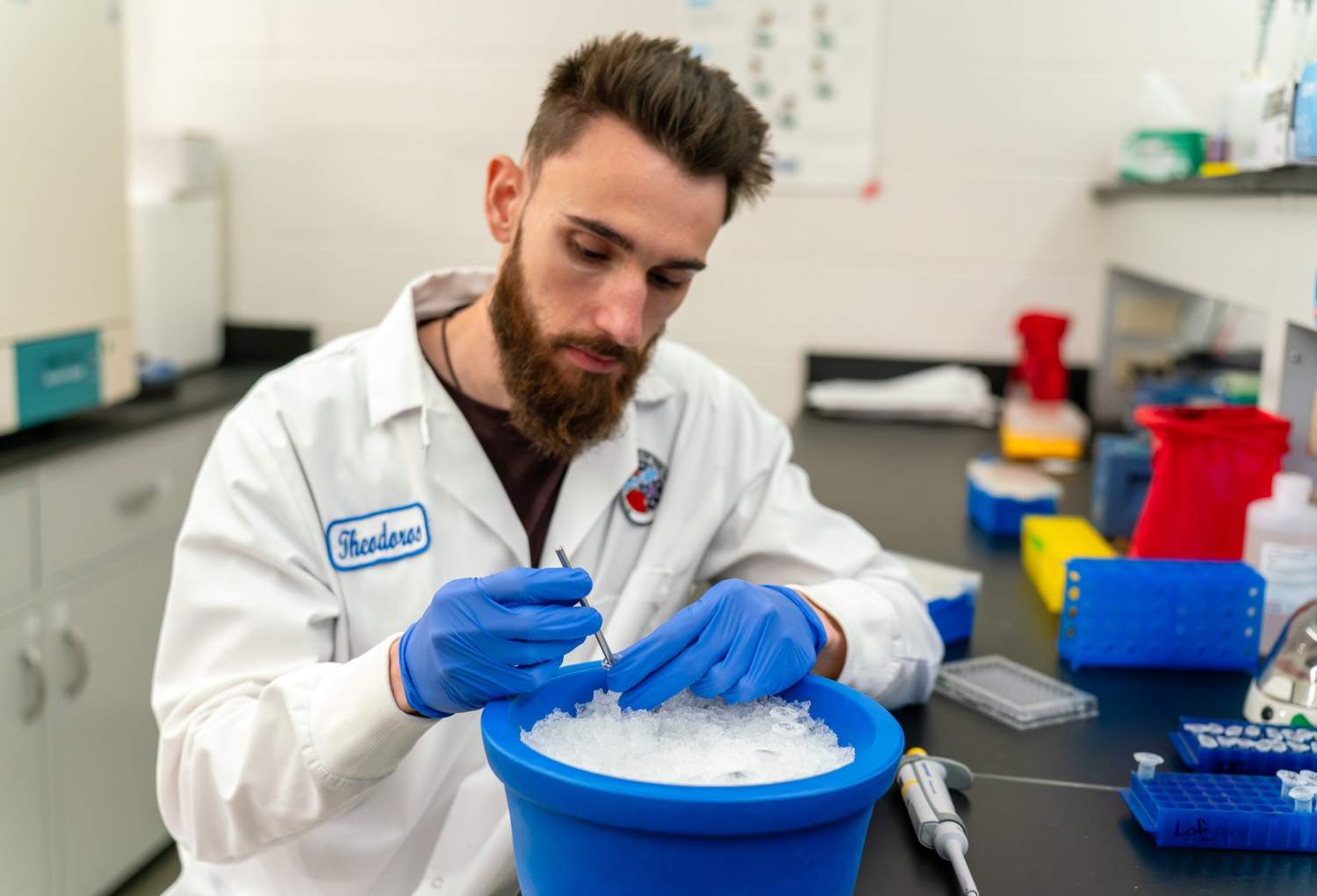
Humans are spending longer in outer space and are venturing further from Earth, making it increasingly important for scientists like Cypriot PhD candidate Theodoros Pavlides to understand how to protect astronauts’ health. The role nutrition could play in preventing muscle loss and maintaining physical function in space conditions is gaining increasing attention.
Pavlides, at the University of Rhode Island, is investigating if resveratrol, a natural compound found in grapes and other plants, could help protect muscles and counteract the metabolic effects of altered gravity.
The research explores the potential of nutrition as a tool to allow future spaceflight to be safer, covering both missions to the Moon and to Mars.
Pavlides, who is from Nicosia, has presented research internationally on health obstacles in space, and was part of a team that won NASA’s Deep Space Food Challenge: Mars to Table.
En.philenews spoke to Pavlides about his research, Cypriot roots, and inspiration behind his interest in space nutrition.
Did growing up in Cyprus influence your interest in nutrition, health and science? If so, in what way?
My interest in nutrition developed through my curiosity about how food affects the body, supports physical performance, and helps manage disease. My studies in Cyprus gave me the foundation to explore those questions and eventually apply them to the challenges of human spaceflight.
Did the food culture in Cyprus affect your perception of nutrition/have any effect on your research career?
I would not describe Cypriot food culture as the main influence on my research career. The more direct influence was my education in clinical dietetics, which helped me understand nutrition as a science with applications across many areas of human health. That foundation allowed me to explore how nutritional approaches might also help address the challenges astronauts face in space.
What motivated you to pursue further studies abroad?
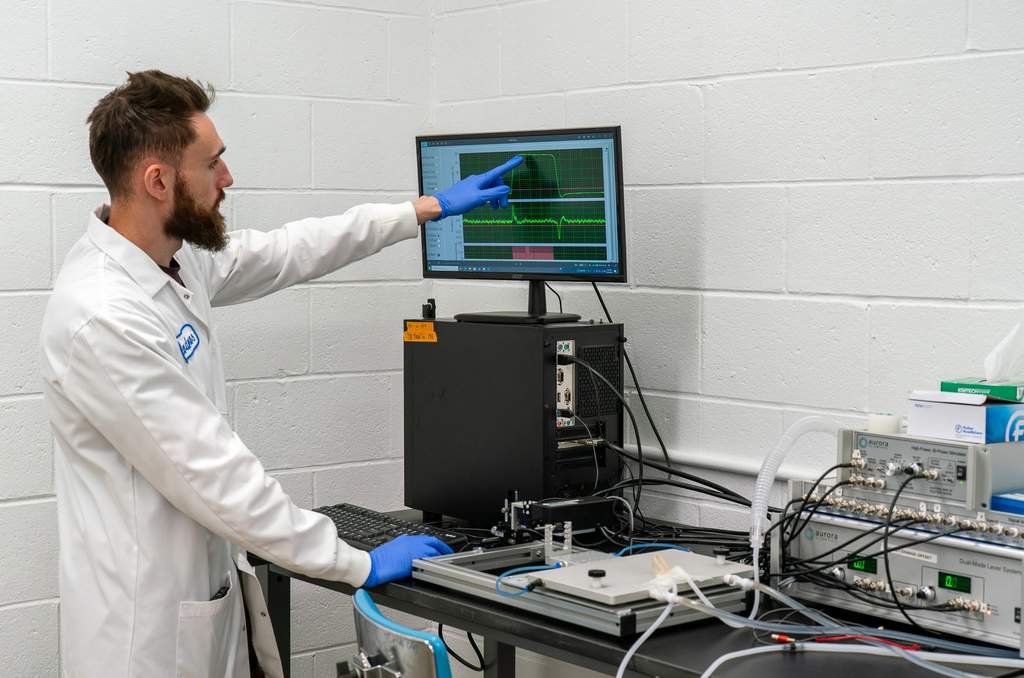
Space has always fascinated me, and during my studies in Cyprus I began to wonder whether I could combine that interest with nutrition. Exploring this connection through my master’s thesis motivated me to pursue further studies in space health research. When looking for a doctoral programme, I discovered the work of Dr Marie Mortreux at the University of Rhode Island. Her research closely aligned with my interests and offered an opportunity to investigate how nutrition may protect muscle health under altered gravity.
During your studies in Cyprus, is there a moment you can pinpoint as to when you first became interested in the combination of human health, nutrition, and space?
The clearest turning point was choosing my thesis topic during my master’s degree in clinical dietetics at the University of Nicosia. Although the programme was not focused on space, I proposed a project that brought together my interests in nutrition and space health. Through my thesis, supervised by Dr Evelina Charidemou, I examined whether nutrition-based interventions could reduce DNA damage caused by radiation relevant to spaceflight. That experience showed me that these interests could form a clear research direction and motivated me to continue into doctoral research.
What first attracted you to the research of resveratrol? What makes it interesting regarding space research?
Resveratrol is a naturally occurring polyphenol, best known as a component of grape skins, that has been studied for its antioxidant and anti-inflammatory properties. My interest in it grew from learning about the work of my supervisor, Dr Marie Mortreux, whose research examined its potential to preserve muscle health under simulated partial gravity. I also encountered resveratrol during my master’s thesis while investigating nutritional approaches to reducing DNA damage caused by space radiation. When I began my PhD at URI, resveratrol stood out as a strong candidate because of its effects on how muscles produce and use energy, as observed in experimental studies. These effects are relevant to the muscle loss astronauts experience in microgravity.
Grapes are found throughout Cypriot culture, including cultivation and winemaking; have you found your connection to your research to be more meaningful due to your Cypriot roots?
There is an interesting cultural connection between grapes and Cyprus, although it was not what led me to study resveratrol. My interest developed from the scientific evidence and the questions surrounding its potential effects on muscle health. For me, the more meaningful connection to Cyprus is that my education there helped lay the foundation for the research I am now pursuing internationally.
How would your research help maintain astronauts’ health during longer missions to space, particularly the Moon and Mars?
My research explores whether nutritional interventions could help address health challenges associated with spaceflight. My master’s work examined how nutrition-based interventions could reduce radiation-induced DNA damage, while my current PhD focuses on whether resveratrol can limit muscle loss, preserve muscle function, and reduce metabolic dysfunction associated with altered gravity. When muscles bear less weight, they receive less of the mechanical loading that helps maintain their mass and strength. Using ground-based animal models, we simulate aspects of microgravity and lunar gravity to investigate these changes and potential countermeasures. The long-term aim is to help guide strategies for keeping astronauts healthy and improving their performance during extended missions. Although my PhD does not directly simulate Martian gravity, the findings of this work may also inform future Mars research, as altered gravity is present there as well.
Would the findings also benefit the health of individuals on Earth?
Potentially, yes. Studying how muscles respond to reduced loading can help us understand aspects of muscle loss on Earth, including during prolonged bed rest or immobilisation after an injury. The findings may also be relevant to some neuromuscular disorders in which reduced mobility contributes to muscle loss. If a nutritional intervention helps preserve muscle mass or function in our experimental models, it could provide a basis for further research in these settings.
How did receiving international recognition as part of the winning team of NASA’s Deep Space Food Challenge: Mars to Table make you feel?
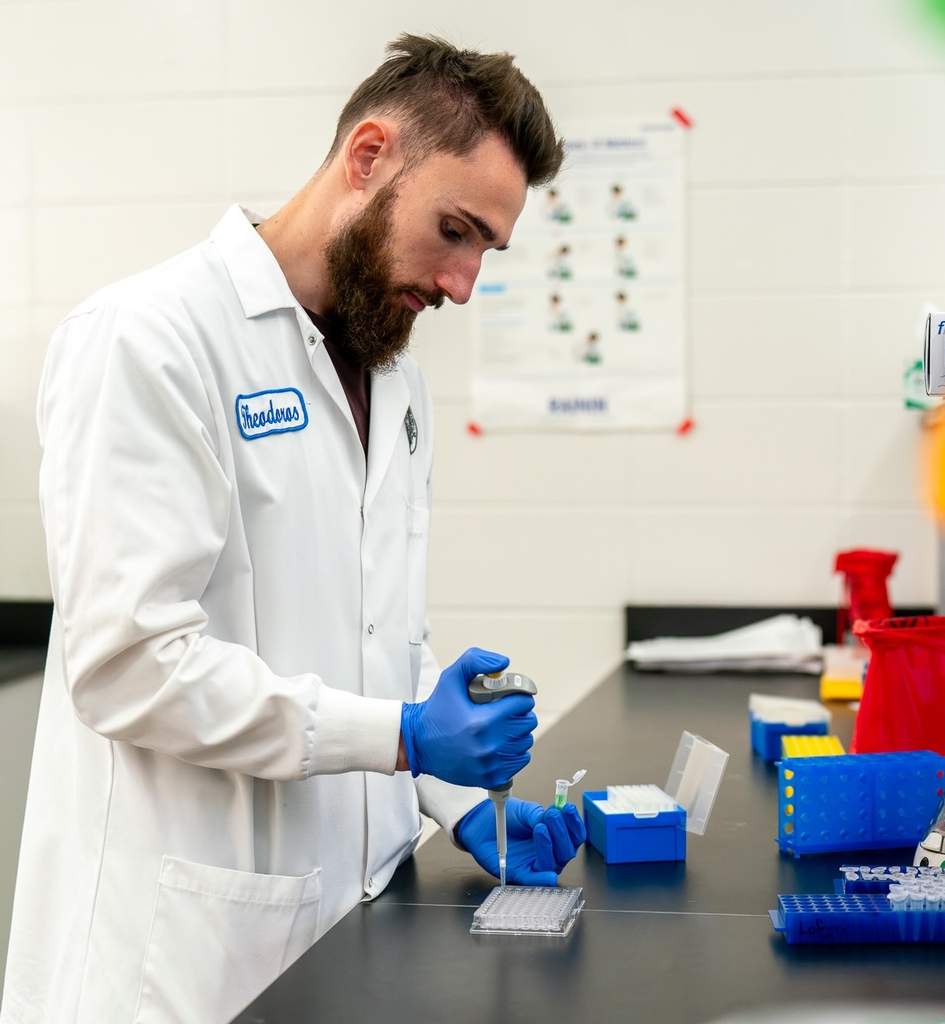
It was very exciting to learn that our team had been recognised as the international winner of NASA’s Deep Space Food Challenge: Mars to Table. A great deal of effort went into the submission, so seeing that work recognised was rewarding. As one of the team’s nutrition specialists, alongside my colleague Maria-Eleni Makreli, I contributed to developing nutritious, appealing meal plans and evaluating how nutrition could help address health challenges during future Mars missions. It was an opportunity to apply my interests to a practical challenge.
How did you find the transition from studying in Cyprus to conducting research in the United States, academically and professionally?
The transition was challenging because I was adapting to a new academic environment while also moving from clinical dietetics into more experimentally focused space health research. My doctoral work has required me to develop new laboratory skills and deepen my understanding of muscle biology and metabolism. Space health also requires a multidisciplinary perspective, bringing together areas such as nutrition, physiology, and molecular biology, with radiation biology relevant to my earlier work. Learning to connect these fields has been demanding, but it has also helped me grow as a researcher.
Do you think Cyprus has the potential to play a larger role in international research, specifically in nutrition and space health?
Yes, I believe Cyprus has the potential to contribute more to international research in nutrition and space health. These fields bring together many disciplines, so there are opportunities to contribute through focused expertise and collaboration. Developing that potential requires support for research training, access to facilities and funding, and partnerships with researchers abroad.
Are you open to the possibility of returning to Cyprus and bringing your knowledge and experience to the island?
Yes, I am open to the possibility of returning to Cyprus and contributing the knowledge and experience I gain abroad. I am grateful for the opportunity to work with leading researchers in space health and learn from researchers affiliated with NASA. My aim is to continue developing the skills that will allow me to make a meaningful contribution to the field.
What advice would you give to young Cypriots who wish to conduct similar academic research internationally?
My advice is to explore the subjects that spark your curiosity, even if the path forward is not immediately clear. Combining nutrition and space once felt like an unusual path, but it has become the focus of my research. Look for researchers whose work interests you, learn about their projects, and don’t be afraid to reach out. Building a strong foundation in your subject and being willing to learn beyond it can help you pursue opportunities. I hope my journey encourages students in Cyprus, Greece, and beyond to explore their own ideas. Even when others may not immediately see an idea’s potential, a question that matters to you is worth pursuing.

