


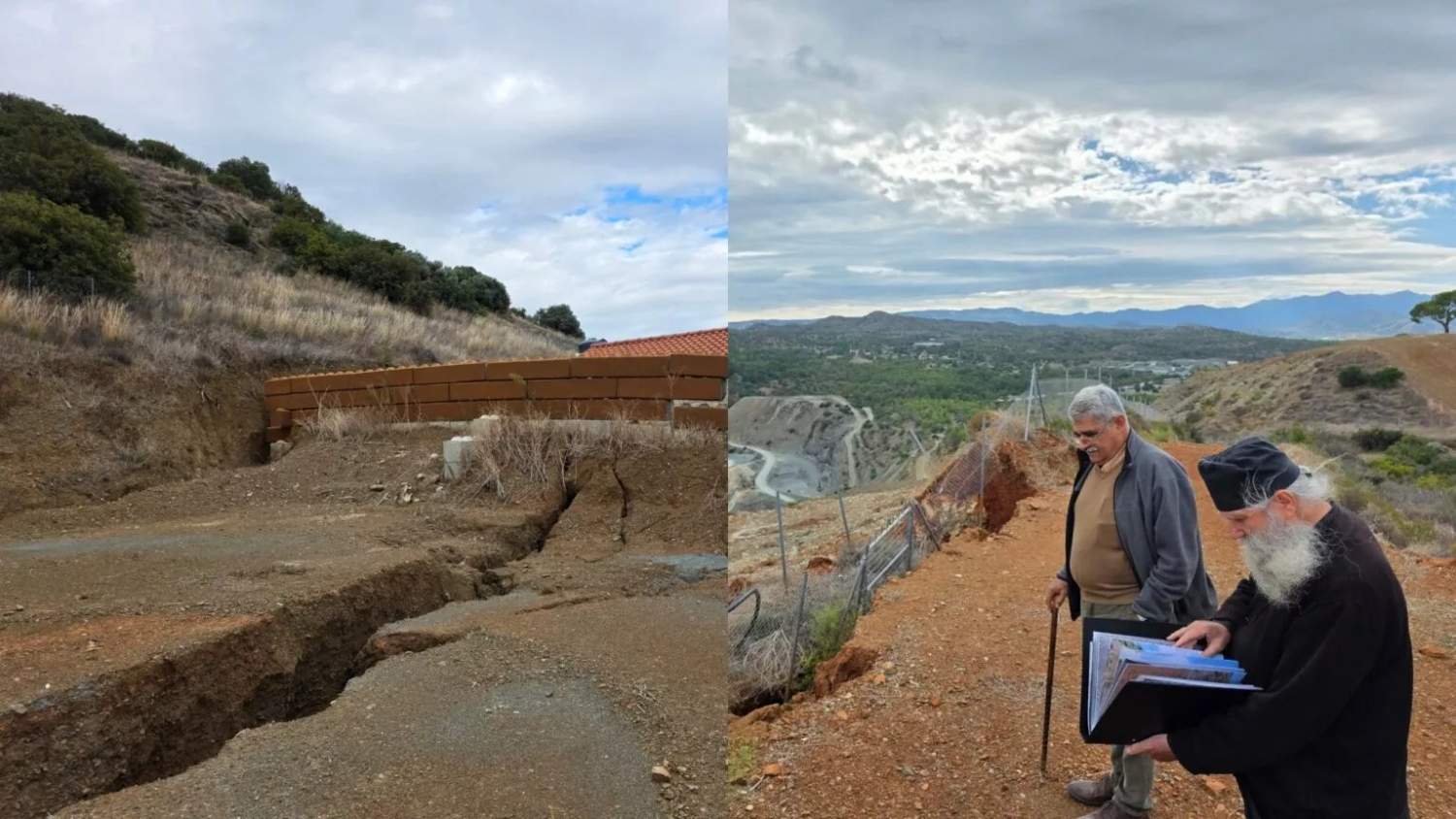
Land belonging to Stavrovouni Monastery next to a quarry zone in Pyrga, Larnaca district, has developed long cracks and subsidence, and a Geological Survey Department report says the area appears not to have stabilised despite measures taken in 2020. The monastery has called for definitive and drastic action before the instability leads to irreversible damage or loss of life.
The department’s report, dated 17 July 2026 and based on a site inspection on 8 July, found that the area “continues to show signs of instability”. Satellite data from the European Ground Motion Service (EGMS) show downward movement, or subsidence, and ground deformation over a number of years.
The underlying rock, altered and weathered diabase with low mechanical strength, combined with deep excavation, makes the area geotechnically extremely vulnerable, the report says. It recommends that experts carry out an immediate, comprehensive geohazard management study before the coming winter.
The Planning Authority on 27 July 2026 again rejected the quarry company’s application to extend its planning permit, according to an Interior Ministry letter to Lefkara Municipality dated 5 August. An enforcement notice was also served for the immediate termination of operations at the site’s aggregate crushing plant and the restoration of the site to its former state by 31 December 2027, in compliance with a Larnaca District Court order of 23 December 2024 in case 290/2019.
Damage at the site
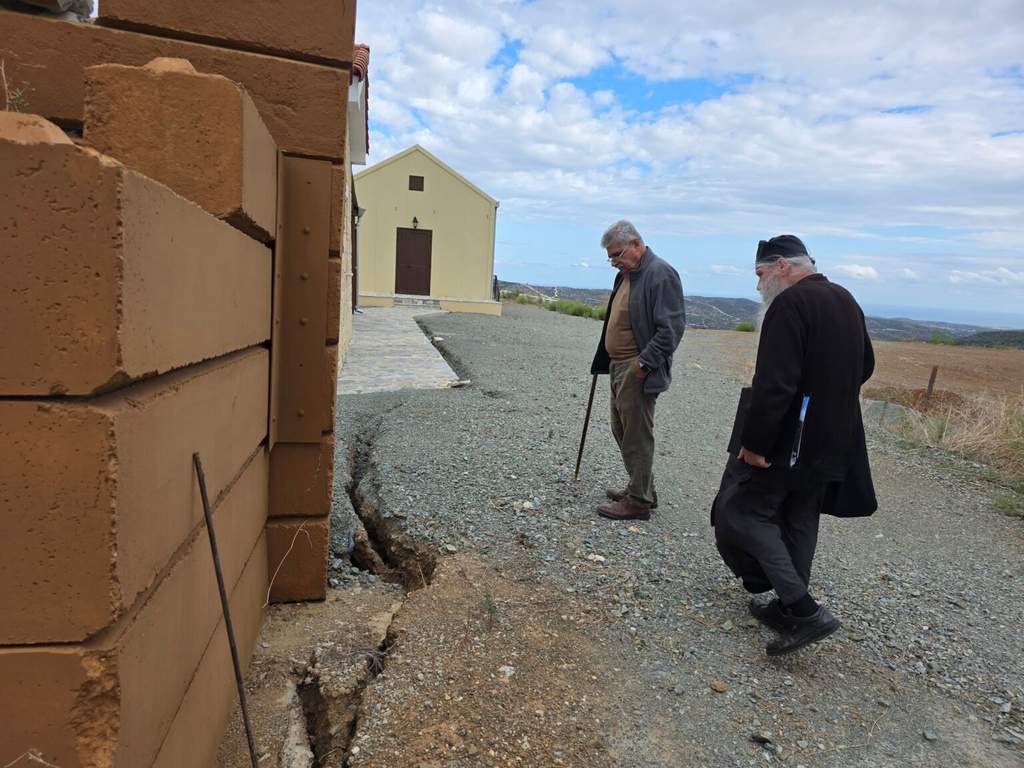
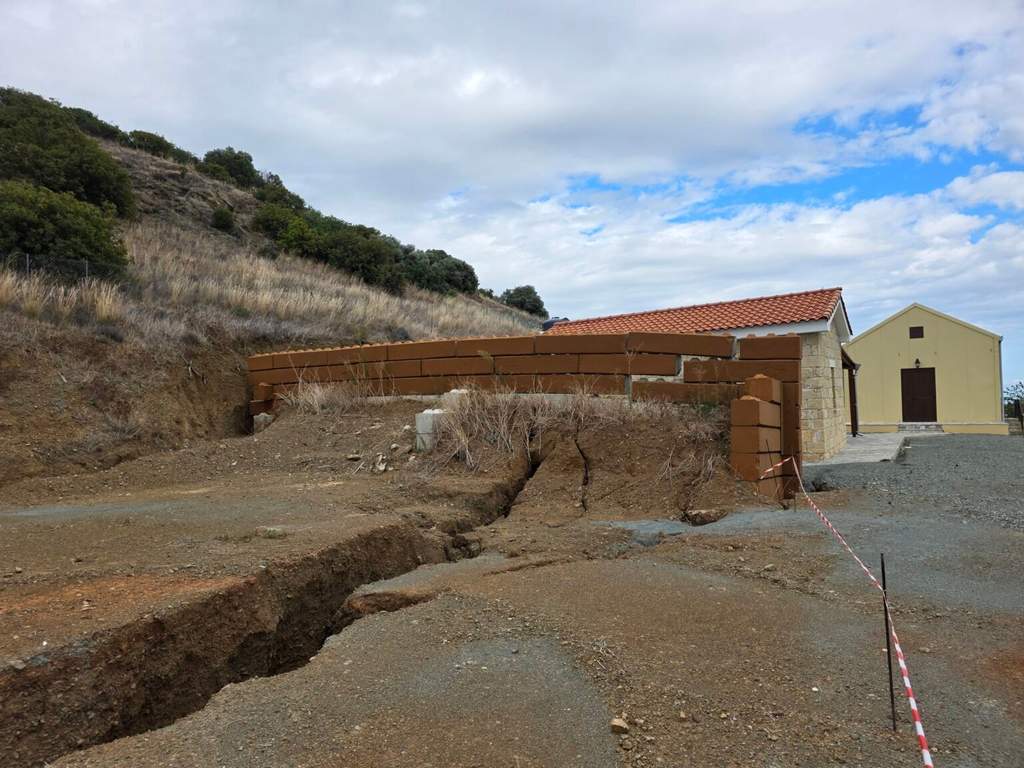
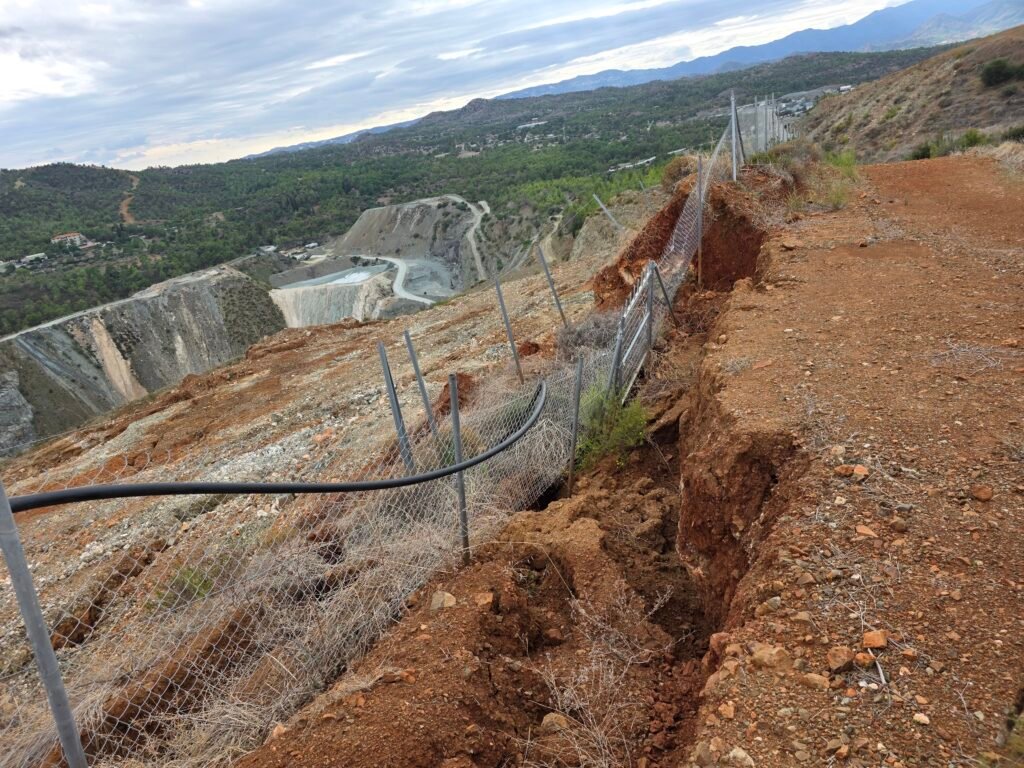
Phileleftheros visited the site with representatives of the monastery and found that the signs of geological instability were severe and had seriously worsened, mainly after recent heavy rain.
Long surface cracks were visible on the state-owned plot that lies in between and on the monastery’s private plot (No. 148, sheet/plan 40/57). The plots lie at between 400 and 425 metres above sea level, while the existing quarry lies at 250 to 275 metres. The quarry sits below the peak of Efkali State Forest and the monastery’s estate.
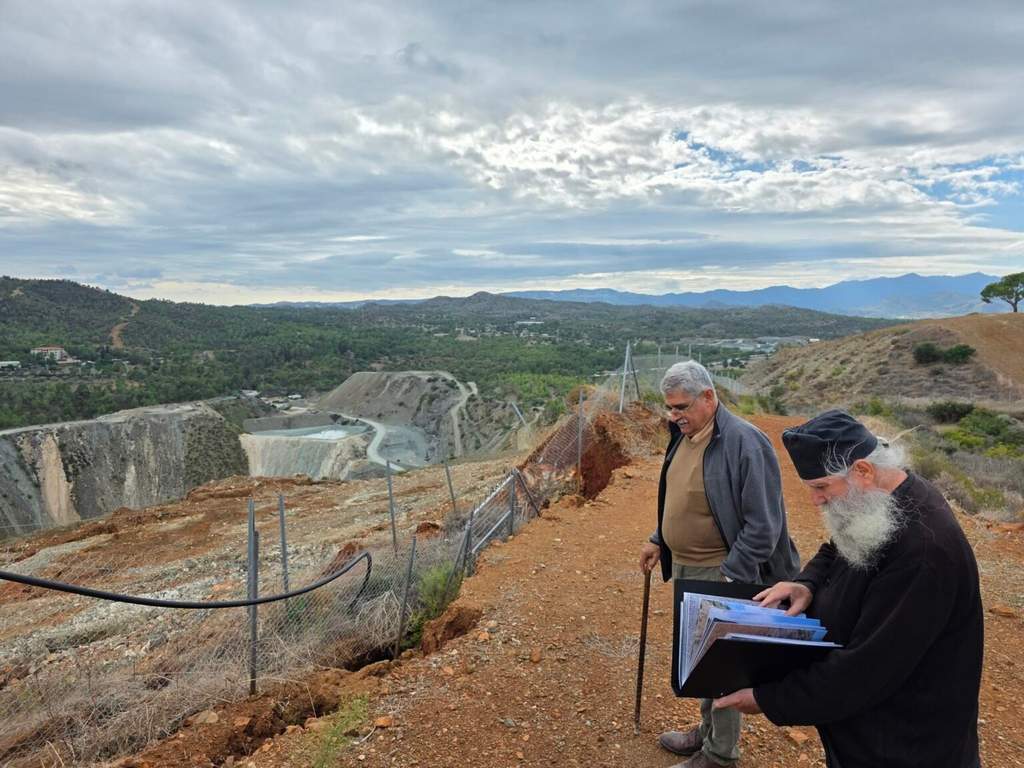
Inside the quarry zone, at a point where extensive deep quarrying had taken place, with a height difference of almost 150 metres above the existing quarry, an extensive landslide had occurred on the slopes.
At the monastery’s buildings, the ground had subsided locally to form a hollow, the paving around them had failed and low walls had shifted from their original position.
Letters and the Holy Synod
In a letter to Interior Minister Constantinos Ioannou dated 6 April 2026, Lefkara mayor Sofoklis Sofokleous raised the serious and ongoing problems residents face from the existing quarry in the Kornos district of the municipality. He asked for information on whether the quarry was operating legally and in line with the terms of its lease, saying the health of citizens and protection of the environment must be everyone’s priority.
In a letter to the director of the Department of Town Planning and Housing on 1 May 2026, the monastery raised a serious safety and health issue in the forest area. It said the company intended to expand the quarry zone by 70 decares within the safety zone of the Stelios Mavromatis army camp, criticised the use of daily blasting next to firing ranges and asked for all planning permits to be reviewed.
The Holy Synod, at a regular session chaired by Archbishop Georgios on 17 September 2026, considered a letter of protest from the monks and residents of the area. It fully endorsed what it called their reasonable concerns about the effects on the environment and people’s health, and condemned the planned expansion of the quarry.
The Synod called on the President, the government and parliament to “take on their responsibilities and stop the expansion of the quarry in the area”, to protect people’s health and the stability of the monastery’s buildings and the area’s rock formations.
The 2020 meeting
The problems are not new. Minutes of a meeting held on 28 July 2020 at the office of the Minister of Agriculture, Rural Development and Environment, attended by the minister, government officials, the Mines Service, the Forestry Department and representatives of the monastery, state explicitly that the cracks were caused by quarrying in the area.
According to the minutes, the minister said “the quarry did not operate in the appropriate manner” and that strong representations had been made to the company that owns it. Instructions were given to commission a slope stability study. The minutes also stress that the monastery’s plot would not be affected in any way and that the environment must be protected.

