


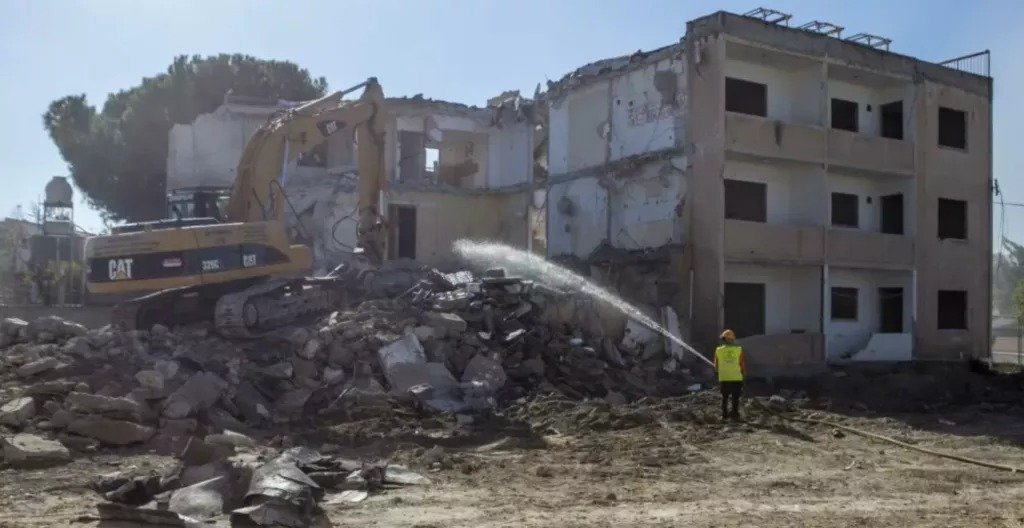
A government scheme to demolish and rebuild apartment blocks for refugees in Cyprus is facing delays and criticism, with some residents left in limbo and others facing substandard living conditions.
Under the ‘ktiZO’ (build) scheme, thousands of refugees were relocated from deemed unsafe buildings to temporary accommodation while demolition and reconstruction works commenced. However, progress has been uneven, with some sites experiencing significant delays.
Despite receiving rent subsidies from the state, some refugees have been forced to wait nearly a year for demolition to begin, with no visible signs of deterioration in the original buildings. Others have been relocated to apartments with makeshift fittings and poor living conditions.
Furthermore, it has emerged that some apartments in the evacuated blocks are now occupied by individuals who do not meet the eligibility criteria, including foreign nationals. These individuals are reportedly living in substandard conditions, with doors and windows replaced by makeshift coverings.
The government has allocated rent subsidies for eligible refugees based on apartment size, with higher rates offered for larger properties and for those living in Limassol. However, with the maximum subsidy period set at 24 months, refugees are concerned about their long-term housing prospects.
Adding to the problems, some of the evacuated buildings have been targeted by looters, with valuable fixtures and fittings stripped out.
The Department of Town Planning and Housing has initiated tenders for the demolition of six apartment blocks, with plans to finalise arrangements for a further seven. A previous assessment identified 43 buildings as structurally unsound and in need of demolition.
Read more:

