


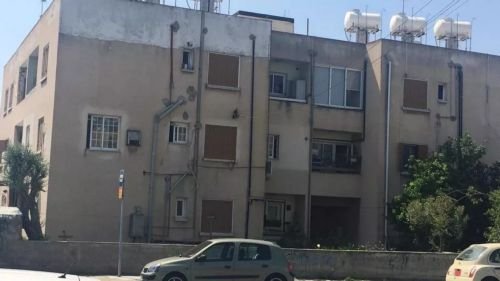
Authorities have begun tearing down makeshift carports on refugee housing estates in Pallouriotissa and Aglantzia, where some residents took two or three parking spaces and others have none, the House Refugees Committee heard on Wednesday.
Several of the 69 refugee estates do not have enough parking spaces for their residents, and plans to reallocate the spaces are now being set in motion, the committee was told.
Andri Hadjiandreou, Aglantzia’s deputy mayor, told the committee that residents had also taken over public green spaces, some of which “have even been turned into chicken coops”. The coops are now being dismantled, and some of the green spaces will be turned into parking.
Cost is one of the main obstacles. Hadjiandreou said the Municipality of Nicosia estimates that building parking areas, pavements and other works will cost about 10 million euros. The basic works on the Athalassa estate in Aglantzia alone are expected to cost more than one million euros, she added.
The committee heard that the estates were built with no provision for organised parking because the priority at the time was to give displaced people temporary housing, so open spaces were used instead. This caused few problems at first, because few residents owned cars then.
In Aglantzia, all the carports on Kontea, Milia and Voni streets have been demolished and the area cleared, Hadjiandreou said. Green spaces are now being landscaped, and some could be turned into parking because parks take up large areas of land in Aglantzia.
She said the aim was to change the look of the estates and improve living conditions for refugees and other residents. Work is also under way to upgrade public spaces, resurface roads and build pavements. She added that timing was also a concern, meaning when the plans would actually be carried out.
An official from the Municipality of Nicosia said structures that had been used for parking had already been demolished on two estates, where pavements and new road surfaces had been laid. Lines have been marked so that everyone knows where to park, and construction will follow. The official said the works would change an appearance that “in some cases resembles a ghetto”.
The committee heard that, because the money is not currently available, the municipality will draw up a single design, and anyone who wishes can carry out the works to its specifications.
Antoniou, speaking for the Department of Town Planning and Housing, said the problem was now being dealt with after the fact. Where estates have only footpaths and no road access, organised parking areas with numbered spaces are being created so that everyone knows which space is theirs, she said.
She said construction plans would be drawn up with the relevant local authority. The work will either go to a private contractor or be carried out by the municipality, with the department covering the cost. Some green spaces could be used for parking, but that would need a change of use. She added that planning was well advanced and the aim was to cover every estate.
Committee chairman Nikos Kettiros and committee members Giorgos Lysandrides of DISY, Christos Christofides of AKEL, and Zacharias Koulias and Adamos Aspris of DIKO stressed the need to create parking on government refugee estates, even at this late stage.
Nicosia, including Strovolos, has 22 estates with 6,952 housing units. Limassol has 14 with 2,947 units, Larnaca 13 with 3,320, Paphos ten with 284 and Famagusta district seven with 132.

