


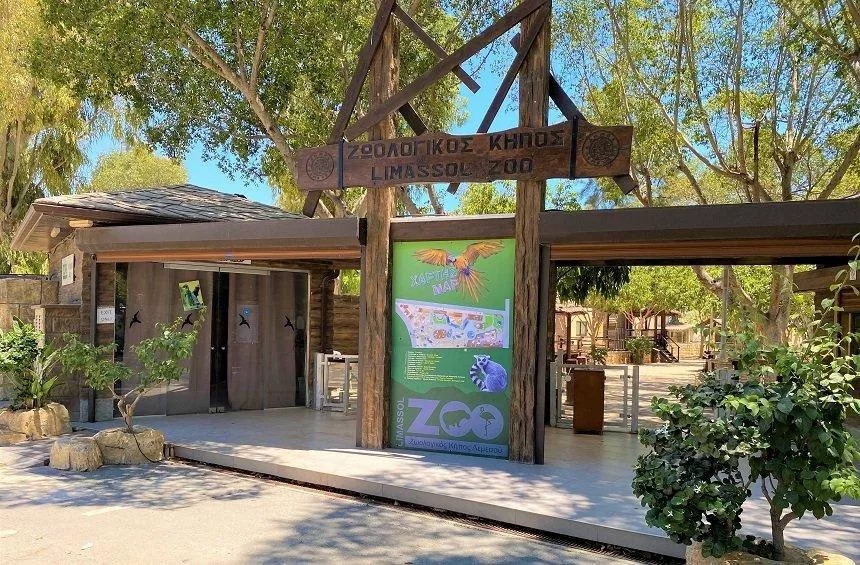
After years of delays, Limassol Zoo is finally on course for a radical reinvention. A proposal to turn the ageing animal enclosure into an ambitious environmental centre has been presented to the Limassol Municipal Council, marking what planners are calling a new chapter for the city.
The updated proposal, drawn up by the Cyprus Centre for Environmental Research and Education of the Limassol Metropolis (KYKPEE), would convert the old zoo into a Biodiversity and Urban Environment Centre to be named “Fysi” — the Greek word for nature.
An online public consultation is currently under way, conducted by KYKPEE on behalf of Limassol Municipality, to gather the views of residents and organisations on the plan. An in-person public consultation is also scheduled for 4 March at the Panos Solomonidis Cultural Centre.
Early signs from the online process are encouraging. KYKPEE scientific director Dr Andreas Hatzichambis told Phileleftheros that respondents had expressed strong support for all eleven key features of the proposal and had embraced the new vision for the city.
“They are quite positive. We can confirm that,” he said. Once the consultation is complete, the proposal — together with citizens’ views — will be resubmitted to the Municipal Council.
Dr Hatzichambis described the project as an opportunity for Limassol to create something innovative, accessible and environmentally friendly: a space that would serve residents and families while opening up prospects for the city beyond Cyprus’s borders through the International Network for Environmental Citizenship.
The centre is designed as a living public hub bringing together nature, knowledge and culture, serving all age groups — from children and families to schools, researchers and professionals — through educational programmes, digital applications and partnerships with international organisations.
At the heart of the plan is a decision to stop keeping animals in captivity, in line with contemporary animal welfare standards. Animals will be relocated to certified sanctuaries using scientific protocols, with full transparency. The proposal’s authors describe this as a shift from a model of “exhibition” to one of “coexistence”, positioning Limassol as a pioneer in environmental citizenship.
The educational offering would cover themes including urban microclimates, heat islands, light pollution, urban birds, green mobility and nature-based solutions, delivered through experiential programmes for schools, families and adults.
Interactive and digital stations would give visitors access to maps, databases, photographs, sound archives and information on species, habitats and Natura 2000 sites, allowing them to explore Cyprus’s flora and fauna in a scientifically grounded way.
Several features would be firsts for Cyprus. These include “living laboratories” for hands-on learning, small urban habitats, observation micro-environments and surface micro-ponds — a new way of presenting and understanding ecosystems within an urban setting.
An Environmental Art Pathway, featuring sculptures made from natural and recycled materials, installations and periodic exhibitions, would weave culture throughout the site. The space would also serve as a green urban retreat, with shaded walkways, quiet areas and spaces for social gathering.
On research, the centre aims to connect Cyprus with the international scientific community through conservation programmes, biodiversity studies and participatory science.
Its partnership with KYKPEE — which has links with 88 research centres and universities across 39 countries — is expected to anchor the centre’s scientific credibility and give it genuine international reach.

