


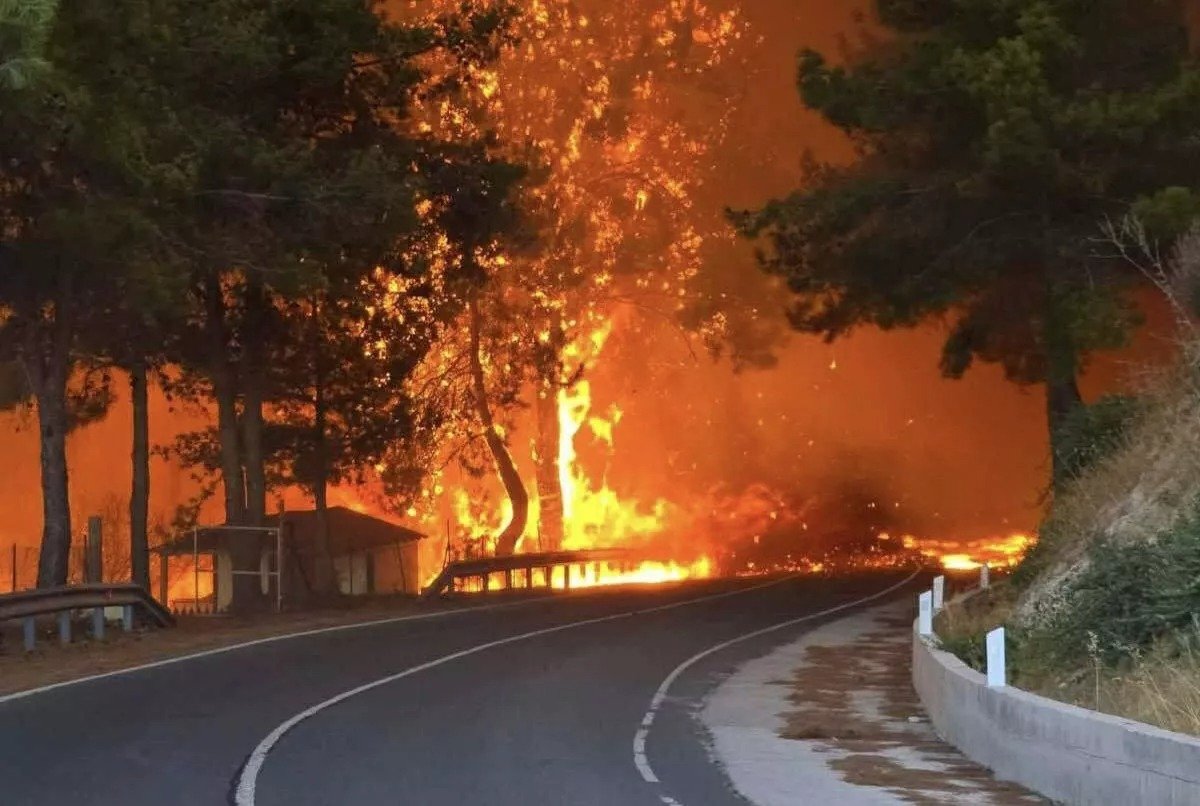
The massive wildfire in Limassol province burnt landscapes and habitats of major ecological importance, affecting three protected areas of the Natura 2000 Network, BirdLife Cyprus announced.
The affected areas are Limnatis Valley, Ha Potami and Paramali River, the conservation organisation said.
Extent of damage
According to BirdLife Cyprus, the burnt area as a percentage of each Special Protection Zone was:
- Limnatis Valley: 46.7% (13.5 km²)
- Ha Potami: 15.5% (12.4 km²)
- Paramali River: 1.7% (0.3 km²)
“These areas host important habitat types, birds of prey (Bonelli’s Eagle, Booted Eagle, Griffon Vulture) and endemic species (Cyprus Wheatear, Cyprus Coal Tit) which use the areas for nesting and feeding,” the organisation said.
“The value of these areas for biodiversity and the provision of ecosystem services is invaluable. Yet they remain vulnerable, even under protection status”.
Land use analysis
Based on land use analysis, the fire burnt (*LULC analysis based on CORINE 2018 LEVEL 1):
- 62 km² of forest, natural and semi-natural areas
- 54 km² of agricultural land
- 4 km² of artificial surface
- 1 km² of water body
BirdLife Cyprus warned that natural regeneration of the burnt land will be uncertain, as the climate crisis intensifies prolonged drought and extreme weather phenomena.

Call for comprehensive planning
“The scientific community has been warning about climate change for years, while the state is informed and has legal commitments to take mitigation and adaptation measures. Yet the state continues to lack modern, long-term planning for fire prevention and management,” the organisation said.

BirdLife Cyprus said fire prevention and response requires a holistic and coordinated approach, noting that what is missing is the political will for implementation.
The organisation has for years submitted clear and documented positions on the need for modern prevention and action planning, including:
Prevention measures:
- Landscape management and strengthening agriculture and livestock farming in rural areas, with a mosaic of uses that reduces fire spread risk
- Resilient forest ecosystems with species diversity, not monocultures such as pine forests
- Regulations for isolated dwellings and prohibition of practices such as stubble burning
- Education, volunteers and early intervention plans
Response measures:
- Besides adequacy in ground firefighting forces, there must be large-capacity aircraft for immediate extinguishing and effective fire suppression before spread
- Natural regeneration where possible, with minimal mechanical interventions
- Deterrent penalties and, most importantly, their practical implementation
“This disaster must finally be transformed into a starting point for serious change to avoid loss of human lives, property and nature of invaluable worth,” BirdLife Cyprus concluded.

