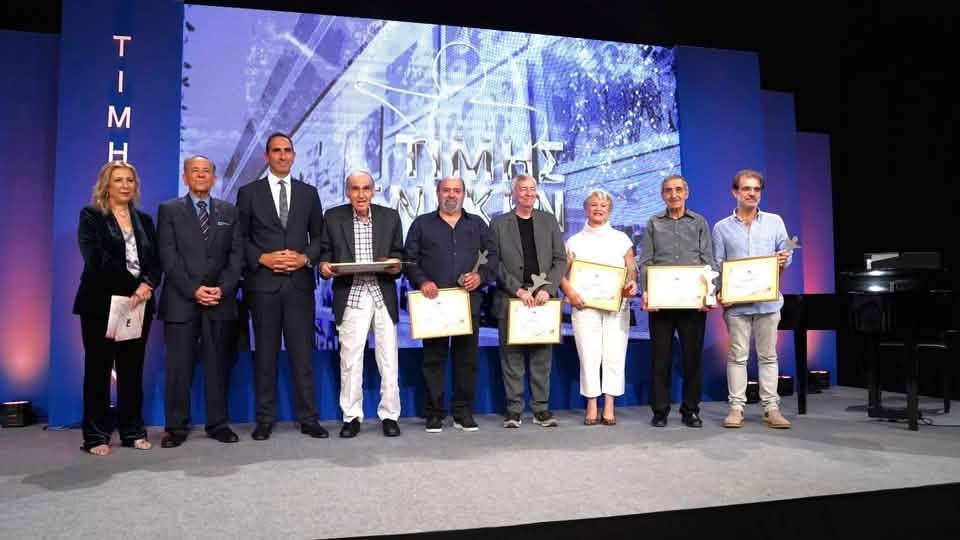
John Vickers, whose voice kept a generation of Cypriots company at night on CyBC’s ‘Request Time’, has been honoured for the programme together with his long-time co-presenter, Vicky Bishara, at the state broadcaster’s fifth ‘Honoris Causa’ awards.
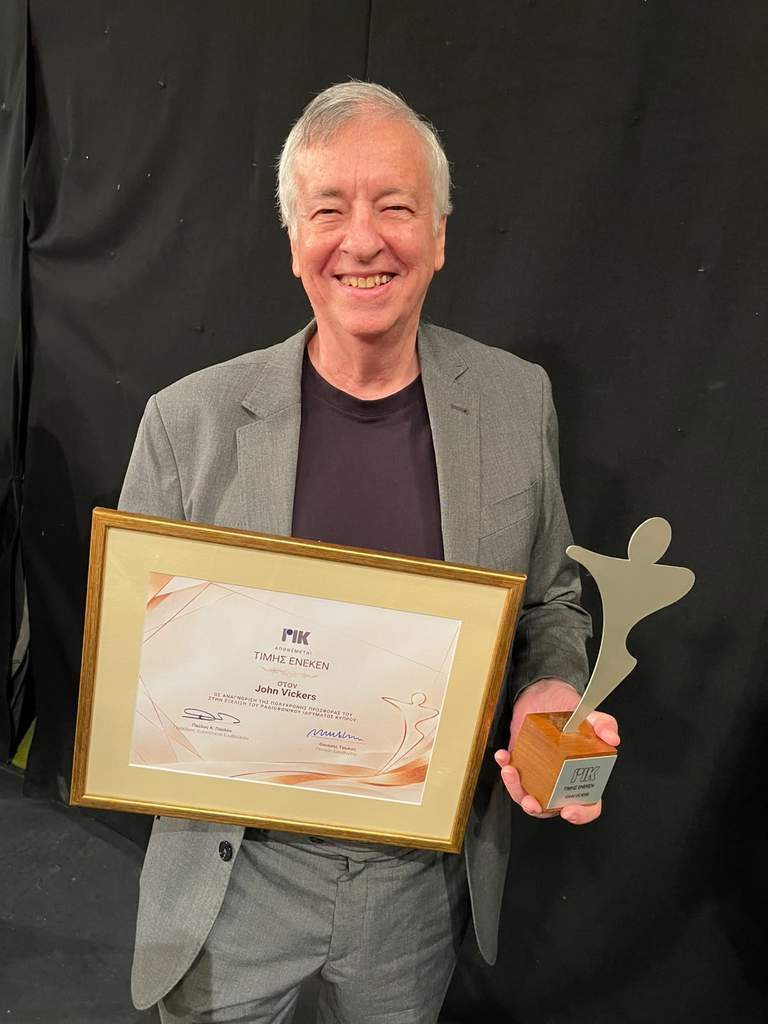
A radio producer, musician, actor, journalist, translator and editor, Vickers told Phileleftheros about a life that took him from England to the CyBC microphone almost by chance. “A lot of things in life happen completely by chance,” he said.
The programme went out at a time when radio was perhaps the only channel of communication and expression for young people, through thousands of dedications sent in by letter. Some listeners fell in love, others broke up, and all of them enjoyed the foreign music that John and Vicky were the first to play in Cyprus.
Arriving in Cyprus
His path was never planned. “Whatever we want to do, whatever we think we’re doing,” he said of the role chance has played in his life.
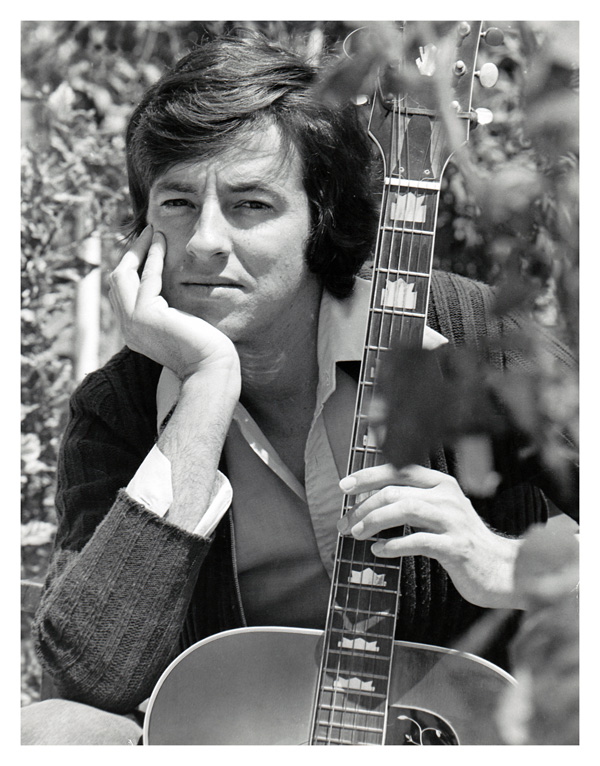
Born in England in 1949, Vickers discovered pop music and the Beatles at 13. At 16 he learned the guitar and began writing his own songs. He studied French and Italian at the University of Leicester, where he met his first wife, Lia, a Greek Cypriot. “Back then we had the luxury of studying what interested us, without worrying about getting a job. I studied languages because I liked them. I didn’t know what I’d do afterwards.”
He came to Cyprus for love in July 1972, with no firm plans. All he knew was that he didn’t want to be a teacher, although as soon as his neighbours in Limassol heard that a young Englishman had moved in, they sent their children to him for English lessons.
His route into CyBC began in September 1972, when he saw a newspaper advert for a pop music festival in Lysi, now in the occupied north. He went along with his guitar and sang. The organiser, impressed, introduced him to the concert’s English presenter, who worked at CyBC. The presenter was about to leave the station, and Vickers was told it was looking for an Englishman with a deep knowledge of music. He was invited to audition, did a voice test, got the job and presented his first solo show on 1 October 1972.
“I was scared. Radio wasn’t my dream, it just happened,” he recalled.
The ‘Request Time’ years
A few months later, Lebanese journalist Vicky Bishara joined him in the studio. So began one of the best-known double acts on Cypriot radio, and ‘Request Time’. At a time when CyBC had only two channels and there was no independent radio, a programme in English and Arabic became the number one show.
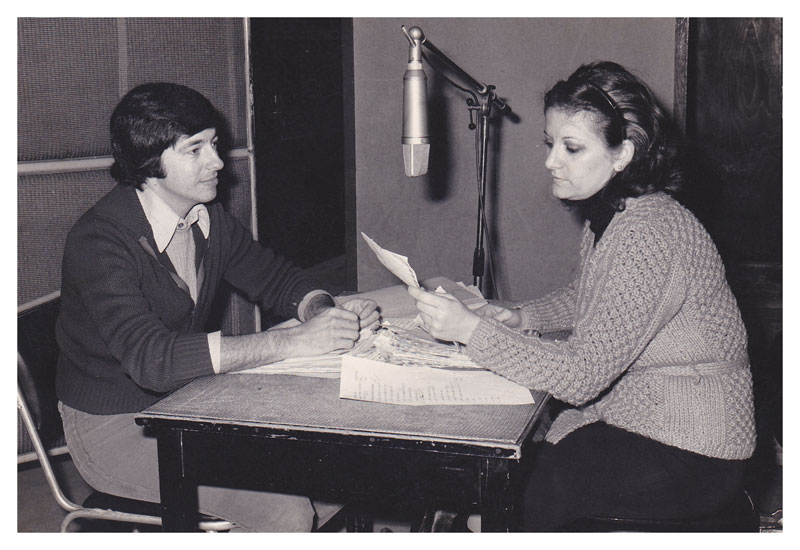
At first, the programme was aimed at neighbouring countries such as Lebanon, Egypt, Israel, Syria and Turkey. When war broke out in Lebanon, the letters from abroad stopped abruptly.
“I knew a lot of Cypriots were listening and sending us letters, but we weren’t allowed to broadcast them, as there was another programme for local listeners,” he explained. “So I suggested we open the show up to Cypriots. Within a few months, ‘Request Time’ became the programme that all the island’s pupils, soldiers and young people listened to.”
Its success, in his view, rested on authenticity and spontaneity. He refused to read pre-written scripts, as colleagues on Greek-language programmes did, and preferred to read listeners’ letters and dedications live.
At its heart, though, was the music, mostly British and American. With no internet, he paid friends who worked at Cyprus Airways out of his own pocket to bring him the latest records from London, so that he could be the first to play them. Many people still tell him they discovered foreign music through the show.
For 17 years, from 1972 to 1989, the programme kept young people in Cyprus and the wider region company every night, receiving hundreds of letters a day.
The stories behind the dedications
Behind every dedication was a human story. Among the thousands of letters, Vickers remembers a devoted listener, here called ‘Dora’, who wrote every week with loving dedications to Giannis. One day a letter marked ‘URGENT’ arrived. It was from Dora, writing in a panic: “Please don’t play the letter I sent you for Giannis, because we’ve split up and now I’m with Giorgos!”
Another story came after 1974. Among the letters was one from an American named Billy, who said he was a prisoner in a Turkish jail and wrote that “if you have a bit of money, anything goes in here”, asking for a song. The show played it, and the story was forgotten.
Years later, in 1977, Vickers went to a cinema in Athens to see ‘Midnight Express’, which was banned in Cyprus. “Watching the film, I realised that the main character, Billy Hayes, the man who escaped from the Turkish prisons and wrote the book of the same name, was the same Billy who’d sent us the letter at CyBC. Sadly, that letter has been lost.”
Summer 1974
His memories of the coup and the invasion remain vivid. On 15 July, his father-in-law woke him with the news that Makarios was dead. A few days later, on the evening of 19 July, his director, Lana der Parthogh, asked him to go to CyBC to read the English-language news bulletin and play classical music.
“I did it with an armed soldier inside the studio,” he said. “Because of the curfew, I had to sleep on the studio floor. I left the next morning, 20 July, just before 6am. Everything was quiet. In the car I put on the BBC and suddenly heard that the Turks had invaded Cyprus. I’d just left the only radio station in the country, where nobody knew anything. And straight after that, the gunfire started.”
Although he was only 24 and held a British passport, he never thought of leaving the island. “Maybe I hadn’t fully realised the danger because we were in Limassol, but the main thing was that I couldn’t leave my family. So I stayed, and 54 years later I’m still here.”
Vickers left CyBC radio in 1989. “CyBC gave me my first step in radio, and later in theatre and television, and all of that led me into journalism. I’m grateful for everything.”
Journalism
His journalism career began in 1973 with a music column in the Cyprus Mail. In 1979 he moved to the Cyprus Weekly, where his column grew to a full page, and he later worked as the paper’s Limassol correspondent. He has edited publications including Hermes International, the Cyprus Review, Time Out and the international magazine Odyssey. He also ran the EuroMed Info Centre in Brussels, where he lived for four years, and since 2011 he has been editor of the business and trade magazine GOLD.
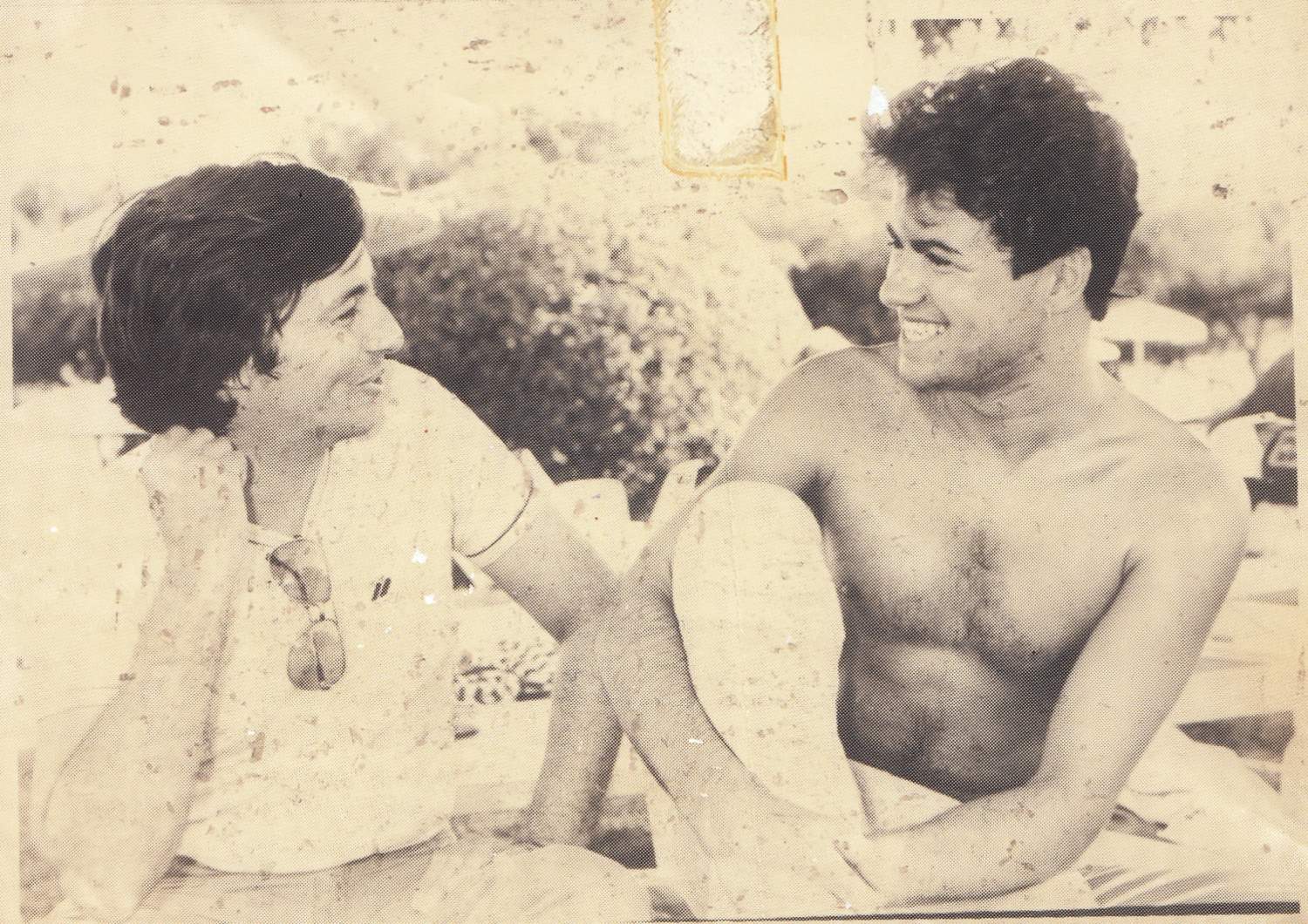
His journalistic archive includes an interview with George Michael in June 1984. Vickers tracked down the singer at a Limassol hotel, when he was having his first hits with Wham.
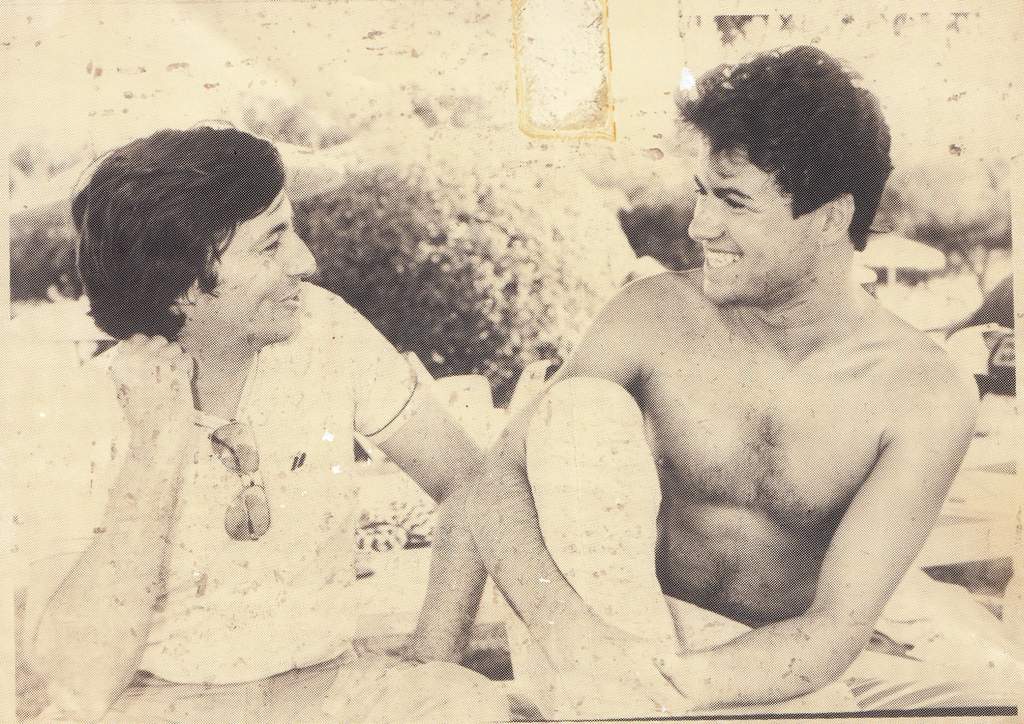
He went to the hotel and asked the receptionist whether a George Michael was staying there. “She looked at me and said no, we don’t have anyone by that name. I said, what about a Giorgos Michaelides? Again, no. I had an English music paper with Wham on the cover. I showed it to her and she said, ‘If you mean Mr Giorgos Kyriakou Panayiotou, he’s at the pool.’”
During their conversation, George Michael surprised Vickers with the way he talked about music, and even told him about a ballad that had not yet been released: ‘Careless Whisper’.
Cat Stevens, now Yusuf, made a similar impression on him. They met twice, first in 1976 and later at his flat in Limassol, after the star had converted to Islam and stepped away from music.
Records and Eurovision
Vickers has been involved in Eurovision 10 times in different roles, including backing vocals, TV commentary, as a journalist and as a songwriter. His name is also linked to the only time Cyprus did not send a song to the contest.
In 1988, CyBC chose a song of his, but an objection by the writer of another song, on the grounds that Vickers did not yet have Cypriot citizenship, led to Cyprus’s entry being cancelled that year.
In 1990 in Zagreb, by then a Cypriot citizen, he took part as a songwriter with ‘Milas Poli’, sung by Haris Anastasiou, which finished 14th. Hidden in the melody of the chorus was CyBC’s signature jingle.
Alongside radio and print, Vickers recorded his own music. It began in 1975 with the nine-minute song ‘It Was an Island’, about the tragedy of Cyprus, which was used in Andreas Konstantinidis’s documentary of the same name. His first solo album, ‘At Last’, followed in 1979, then ‘Take Two’ with Linda San Martino in 1985 and ‘Transition’ in 1987. After a 1998 release of cover versions, he returned in 2024 with ‘Back to Yesterday’, an album of 20 previously unreleased songs he wrote as a student between 1968 and 1972.
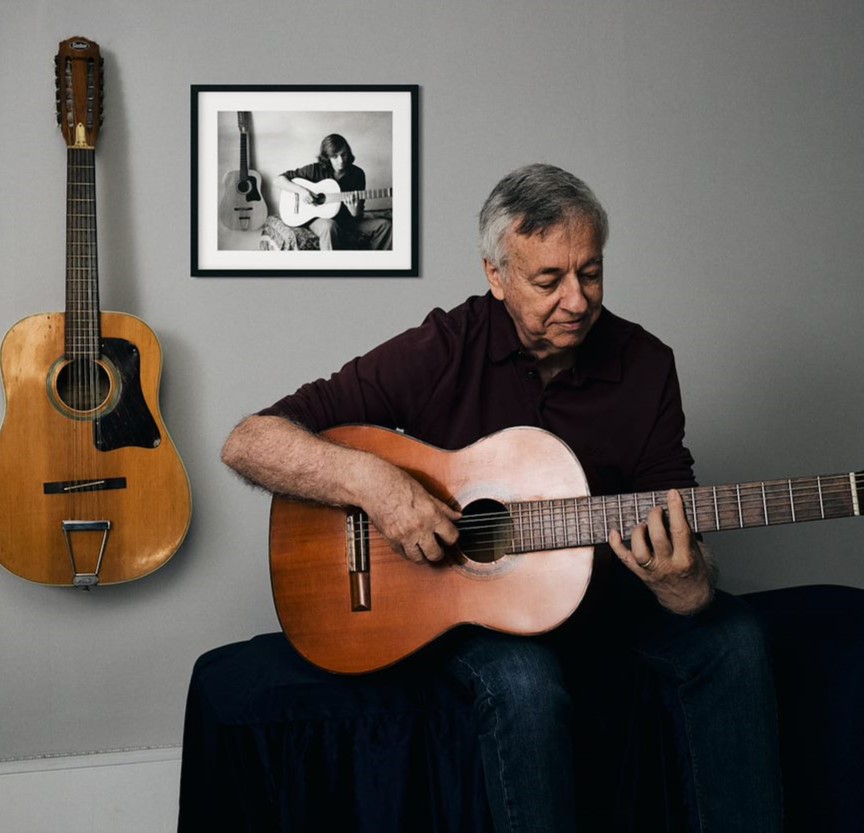
He was part of the founding team of Radio Proto, the first independent station in Cyprus, where he organised the record library and presented his own programme of old songs for three years. That turned out to be his last involvement with radio.
In 1998 he moved to television at Sigma, co-presenting the live English-language current affairs programme ‘Weekly Review’ with Vivian Ladommatou. Guests included President Vassiliou.

He has also acted. In 1976, Evis Gavrielides cast him as the young English soldier in Brendan Behan’s ‘The Hostage’. He has translated more than 30 Greek books into English.
Today
Now 77, Vickers lives in Larnaca with Soula, his second wife of 32 years. He has two daughters and five grandchildren, and still writes and translates books.
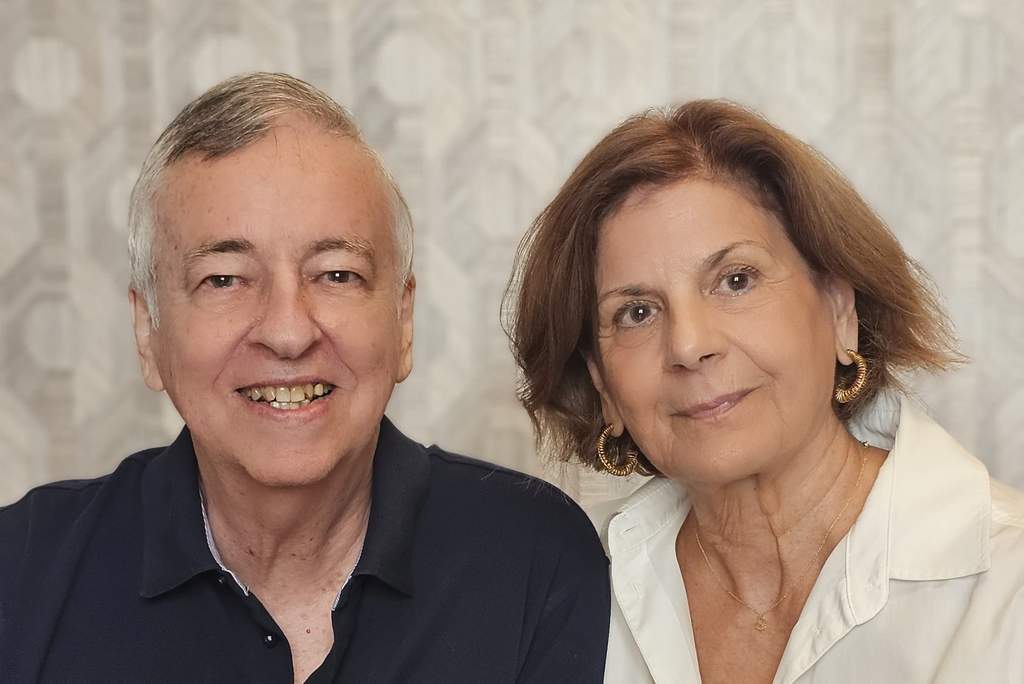
But what people remember most fondly, all these years on, is his radio show. Almost 40 years later, ‘Request Time’ lives on in Cypriots’ memories as the soundtrack of the most innocent yet difficult years of their youth.
“Back then, Vicky and I were just doing what we loved. We knew people were listening, but we didn’t imagine it would take root in them with so much love. Today two generations remember us as if it were yesterday and still recognise us by my voice or Vicky’s laugh. I didn’t realise then that our work would mean so much to so many people,” he said.