


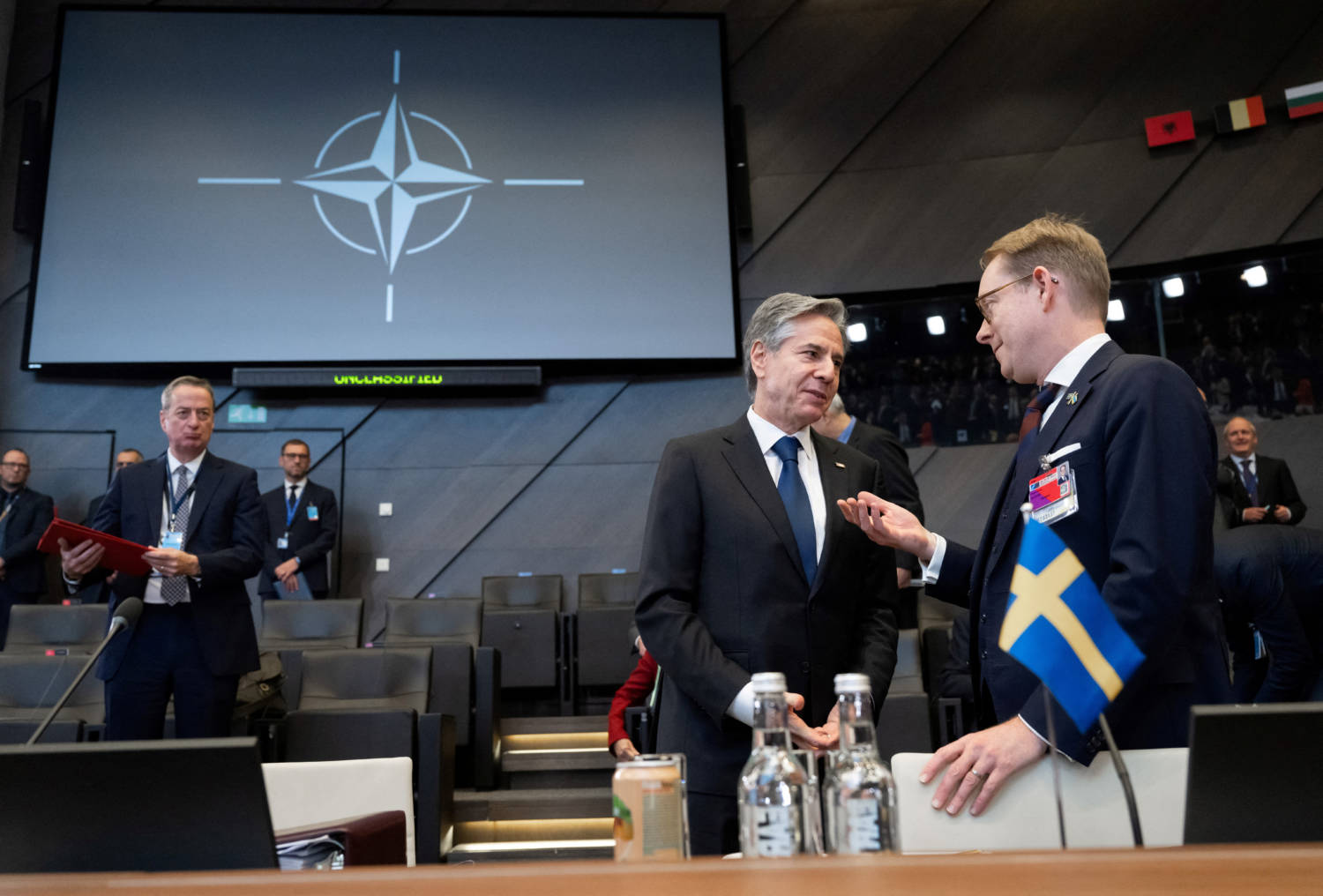
Not long ago, Cypriots were taking to the streets in angry protests against NATO and the US. Today, the atmosphere is completely different. The Atlantic Alliance is no longer seen as the embodiment of “evil”; rather, Cyprus now appears to be seeking a closer relationship with it.
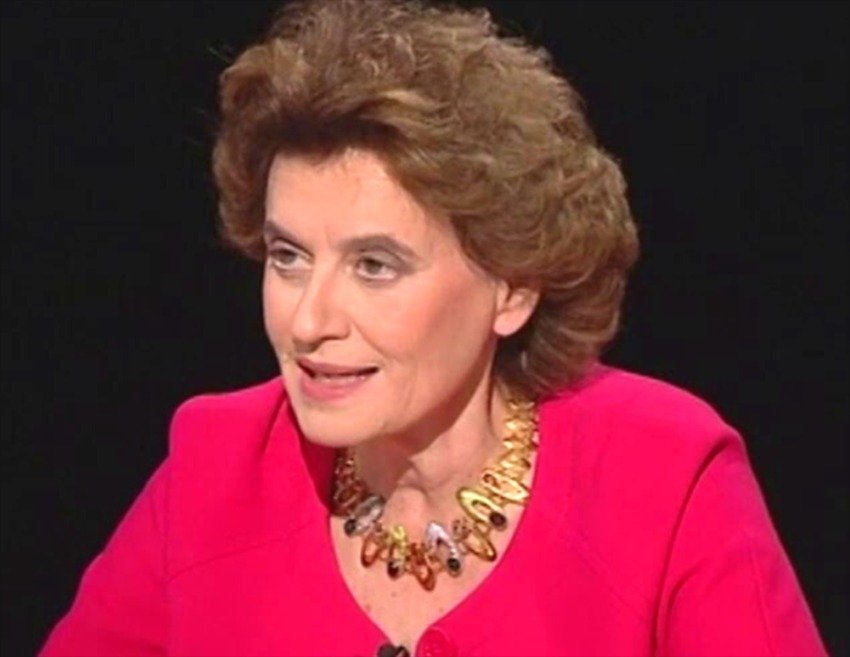
Speaking to Phileleftheros, Ino Afentouli, Executive Director of the Institute of International Relations at Panteion University, explained that connecting Nicosia with NATO won’t be straightforward. She noted that Nicosia’s aspirations for partnership and association will face resistance from Turkey, which considers the Alliance its own domain and has no intention of letting others gain influence within it. “If Turkey doesn’t consent, the matter cannot proceed,” she emphasised.
This is why Cyprus must first do the necessary groundwork before taking any steps, creating conditions that will convince other member states of the benefits it offers. This means demonstrating what NATO itself would gain and reaching an understanding with other member states.
Most importantly, according to Afentouli, Turkey’s resistance must be overcome. This could be achieved if Cyprus’s relationship with NATO is linked to efforts to resolve the Cyprus problem and if Ankara can be convinced that in the post-solution era, the Republic of Cyprus won’t pose a threat. Furthermore, it could play a role in resolving the Cyprus problem itself. “For example, the Alliance or some of its member countries, in conjunction with the EU, could contribute to a multinational force to ensure Turkish Cypriot security, which is an important issue for Ankara,” she noted, emphasising that it’s a complex issue requiring Cyprus to work methodically, leveraging the benefits offered by its geostrategic position.
The topic of NATO membership or partnership is on the Cypriot public agenda. Is this a discussion that’s happening 60-70 years too late
It’s certainly happening several decades late. Historically speaking, if Cyprus had joined NATO in the 1960s when there was some discussion about it, the Turkish invasion and its subsequent hardships might not have happened. The discussion in both Cyprus and Greece is often about why NATO didn’t do anything in 1974. This happened because NATO only intervenes when there’s an issue involving a member country.
Can Cyprus move closer to the North Atlantic Alliance or even become a member?
My personal view is that Cyprus should pursue this, although it may seem difficult due to the unanimity required in NATO for decision-making. For a country to become a partner, we must consider Turkey’s reaction. At this stage, I believe Cyprus wants to become an Alliance partner rather than a full member.
What exactly does it mean for a country to be a NATO partner?
The Alliance has a series of countries it cooperates with through the Partnership for Peace and other cooperation frameworks. Malta, for example, is a member of these cooperation frameworks. Cyprus hasn’t pursued anything like this until now. Partnership serves as a kind of anteroom if a country eventually wants to proceed with full membership. However, I want to emphasise this: becoming a partner doesn’t guarantee membership, because like a partnership, it requires unanimity from existing member countries. In other words, Turkey has a say and a veto. I believe we need to separate what Turkey will do from what Cyprus will do with other member countries, such as the United States. This discussion starts from the increasing military cooperation with the US, as seen in President Christodoulides’ recent visit and meeting with Joe Biden. Therefore, if military cooperation with the US progresses and is upgraded, Cyprus could seek support from the most powerful country and other member states to become an Alliance partner.
Are there specific steps Cyprus needs to take to achieve this?
The prescribed procedure must be followed, meaning consultation with the Atlantic Alliance, and then it will be very important to lobby all member countries and explain why Cyprus has strategic importance for NATO, due to its geographical position and everything happening in the Middle East and Africa – regions that we must note have a major impact on European security. NATO is also interested in the Middle East and North Africa, and Cyprus could therefore play a role in this security architecture.
-What other benefits could Cyprus gain from moving closer to NATO?
I see it as beneficial if we eventually reach this partnership relationship, for Cyprus to participate in a category of countries that have a direct connection with the Atlantic Alliance and, by extension, in how it organises European security. I say this taking into account NATO’s very close cooperation with the EU. If Cyprus were a partner, as an EU member state it could participate in all collaborative frameworks between the two sides. However, let’s address the difficult issues and look at what Turkey means in all this reasoning. Turkey cannot be excluded from this planning because it has a role within NATO and, as a full member, influences decisions that are made.
Does this create new dynamics for the Cyprus problem?
Furthermore, I believe the discussion about Cyprus and NATO could be combined with the prospect of resolving the Cyprus problem. Beyond the role Turkey wishes to have in the post-solution era, one of the serious issues it puts on the negotiating table is the security of Turkish Cypriots. This is why Ankara wants to always maintain a military force on the island, which is unacceptable to have foreign military forces in a sovereign country. However, if the discussion about Cyprus’s relationship with NATO progressed, the Alliance or some of its member countries, in conjunction with the EU, could provide a transitional multinational force to ensure security for the day after. It’s an ambitious proposal, and President Christodoulides is right to put it on the table, but it will take an enormous diplomatic effort to achieve something like this.
However, there were reactions from Ankara when Nicosia’s intentions became known.
Turkey reacted for two reasons. The first is because it considers NATO its privileged ground for developing its policy and wouldn’t want to face Cyprus and Greece there, as happens in the EU. It doesn’t want the same scenario to be repeated in the Alliance. The second reason is that Turkey feels uneasy about the US position. This isn’t new; it’s a development we’ve observed over the last decade. The Turks don’t feel secure with Washington, which has cut them off from military programmes, strengthened Greece militarily, is now seeking to do something similar with Cyprus, and they’re now seriously concerned about their own relationship with the US.
In the event that Nicosia’s partnership with NATO does proceed and full membership becomes the goal, could Ankara’s objections be overcome as happened with Sweden?
I think this is a very theoretical scenario because Cyprus’s partnership with NATO cannot proceed without securing Turkish consent. That’s why such a prospect can only be considered realistic within the framework of resolving the Cyprus problem. If Turkey doesn’t consent to Cyprus’s membership, the issue cannot move forward. If we assume Nicosia does submit an application, it would be discussed at the level of permanent representatives in the NATO council. Turkey has its position there and would likely exercise its veto right if there hasn’t been prior agreement. This is why we need to see the bigger picture. It’s not a Cypriot initiative independent of how relations with Turkey develop. It must be part of this package, and Ankara must be convinced that it secures its presence on the island in some way and that the Republic of Cyprus won’t turn against it in any solution. It’s a very difficult equation, clearly more difficult than EU membership, where Turkey wasn’t present to raise objections.
One of the Alliance’s basic principles is the famous Article 5 on solidarity in case of attack. If Cyprus becomes a NATO partner, it won’t be able to invoke this, correct?
No, partnership doesn’t offer partners Article 5, as we saw in Ukraine’s case, which is actually a privileged partner. Ukraine has a connection and commitment from NATO that it will become a member, but as we saw, this didn’t prevent Russia from intervening militarily, without Article 5 being activated.
Do you think NATO will continue to play a role in the international political scene, considering we’re entering the Trump 2.0 era in a few weeks?
That’s a logical question which nobody knows the answer to. I believe the US has no interest in abandoning the Alliance, as it serves their interests, and they won’t make some heroic exit, if I may use that expression. However, they will put a knife to their allies’ throats to contribute more to the Alliance’s budget. This will create intense bargaining until they reach an agreement, and Donald Trump might use every means to achieve his goal. Therefore, discussions might be very tough, and he might even use the threat of withdrawal.
So perhaps Cyprus should wait to see how the situation develops before taking its next steps?
Moving from declaring intentions to action will require time anyway. For a serious discussion about Cyprus to take place, it needs to secure the support of some major countries that play a role in NATO, for example Britain, France, Italy. It’s not enough for the Cypriot leadership to desire it; they must organise their negotiating campaign to achieve it. They must convince other member states of the benefits they can offer, such as being a Mediterranean country with a strategic position. This consensus must be secured for the discussion to move forward.
With all these expected difficulties, has the time perhaps come for the EU to make corresponding moves to avoid relying on others for its defence and security?
This is absolutely necessary. The issue with European defence and security, when we’re talking about military means, is that NATO member countries offer these to the Alliance. NATO is 90% a European organisation. These countries within NATO have found the right balance because it’s an intergovernmental organisation. Each member does what it wants, what it believes is best for its interests. In contrast, in the EU, member states surrender part of their sovereignty. And because defence is at the heart of sovereignty, member states are very hesitant to move in this direction. However, if pressured by the US, they will. The alternative scenario, which is realistic, is to create a strong European pillar within NATO as a first phase, so that European defence can develop in parallel. This way, Europe won’t find itself in a security vacuum. A European NATO within NATO, so to speak. And if at some point it will be in a position to become independent if desired, assuming this is something the US also wants.
Are the different threats faced by each state a reason why common defence isn’t progressing?
There’s a divergence of views because each country considers it has certain threats, while others don’t identify with these. We see Turkey differently from other countries, the Baltic countries see Russia differently from us, for example.
Read more:

