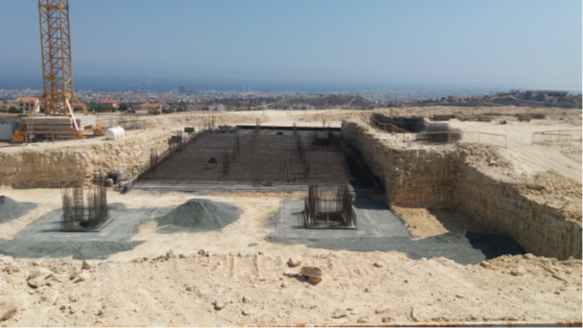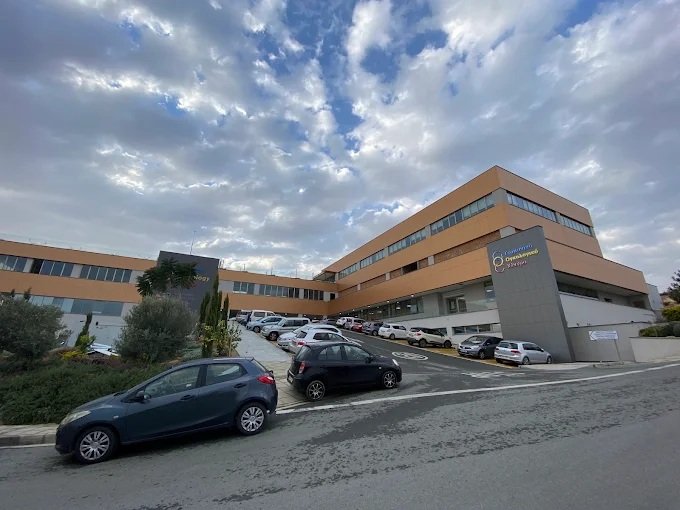
The Department of Environment has ruled that a 2.4-million-euro expansion of the German Oncology Center (GOC) in the municipality of Amathus in Limassol does not need a full environmental impact assessment, clearing the way for a planning permit.
The project adds 2,560 square metres of new buildings, made up of 1,700 square metres of building space and an 850 square metre basement, as well as 1,280 square metres of new roads and parking. All the new buildings will go up on land currently used as car parks, avoiding further disturbance to untouched ground.
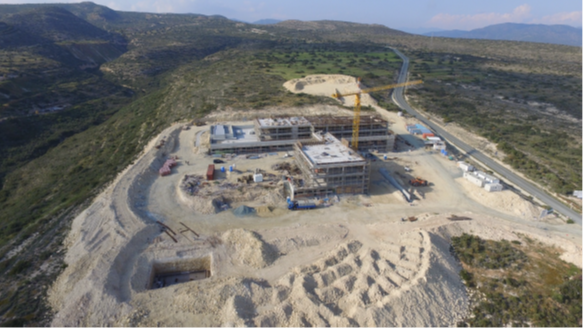
The decision also covers the centre’s wastewater treatment plant, which uses membrane bioreactor (MBR) technology, has a capacity of 40 cubic metres a day and has operated since 2018. As no environmental study was carried out before it was built, the environmental authority assessed it after the fact, drawing on European Court case law and a 2022 opinion by the Attorney General.
The decision says the plant was examined as an exception because it is directly linked to public health and ensures the safe treatment of sewage and radioactive liquid waste. Waste from radiotherapy is held in special tanks, where it is retained and rendered inert, before passing to the treatment plant. The finding effectively corrects the earlier omission and sets rules for how the plant must operate.
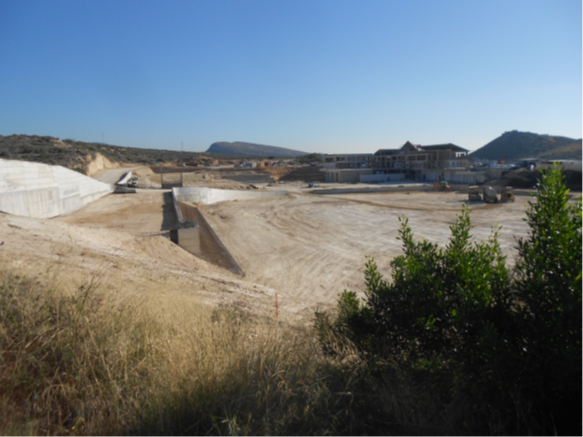
The basement will house the kitchen and storage facilities, examination rooms for the dermatology department and magnetic resonance imaging (MRI) rooms, which will be moved there. The first floor of the new building will have seven flats, six with one bedroom and one with two, for specialist staff from abroad and patients’ relatives. A nursery for staff will take 24 babies and 32 toddlers.
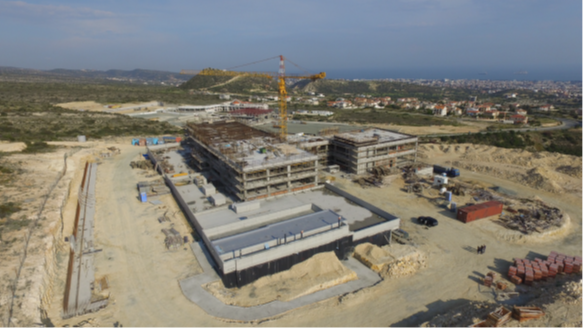
Conditions have been imposed to protect the environment and neighbouring properties, such as a private school 100 metres away. During construction, a noise barrier at least four metres high must be put up around the site, working hours must be observed and the site must be regularly sprayed with water.
Sewage may not be discharged onto the ground or into the storm drain network, and an emergency tank must be installed. Treated water is used only to irrigate the centre’s green areas.
The centre must also install energy-saving systems and double glazing and make use of its existing 1,300 kWp photovoltaic system. To ease traffic, a roundabout will be built and the road widened, in cooperation with the Public Works Department.