


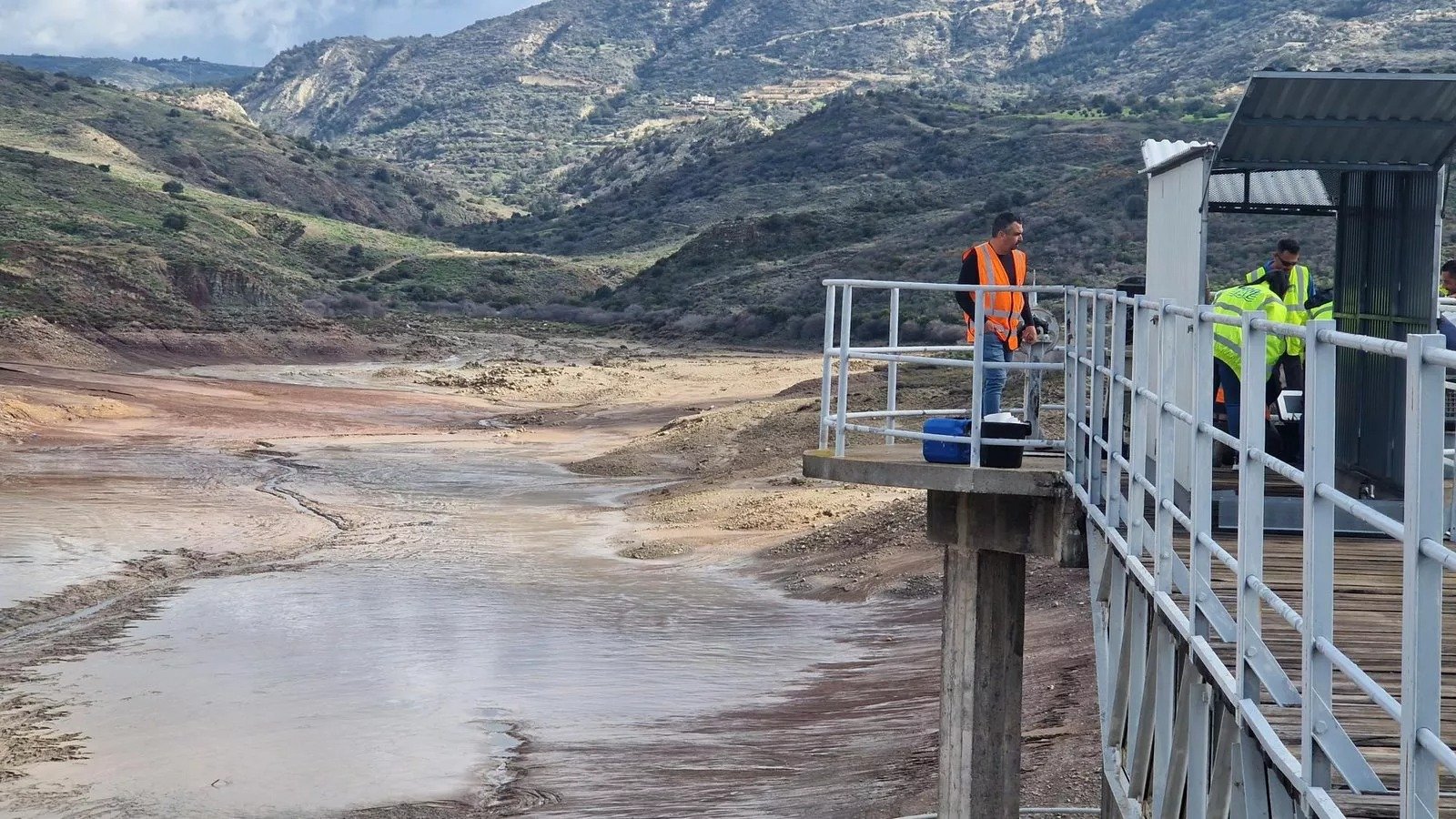
The fruit bats that had a colony in the Mavrokolymbos dam tunnel are known as a highly adaptable species, and it is considered certain that they abandoned the tunnel when the problem appeared and their habitat was drained, avoiding entrapment and death.
Scientists and officials from the Environment Department who monitor and record the behaviour and habits of the species have made reassuring assessments.
The fruit bats that had a colony in the dam tunnel are known as a highly adaptable species, they emphasised, and it is considered certain that they will realise in their own way that the danger has passed and that the dam can once again become their safe place of residence.
Colony of 800 fruit bats recorded at dam since 2024
The population of the protected fruit bat species (Rousettus aegyptiacus) at Mavrokolymbos dam had been recorded since 2024 and numbered approximately 800 individuals.
According to specialists, it is a particularly adaptable species that uses alternative shelters and moves regularly, avoiding dangerous conditions.
Detection devices confirmed no bats were trapped when damage occurred
Special detection devices (bat detectors) confirmed that there were no animals trapped in the tunnel when the damage occurred, showing that the bats abandoned the area before it flooded with water and mud.
Now, with the completion of the damage repair and the cleaning of the tunnel, the space is expected to be suitable for recolonisation by the species very soon.

