



The right to life is non-negotiable. Yet the right to death – euthanasia – remains a source of fear and division. The parliamentary debate several weeks ago brought the issue back into focus, but managing this complex matter is neither simple nor straightforward. Taking positions simply for or against fails to address the significant ethical dilemmas and prerequisites involved.
Only patients themselves can make decisions about euthanasia, according to Effy Vayena, Professor of Bioethics at the Swiss Federal Institute of Technology in Zurich. In an interview with Phileleftheros, she stressed that patients must have full knowledge of their medical condition and prognosis to make informed decisions about their care.
“Patients must make this decision clearly and independently, without any pressure whatsoever,” Vayena explained. “They require complete information about their health status and treatment options. They must also have access to palliative care and understand their prognosis. Ultimately, they will decide how to proceed”.
The professor emphasised the critical need for safeguards that prioritise patient welfare above all else. “This requires external and independent assessment of the patient’s decision-making capacity, the reasoning behind their choice, and the circumstances that led to it. Such evaluations must be conducted by specialists and thoroughly documented,” she said.
Palliative care represents a fundamental option that society must provide to all patients. The false dichotomy of either palliative care or euthanasia oversimplifies the issue. “We must ensure comprehensive palliative care is available regardless of euthanasia legislation,” Vayena noted. “We should do everything possible to offer patients pain relief and comfort at all stages of illness, regardless of prognosis”.
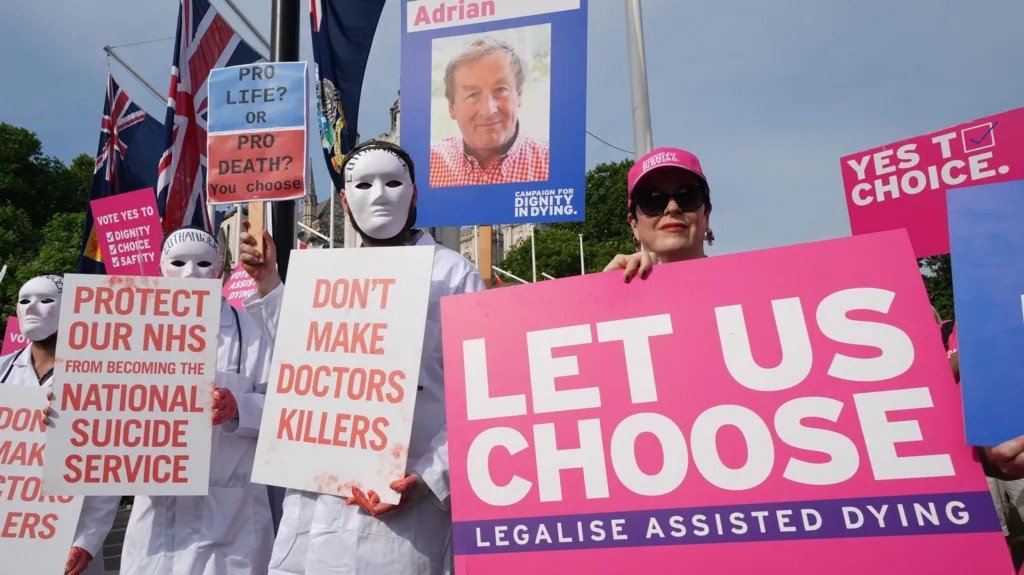
No unified approach currently exists regarding euthanasia and assisted suicide across European Union member states. Active euthanasia proves far more difficult to accept and is rarely permitted, whilst passive euthanasia enjoys broader acceptance among member countries.
Switzerland became the first country to legalise assisted suicide, followed by the Netherlands, Belgium and Luxembourg. Spain and Portugal subsequently passed related legislation after extensive parliamentary debate. Austria, Scandinavian countries, Germany, France and Ireland maintain laws under more specific and stringent conditions.
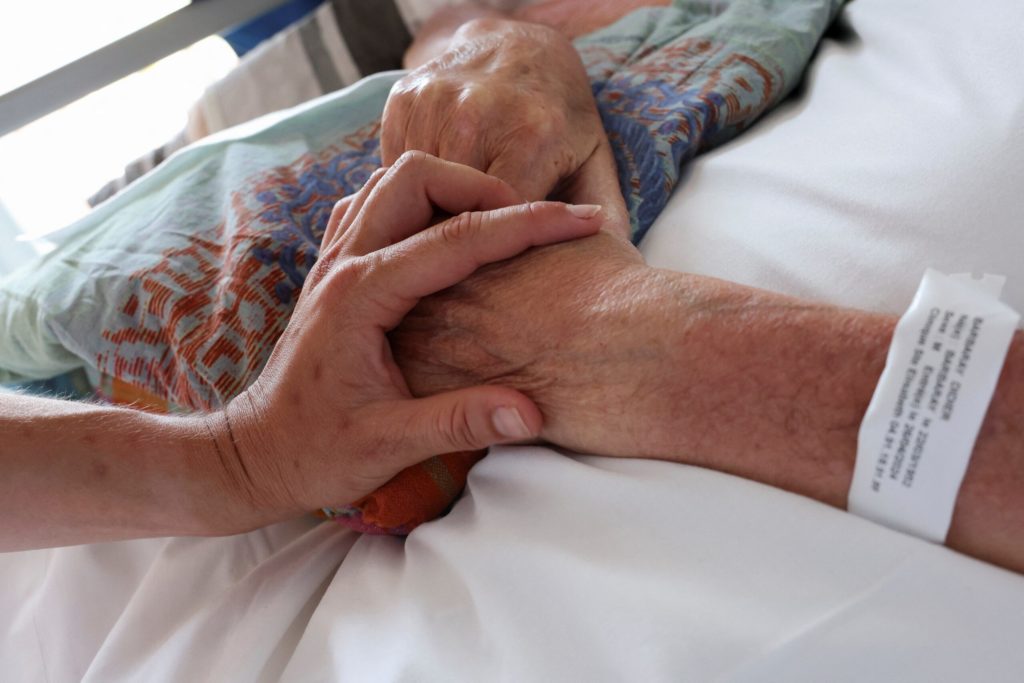
Euthanasia is a decision with no return, that can only be taken once. Into what categories is it divided? Are there any different forms of it?
There are different types of euthanasia. Here are some definitions:
Direct, active euthanasia (The doctor or a third party deliberately administers medication to the patient, which results directly in their death).
Indirect, active euthanasia (use of means to relieve suffering (e.g. morphine) which may have the secondary effect of shortening life). Passive euthanasia (discontinuation of life-prolonging measures, e.g. a life-support machine is switched off).
Physician-assisted suicide involves enabling the patient to obtain the lethal substance, which the person wishing to commit suicide then takes themselves without any external assistance.
This is the system we have in Switzerland (with organisations such as EXIT and DIGNITAS).
The right to life is non-negotiable. However, people don’t live forever. Why do we hesitate to talk about death and the right to die?
I think it is human not to want to talk about death, although it is inevitable for all of us. Death is the end of life’s journey; we associate it with loss and pain and the unknown of the afterlife.
All religions have dealt with death and have given people various scenarios of what happens next. The reason is that death has always been in people’s minds; it is a fear, and it is something we humans have always tried to avoid and delay.
What are the arguments in favour of euthanasia, and what are the arguments against it?
I will focus on secular arguments, as there are, of course, religious arguments mainly against euthanasia. The key argument for euthanasia is that humans should be able to control the end of their lives, especially in the context of severe suffering.
Essentially, it is about a person’s right to live with dignity and die with dignity, as many may consider physical or mental deterioration caused by disease as a loss of their dignity.
Arguments against euthanasia include concerns about coercion for patients to end their lives (e.g., from family members who are burdened by care); hasty decisions made at a difficult moment in one’s life about something as irreversible as death; and the tension that arises when a healthcare professional, whose main role is to treat and save lives, shifts towards ending lives. Broader concerns include the potential for general mistrust if people worry that physicians or healthcare settings may let them die, and even bigger concerns about whether euthanasia may erode the value of life. For example, the value of the life of someone who is severely disabled by disease should not be considered less than that of someone healthy.
Should we have the right to choose when to die? What should be the clear and defined criteria for when it may be allowed and when not?
In our liberal societies, the ideas of autonomy, self-determination, and control over our lives are well established and protected. Within this understanding, we can argue that having the option to decide how we die is acceptable.
What is critical, however, is that this occurs within a well-articulated legal framework with strict criteria to eliminate the possibility of abuse and coercion, and to maintain public trust in healthcare institutions and the medical profession.
At this point, as several countries have legalised euthanasia and physician-assisted dying, we have many examples and data that allow other countries to learn from and make decisions about what works best.
In your opinion, who should have the final say? The patient clearly stating their wish? Their family, when they see the patient suffering, and there is no hope for improvement? The doctors who understand their medical condition?
I think the decision should be of the patient. The patient should be the one to make this decision on their own.
Patients need the information about their condition, treatment options, palliative care options and prognosis. But they are the ones to decide how to proceed.
How can we ensure that the patient’s best interests are protected and that external or conflicting interests do not influence their well-being? Is there an effective way to prevent potential abuses?
Yes, there are ways to protect the patient by making sure that there are external and independent assessments of the capacity of the patient to make decisions, the reasoning for such a decision, and the circumstances that lead one to make such a decision.
Such evaluations should be done by experts and should be well documented.
What is your perspective on euthanasia in cases involving mental health issues? Do you believe there is a distinction when it comes to euthanasia for someone suffering from a mental illness compared to someone with a physical illness?
I think what complicates the issue is the ability of the person with a mental health issue to make such a decision.
To what extent does a mental health condition impair the capacity for decision-making?
This varies by condition and stage of condition, and we have seen that in different jurisdictions, mental health is treated differently in the case of the capacity to decide.
An argument often made is that we should prioritise ensuring the availability of palliative care for patients. Can comprehensive palliative care contribute to alleviating suffering for end-stage patients and serve as a viable alternative to euthanasia?
We should ensure the availability of comprehensive palliative care independently of euthanasia. I think we should make whatever is possible to offer patients options that alleviate their suffering at all stages of diseases and irrespective of their prognosis.
I don’t think we should present euthanasia as an “easy way” out and avoid investing in palliative care. These are not mutually exclusive options. They actually serve different purposes.
Palliative care should be integrated into health care systems, health care providers should be trained in palliative care, and patients should have a wide spectrum of options.
And as AI is getting more essential in our lives and societies, what could be the role of AI in classifying, analysing, and finally making the decision on euthanasia? Would it be easier to accept it if algorithms had the final say?
I assume you are asking whether patients will use an AI system to explore their options. As I mentioned earlier, the decision about euthanasia should be made by the patient.
I don’t believe it should be left to an AI system or other humans. If you are referring to patients who are incapacitated and unable to make a decision, ideally, we should have an advanced directive.
This directive would indicate the patient’s wishes, similar to how some patients have Do Not Resuscitate orders in certain jurisdictions. They might also have expressed other wishes, such as the withdrawal of life-sustaining care.
In cases where there is no advanced directive, these decisions are extremely difficult and are typically made by the family in consultation with the medical team.
This is such a sensitive and complex issue, depending on the unique circumstances of each patient, that I cannot imagine leaving it to an automated system.

