


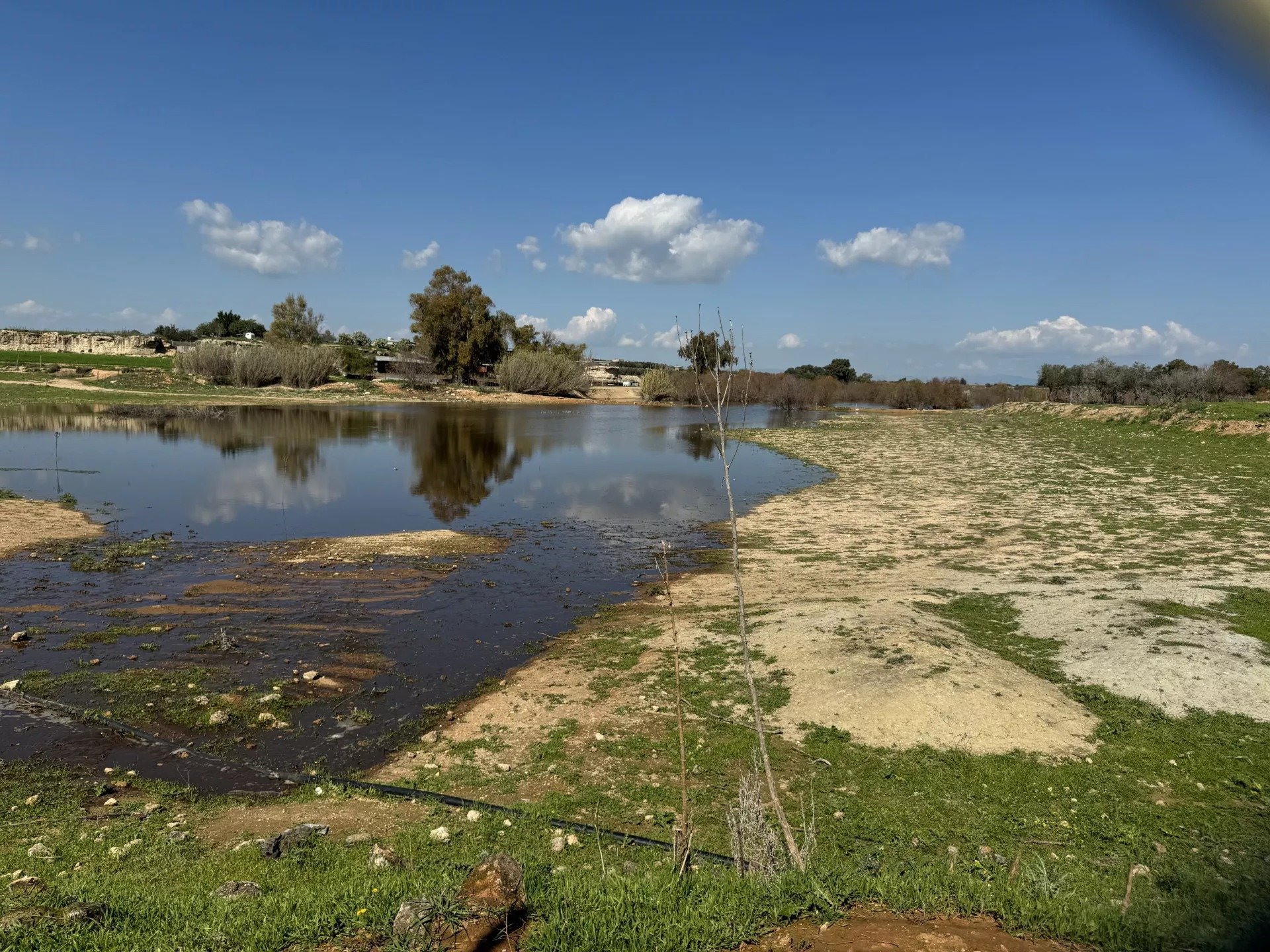
The government approved emergency measures on Wednesday to address a worsening water shortage affecting the country’s southwestern regions, as reservoir levels drop to critical levels amid ongoing drought conditions.
Cabinet ministers declared Limassol and Paphos under emergency status after receiving alarming projections from the Water Development Department (WDD) about potential supply deficits during peak summer and autumn periods.
Currently, water reserves in Cyprus’s main reservoirs stand at just 24.6% capacity, compared with 47.2% during the same period last year, according to official data.
“As a government, we are investing in solutions with measurable impact, supporting local infrastructure and strengthening our collective effort for sustainable and adequate water management during a period of increased pressure due to the climate crisis,” Agriculture Minister Maria Panayiotou said following the Cabinet meeting.
The emergency package includes direct contract awards to existing contractors in Paphos and Limassol’s Episkopi area to install additional mobile desalination plants with a combined capacity of up to 20,000 cubic metres daily.
Officials cited multiple factors contributing to the crisis, including the December fire that completely destroyed the permanent desalination plant at Kouklia and the subsequent loss of 1.4 million cubic metres of water from Mavrokolympos dam in January due to ventilation pipe failure.
The Cabinet also received its first briefing that problems could extend into 2026 if drought conditions persist through the coming winter, potentially creating socioeconomic impacts affecting public health and food security.
Water consumption across Cyprus increased significantly in 2024, rising by 6% in the Southern Conveyor network area and 8% in the Paphos region. Total drinking water consumption reached 96 million cubic metres in 2024, compared with 89.2 million in 2023.
The WDD attributed this increase to higher temperatures, increased tourism, extension of the tourism season, integration of new areas into water supply networks, and increased losses from recently incorporated networks.
To expedite necessary infrastructure, the Cabinet approved bypassing certain planning permission requirements for emergency projects and established a streamlined “express” procedure for small private desalination units up to 1,500 cubic metres daily capacity.
A €3 million grant scheme was also approved to encourage hotels to install private desalination facilities, reducing pressure on government water systems. Under the new procedures, licensing and funding approval for these smaller units will be completed within one week.
Additionally, the government allocated €8 million for emergency state funding to reduce water losses in supply networks managed by Local Government Organizations and communities, where leakage rates reportedly reach 35-40% due to aging infrastructure.
As the Minister said, the decisions announced Wednesday complement an existing National Investment Plan for Water Projects worth over €1.2 billion and a previously approved 28-action programme to combat water scarcity.
Based on preliminary WDD estimates, the total investment cost for producing 10,000 cubic metres of drinking water daily through additional desalination capacity is approximately €3 million annually.
Read more:

