


Cyprus has set new timelines to permanently resolve its long-running waste management problems. Contracts to upgrade the Pentakomo and Kosi waste facilities are expected to be awarded in the second half of 2027 and the first half of 2028 respectively, with upgrade works at both sites estimated to take 36 months.
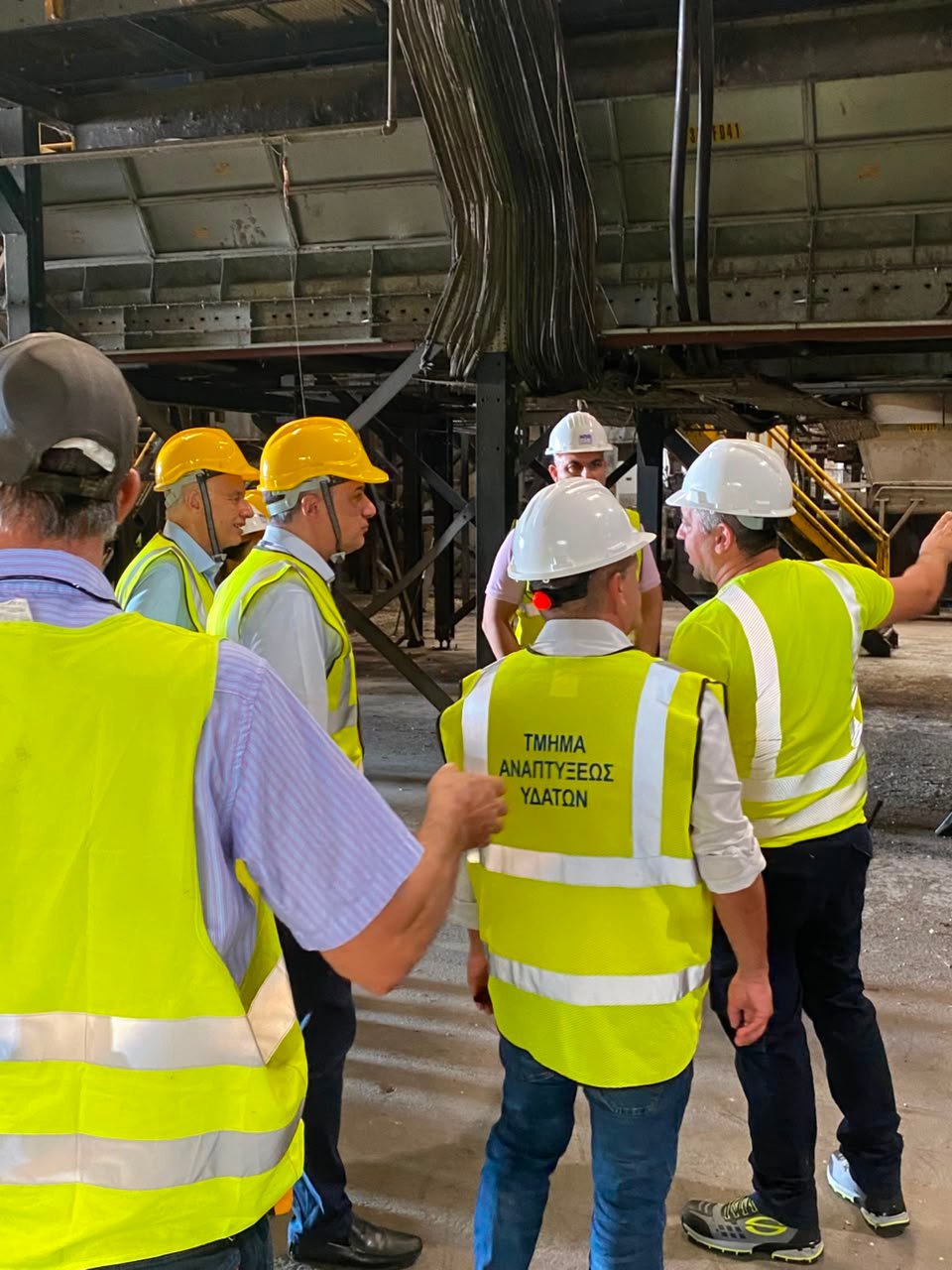
Agriculture Minister Christos Senekis visited both facilities yesterday, accompanied by Costas Konstantinou, general director of the Department of Environment, and other officials. The visits aimed to assess how the two facilities are operating, record long-standing challenges, and determine next steps for their transitional and final upgrades.
At Pentakomo, discussions centred on progress since December 2023, when the state took over management of the facility. Since then, the Water Development Department, with help from the Limassol Development Company, has signed more than 180 contracts covering urgent needs in equipment, health and safety, fire protection and environmental protection. Officials said the work has already brought a noticeable improvement in the facility’s operation, which neighbouring communities have also recognised. Transitional period projects addressing current operational needs were also discussed.
At Kosi, Senekis met with officials and the management of the Larnaca-Famagusta Exploitation Council. Discussions focused on projects planned to secure the capacity needed for the facility to handle waste volumes from the Nicosia, Larnaca and Famagusta districts without disruption.
During the visits, the minister made close monitoring of the timelines and coordination between all parties involved a priority. He said the ministry’s goal is to address the immediate needs of both facilities while continuing consistent planning for long-term waste management.
The final plan for a national waste management network will be set out in a study on the sustainability of the municipal solid waste management infrastructure network for 2029 to 2035, being prepared by the Department of Environment. Officials decided not to wait for the study’s completion, given the urgency of the problems. Speaking after the visits, Senekis stressed the importance of coordination between all bodies involved, including provincial exploitation councils, District Local Government Organisations (DLGO) and local authorities. He said the proposed transitional period projects were designed to meet immediate needs while also being incorporated into the final upgrade, so that investments retain long-term value without pre-empting the choices to come from the sustainability study.

