


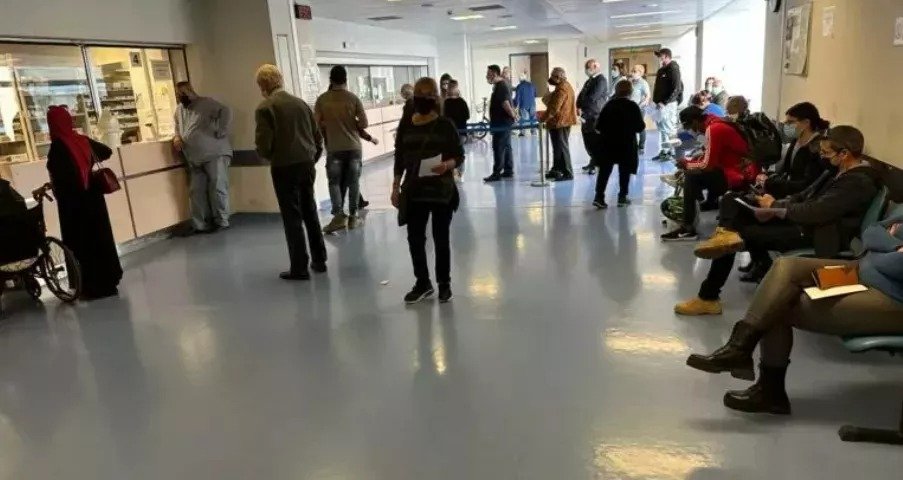
Public hospital pharmacies face monthly queues of patients or their relatives waiting to collect medicine, according to the Federation of Patient Associations of Cyprus (CyFPA/OSAK).
Even when pharmacies have the infrastructure to serve five citizens simultaneously, only two or three officers are on duty to serve them.
The situation is a “mockery of the patients,” said Marios Kouloumas, Honorary President of OSAK. Kouloumas stated that some patients, primarily the elderly, need “two or three buses” just to reach the hospital to collect their medicine.
“The situation, while decisions have been taken from time to time, does not improve because the correct procedures are not being promoted,” Kouloumas added.
Specialist drugs force monthly trips to hospitals
Kouloumas argued that with the implementation of the General Healthcare System (GHS), state pharmacies should have closed.
Citizens should be able to collect all their medicines, whether specialised treatments, simple prescription drugs, or non-prescription drugs (for those entitled), from their neighbourhood pharmacy.
“Instead, we chose to leave the medicines intended for chronically, seriously ill people in the state pharmacies, and instead of supporting them, we end up punishing them,” Kouloumas said.
Kouloumas noted that the continued supply of specialised or “expensive” drugs through state pharmacies obliges citizens to travel “back and forth from the neighbourhood pharmacy to the hospital” to secure the necessary medication.
“For five years now, chronic patients have been obliged every month to go to the state hospital for half the medicines they need and to their neighbourhood pharmacy for the rest,” Kouloumas said, concluding that if the GHS plan had been adhered to, “today’s queues would not exist.”
The situation worsened when non-prescription medicines were added to state pharmacies, which certain categories of chronic patients receive through the GHS by exception.
This results in patients enduring state pharmacy queues to collect supplements or vitamins they could “very easily” obtain from a private pharmacy of their choice, Kouloumas added.
Delays and bureaucracy lead to missed work and hassle
OSAK’s Patient Observatory also received relevant complaints in September from patients protesting that they are often needlessly inconvenienced due to “bureaucracy and formal procedures” for medication they have taken for years and will take “for life.”
One patient reported being forced to miss work to be served at a hospital pharmacy due to limited working hours and unpredictable waiting times.
The patient waited after taking leave from work but did not receive the medication because, they were informed, they had to wait six days for the prescription to open. The patient was told a new box was unnecessary as they had medicine for six more days.
“How can the timely renewal of treatment for a chronic patient who will not stop taking the same medicine be considered a waste?” the patient asked.
Another citizen complained that only two of five service windows were operating at a large public pharmacy, resulting in queues of elderly and chronic patients.
“It is unacceptable that we are served immediately in private pharmacies but have to endure hardship in public ones. All medicines should be available in private pharmacies so that we have a choice,” the citizen stated.
As OSAK, Kouloumas reminded, they expect the transfer of non-prescription medicines to private pharmacies.
They also request the provision of supplies to cover the needs of chronic patients for at least two months, not one, so people are not forced to endure the queues every month.
Kouloumas said the State Health Services Organisation (SHSO), which operates the state hospitals, must take measures while patients are still being served by state hospital pharmacies, as has been discussed and agreed upon many times.
“It is unacceptable that there are 100 people waiting in the queue, and there are only two or three officers. There is a problem,” he concluded.

