


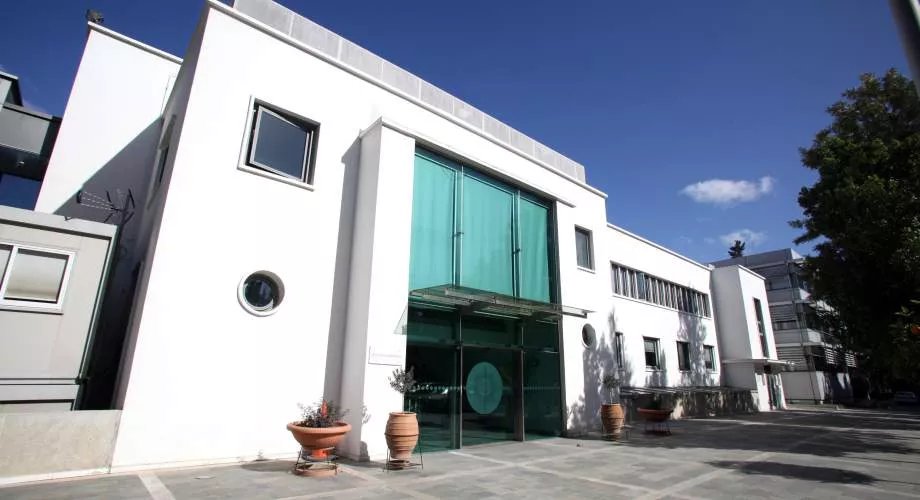
MPs from all parties on the House Finance Committee agreed on Friday that a new building for the House of Representatives was urgently needed. They said it was a matter of respect for democracy, and that the current building raised problems of functionality, safety and health every day.
The House’s deputy director general, Andreas Christodoulou, told the committee that 200,000 euros had been spent on repairs last year alone. The existing building had many problems, he said, and safety and health issues would arise in future. Parliament’s 2027 budget includes 30,000 euros to update the architectural plans for the House building.
Christodoulou said building a new House was a matter for a political decision. “It is not only a matter of image, but also of functionality,” he said, adding that the institution deserved a building that lived up to its standing.
AI drives surge in questions
Christodoulou also told the committee that the workload of parliament’s services had risen sharply, as MPs’ use of artificial intelligence had greatly increased the number of parliamentary questions and law proposals they submit. These need a lot of legislative drafting work from staff, he said, and ministries had complained that they could not keep up with the volume of questions.
Parliament does not assess MPs’ work by quantity, he said, adding that tools circulating for that purpose do not belong to the House. He was not trying to stop any MP from exercising their constitutional rights, but called for greater emphasis on quality rather than quantity.
MPs urge decision on new building
Chrysis Pantelides of DIKO, who chaired the committee, urged MPs to have the courage to move ahead unanimously. “We must overcome the phobic syndrome that we will be blamed,” he said, noting that parliaments were the most impressive buildings in every capital.
ALMA leader Odysseas Michaelides said the first plans for a new building were drawn up in 1995 and had been updated several times since, but there had been no willingness to proceed from the Transport Ministry. He called on all parties in the House to make a joint request for the project to go ahead, adding that the existing building could be used by a public service.
Referring to the new Archaeological Museum, which is shaped like a ship, Giannis Laouris of Direct Democracy Cyprus said he would like the House to be a spaceship, to show that MPs were thinking about the future. “It’s a pity to spend 150 million euros on a building based on 1995 plans,” he said.
DISY’s Demetris Demetriou said parliament needed the self-confidence to decide to go ahead with construction, as everyone could see the weaknesses of the current building. His party colleague Savia Orphanidou said it was a political decision that had to be taken, noting that Cyprus had an important role to play as a European state and in the Eastern Mediterranean, and that the House received important foreign leaders.
AKEL’s Aristos Damianou said the House should be more assertive towards the executive, pointing to the very small share of the state budget the House receives. Committee rooms could not fit their guests, he said, and the decision should be taken collectively and carried out over the coming years. He described parliament as the temple of democracy and spoke of “reverse populism”. ELAM’s Marios Pelekanos said the building would remain for future generations as a symbol of the institution, and asked what was being done about safety and health issues in the existing one.
The 2027 budget
Parliament’s spending for 2027 amounts to 36.9 million euros, or 0.31 per cent of the total state budget. The medium-term framework for 2028-2029 is 38.2 million euros a year.
Staff costs come to 18.5 million euros, including 6.9 million euros for MPs’ pay and allowances. Operating costs total 5.3 million euros and transfers, which include funding for political parties, 12.4 million euros. A further 630,000 euros is set aside for fixed assets and works under construction.
Christodoulou said parliament wanted to upgrade its image and become more open and outward-looking towards the public, as befits a modern legislature. Planned actions for 2027 include recording, classifying, digitising and documenting the House archive for 1960 to 1980, which will later be available online. Parliament is also pressing ahead with its digital transition, including using advanced AI tools to record minutes, and is planning the equipment needed to broadcast committee sessions.
Legal service and staff transparency
Michaelides also asked for the House to consider setting up its own legal service, which MPs and parties could turn to for legal advice. Parliament’s services already did this to some extent, he said, but it needed to be better organised.
Christodoulou replied that an earlier attempt to set up a legal service had been abandoned. He noted the separate issue of representing the House before the Supreme Constitutional Court when the executive refers laws to it.
Demetriou, Damianou and Michaelides also called for greater transparency on the House staff’s schemes of service.
(Information from Cyprus News Agency)

