


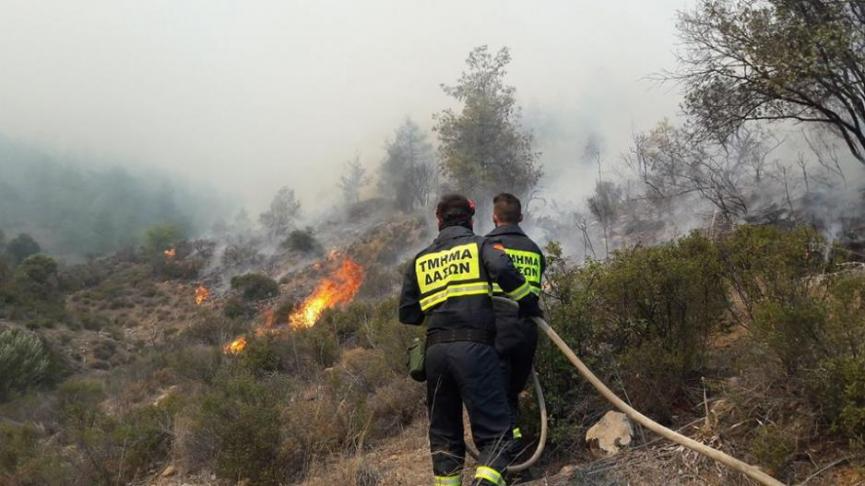
More than a quarter of forest fires in Cyprus were deliberately set in 2024, government data show.
Official figures from the Department of Forests at the Ministry of Agriculture, Rural Development and Environment revealed that 27% of forest fires were intentionally started, continuing a troubling trend from previous years.
Agricultural activities caused 15% of fires, while electrical wire short circuits accounted for 10%, the department said. Travellers were responsible for 8% of blazes, residential activities for 5%, and waste burning for 4%. Natural causes such as lightning strikes triggered 5% of forest fires.
Cyprus has deployed seven aircraft for firefighting operations since May 1, including four leased Air Tractor 802 planes, two similar aircraft from Jordan, and one Chinook helicopter from British Bases. Four additional helicopters are expected to be contracted by the end of May, which would increase the primary aerial fleet to 11 – the highest number ever operational in Cyprus.
Despite lacking its own firefighting aircraft, the authorities have managed to reduce the total affected area by 28.6% compared to the decade’s average, attributed to rapid response and improved firefighting methods.
In 81% of cases, the burned area per fire did not exceed one hectare, the report stated. Only three incidents surpassed 50 hectares: in Trimiklini-Lania (130 hectares), Droushia (130 hectares), and Vasa Kellakiou (89 hectares).
The average response time remained at 12 minutes, matching the decade’s average. Of the 168 fires in 2024, most (150) occurred within 2 kilometres of state forest boundaries, while only 18 broke out within state forest land. In total, 37 hectares of state forest land were affected.
The Department of Forests also participated in extinguishing 91 rural fires in cooperation with the Fire Service, with a total affected area of 462 hectares.
Prevention efforts have intensified with new practices, including the first controlled burning operation implemented in 2024 in collaboration with CERIDES at the European University of Cyprus and the Pau Costa Foundation. The method, governed by strict meteorological, environmental and organisational protocols, aims to prevent fires and preserve biodiversity in abandoned agricultural areas.
Additionally, 17 communities and municipalities received 100% subsidies for the procurement of wood chippers to enhance local preparedness. A pilot application of controlled grazing will begin in 2025 in Pyrgos Tyllirias to reduce combustible material, with plans to expand to two more areas in 2026.
The Ministry of Agriculture reported 2024 as a year of reduced burned area and improved response, but highlighted the high frequency of deliberate fires as a major problem requiring immediate action through prevention, surveillance and stricter penalties.
Read more:

