


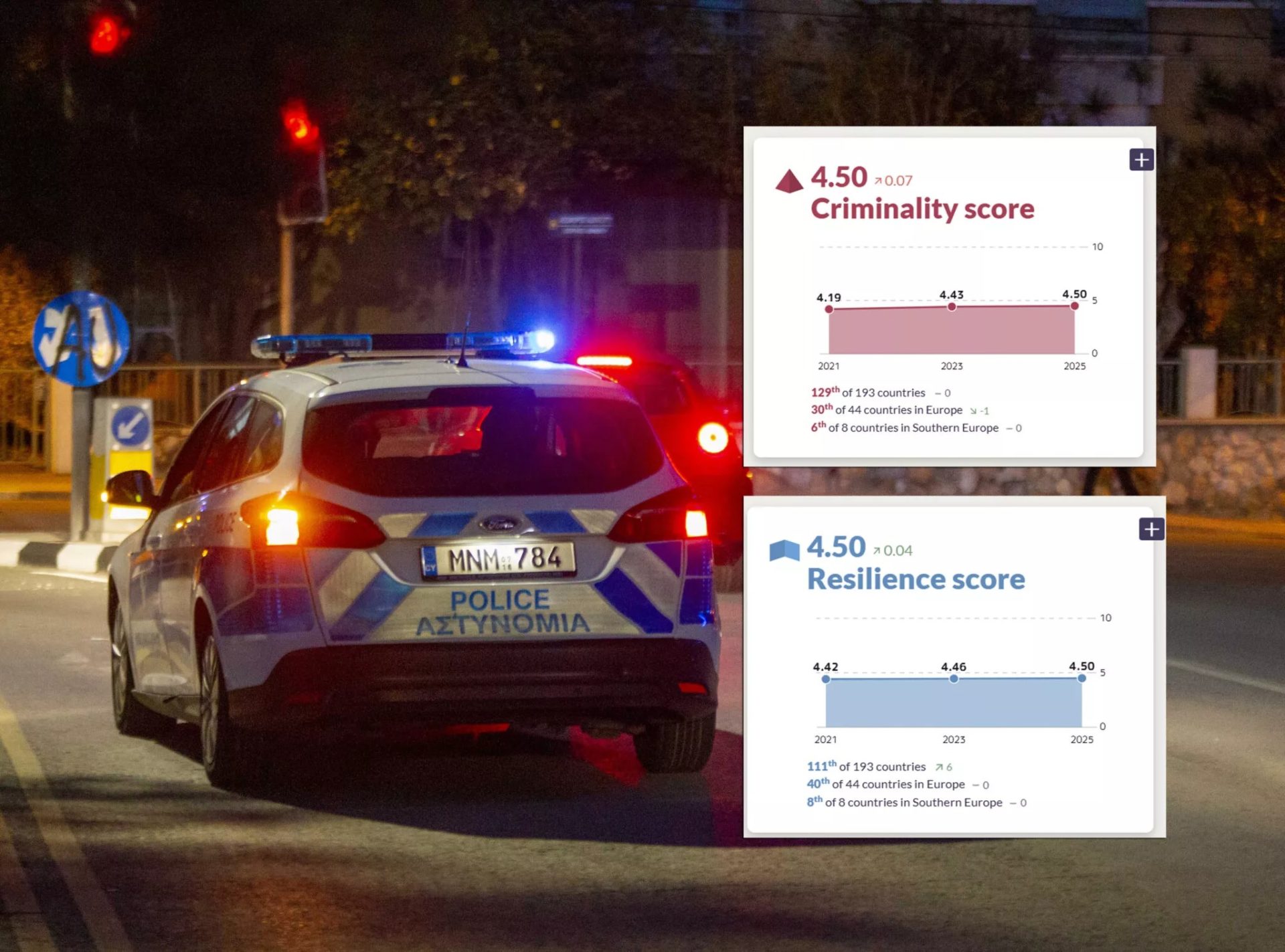
International experts analysing organised crime in Cyprus have raised concerns about individuals serving the Cypriot state who act in ways that serve criminal purposes, according to a major global crime mapping programme.
The report on crime in Cyprus includes specific references to high-profile murders, indicating turf wars between criminal groups. But the findings extend beyond gang violence.
A dedicated section analyses the behaviour of individuals who contribute to criminality, with experts focusing on police force members and other state officials.
“The role of state-embedded organised crime actors has drawn increased scrutiny, particularly regarding corruption allegations within law enforcement and state institutions,” the report states.
“Reports have emerged implicating police officers in facilitating criminal activities, with accusations ranging from abuse of power to direct participation in organised crime”.
The report notes that broader concerns about institutional corruption intensified with the Cyprus Confidential scandal, which exposed weaknesses in state oversight mechanisms.
The parliamentary committee on Legal Affairs, Justice and Public Order highlighted systemic failures that facilitated illegal financial activities, reinforcing perceptions of deeply rooted corruption in state institutions, according to the analysis.
The assessment comes from 350 specialists at the Global Initiative Against Transnational Organised Crime, which produces a biennial global crime index.
The analysis draws on support and data from Interpol and the Institute for Security Studies. The data is analysed by a large team of experts as part of a programme running since 2020, funded by the European Union with additional financial support from Norway and the United States.
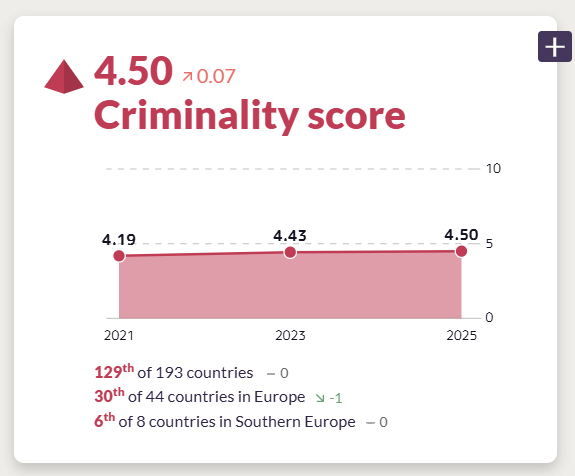
Cyprus scored 4.5 out of 10 in 2025 and remains at 129th place in the ranking of 193 assessed countries. A lower ranking indicates better conditions. Myanmar (8.08/10), Mexico (7.82/10) and Colombia (7.68/10) occupy the top three positions.
Cyprus records its highest scores in two crime categories. The first concerns “foreign actors” – criminal actions carried out not by locals but by foreigners in the Republic from Eastern Europe, Western Asia and Turkey. The second relates to irregular migration.
Cyprus ranks 34th globally in the “foreign actors” category and 38th in “illegal immigration” – placing it in the top 40 countries facing these two issues most acutely.
Categories where Cyprus ranks highest
Cyprus records its highest scores across nine specific crime categories:
Foreign actors involved in crime: 34th globally
Irregular migration: 38th
Private sector actors: 78th
Trade in counterfeit products: 80th
Illegal trade in excise products: 81st
Cocaine trade: 89th
Technology-dependent crimes: 95th
Mafia-style groups: 98th
Human trafficking and exploitation: 100th
The analysis makes clear that the occupied areas, directly connected to Turkey, have a particularly negative impact on crime in the Republic of Cyprus. References to the breakaway region as an incubator for illegal activities appear throughout the report.
Turkey scored very high on criminality in 2025 and ranks 10th globally.
Regarding the occupied areas, the report focuses on arms trafficking, illegal commercial goods, migration, illegal trade in excise goods such as tobacco products, fuel smuggling, drug trafficking and cocaine money laundering through casinos and gambling in the breakaway region.
Resilience improves slightly
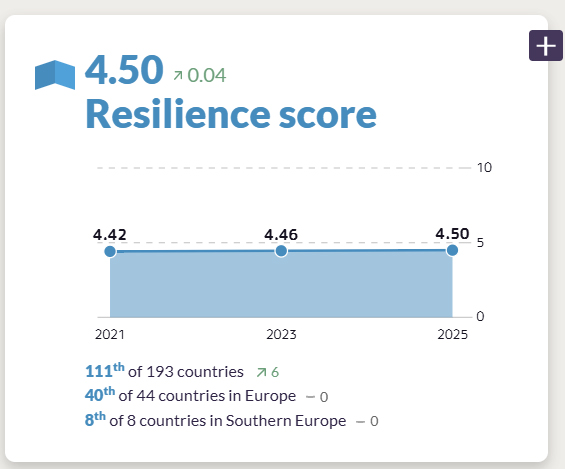
On resilience – measuring a country’s ability to counter and recover from organised crime consequences – news for Cyprus is slightly better compared to the previous two-year period. With a score of 4.5/10 (up from 4.46/10 in 2023), it has climbed six places in the ranking to 111th.
“Cyprus has demonstrated capacity in maintaining stability in leadership and governance. The government has stated a commitment to combating organised crime, with political leaders emphasising law enforcement measures against criminal networks,” the report states.
However, it adds: “Concerns remain regarding the extent of organised crime influence in the country. Transparency and accountability remain significant issues. Opinion polls show corruption is widely viewed as a serious problem, with a significant percentage of Cypriots expressing distrust towards state institutions”.

The report notes that establishing an Anti-Corruption Authority and legislative provisions for whistleblower protection represent efforts to address these problems.
But criticisms remain about the effectiveness of anti-corruption initiatives, particularly regarding enforcement and oversight mechanisms.
Cyprus has a strong legislative framework aligned with international commitments, including ratification of major treaties such as UNTOC and various bilateral agreements against organised crime, according to the analysis.
Despite these frameworks, challenges persist in law enforcement, particularly in extradition cases where delays have allowed suspects to evade prosecution.
On criminal justice and security, the report notes that “the lack of judges and increase in cases have further burdened the system, resulting in low efficiency”. For police, it states that “surveys show concerns about corruption in the force”.
On the economic and financial environment, the experts judge that Cyprus “has a long history as a place of financial secrecy, making it vulnerable to money laundering”.
Despite regulations against money laundering, international assessments have highlighted ongoing deficiencies, particularly in implementing Financial Action Task Force recommendations.
Despite improved enforcement measures, concerns remain about effectiveness in asset recovery and prosecuting financial crimes, according to the report.
Read more:

