


The Police have proceeded with a mapping of organised crime, observing that factions either locally or from abroad (mainly from Greece) are sending hired assassins to carry out contract killings.
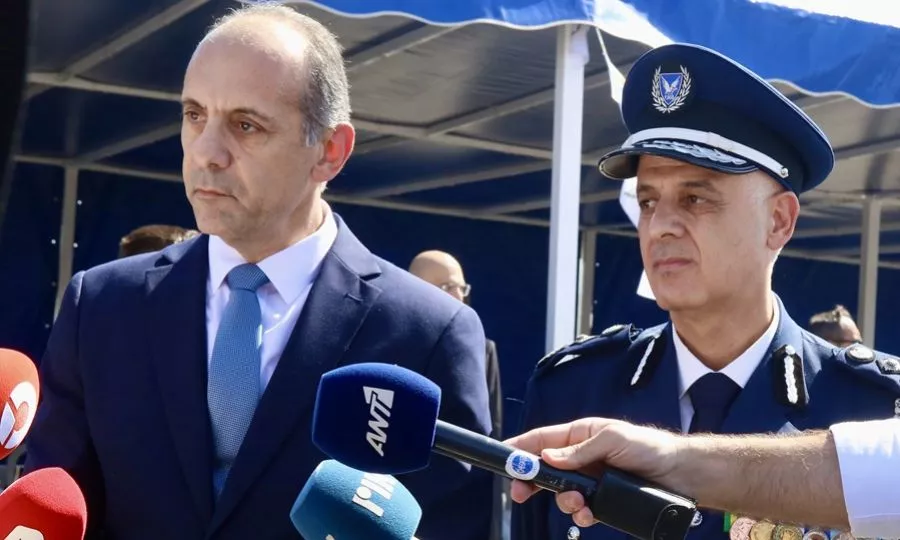
Relevant reports were made yesterday during the closed session of the House Legal Affairs Committee, which was urgently briefed on organised crime following the murder of Stavros Demosthenous in Limassol. The Minister of Justice and the Chief of Police provided data on the factions operating in Cyprus by area, though without naming individuals. A plan with a mapping of the factions active in various districts, as well as the sectors they operate in and the individuals belonging to organised crime, was shown to the MPs. According to information obtained by “Phileleftheros,” Minister Marios Hartsiotis informed the MPs that the Authorities know the individuals operating in organised crime, who leads them, and are aware that there are persons connected to two separate factions from different cities.
It was also mentioned that the Greek mafia is sending hitmen to Cyprus who execute contract killings and then return. This is why data on the matter was recently requested from the Greek Authorities. According to the same information we received, Limassol and Larnaca take the lead in crime, followed by Paphos, and then Nicosia and Famagusta. In Limassol and Larnaca, there are members of factions belonging to two different groups that either cooperate or, in some cases, act separately.
During the session, it was mentioned by the government that the issue of installing cameras on main roads in both cities and on motorways is being seriously studied solely for the purpose of crime suppression. Furthermore, the review of the bill is expected so that it can be promoted to the House of Representatives for the commencement of wiretapping telephone conversations. Providers are ready, the equipment has been purchased, and the legal framework is awaited.
MPs submitted several questions regarding the activities of the factions, and they also focused on the recent murder in Limassol, with Stavros Demosthenous as the victim. The Chief of Police, Themistos Arnaoutis, expressed his optimism to the MPs that this heinous crime will eventually be solved, with MPs expressing their satisfaction with the Police’s reaction and the measures being taken.
On the right track
“We hope for the clarification (solution) and for the culprits of this heinous crime to be brought to justice,” the Minister of Justice stated after the session. He added, “We are four days after the heinous crime, there is a lot of evidence, and yes, we hope that this specific crime will be solved.” Answering a question, the Minister said that “organised crime existed, exists, and will continue to exist. Organised crime is evolving regarding the methods followed from time to time.” As he said, organised crime is now imported, which, as he noted, is not unique to Cyprus. “Organised crime will never be completely eradicated. However, it is the state’s obligation to take all the measures at its disposal to limit the spread of organised crime within our country’s territory to the greatest possible extent. This is being done,” he said.
When asked how organised crime is evolving, he said that it was previously “purely Cypriot” and “of Cypriot interests,” noting that today many people come to Cyprus to commit offences on behalf of others, whether they are in Cyprus or abroad. Also, he said that in the past, the majority of crimes were committed at night, while now they are even happening during the day. He even gave the robbery at the Louvre and the time it happened as a relevant example. Mr. Hartsiotis added, however, that “we are not in uncharted waters and that a lot has been done recently.” Specifically regarding organised crime, he said that as much has been done as hadn’t been done for many decades. “Special units have been established in the Police that deal exclusively with organised crime; organised crime is being mapped,” he stated.
Asked to comment on the fact that many organised crime cases, including this specific one, are linked to convicts in the Central Prisons, he said that we have not yet reached final conclusions in this particular case. “Mobile phones and drugs are a timeless problem in prisons. It will not be definitively resolved,” he said. Referring to the claim that the solution to prison problems in the area of crime organisation will occur when mobile phones are permanently removed, he said that the prison building “is not airtight,” noting that inmates receive visits, take leave to see relatives, and communicate using conventional telephones within the prisons.
MPs and police representatives call for enhanced measures
On the part of the MPs, Nikos Georgiou of DISY referred to the need to give authorities the powerful weapon of telephone wiretapping, while on the part of AKEL, MP Andreas Pasiourtidis, said that they are greatly concerned that organised crime has become completely brazen, that there appears to be involvement from the prisons, and that society’s sense of insecurity is intensifying. He noted that it is a common belief that organised crime “is ahead of its persecutors,” stating that repression may be the largest part of the police work, “but prevention is also very important, especially for serious crimes.”
For his part, ELAM MP Sotiris Ioannou separated organised crimes from others related to immigration, for which ELAM submitted a bill in 2022, so that those arrested for criminal offences are immediately deported.
The President of the Police Corps Branch “ISOTITA,” Nikos Loizidis, asked about the issue, said that three things are needed to combat organised crime: The recording and use of audio documents as evidence, the creation of a maximum security prison in Menogeia, and the increase of frontline police officers from 800 today to 2,000.
Seizure of a hotel and €25 million in crypto
Mr. Hartsiotis provided data to the MPs on the fight against organised crime. As he mentioned, since April 2024, the Asset Investigation Branch was established to check individuals who have not given cause for involvement in predicate offences, but who nevertheless appear to live a lifestyle inconsistent with the income they declare to the state.
In the context of investigating cases, assets were seized, including a hotel, a house, cars worth €1.1 million, ancient relics, and a church icon. From 1/1/2024 up to 16/5/2025, financial amounts reaching €1.2 million have been frozen or confiscated. At the same time, real estate such as houses, apartments, hotels, and plots of land with a total value of €8.9 million, and jewellery and valuables with a total value of one million, have been frozen or confiscated.
Vehicles whose value reaches €1.1 million were also seized, as well as cryptocurrencies whose value reaches €25 million. Furthermore, 1.8 million sterling and another €890,000, which are amounts for investigated cases, were frozen in bank accounts abroad.
Read more:

