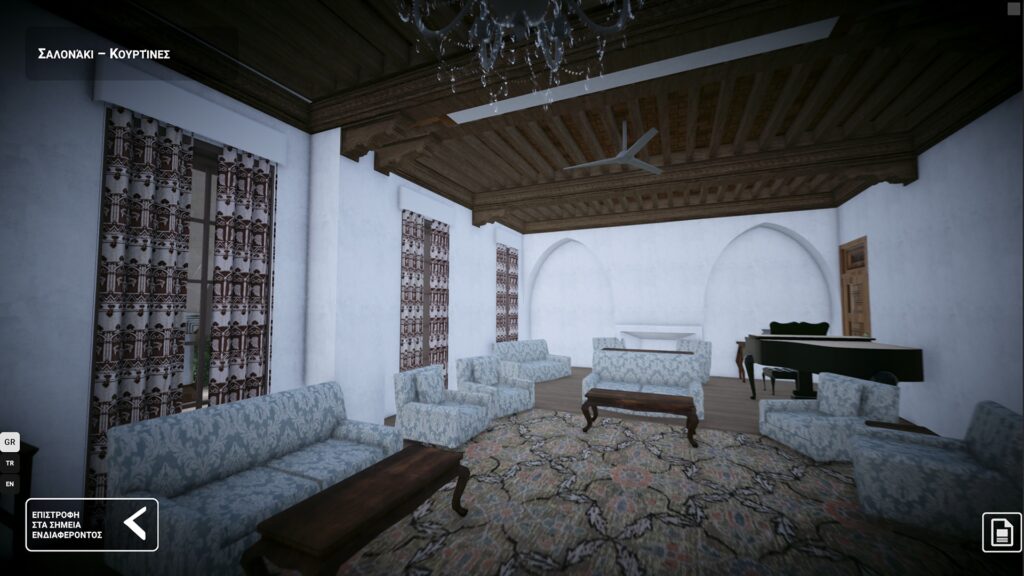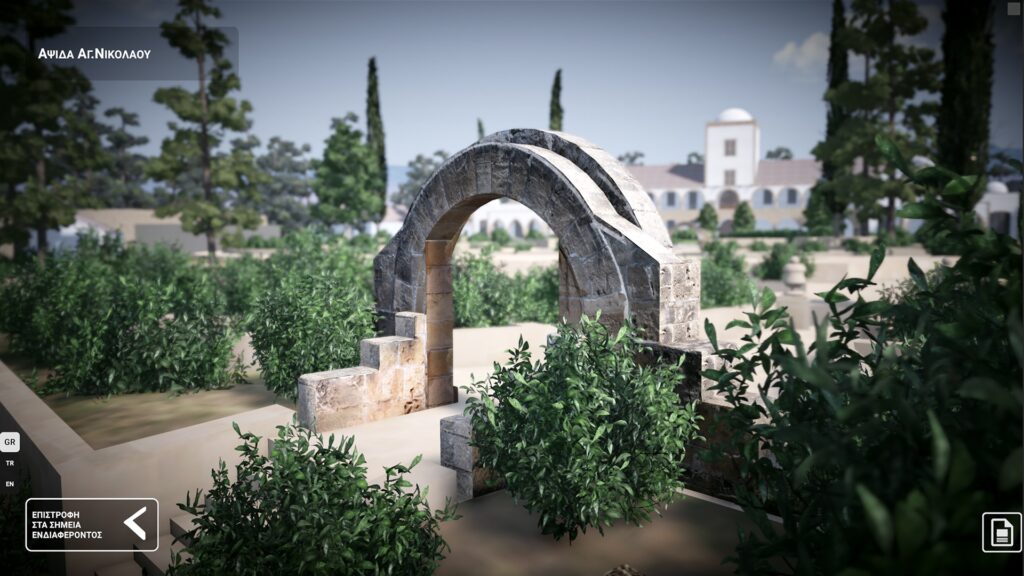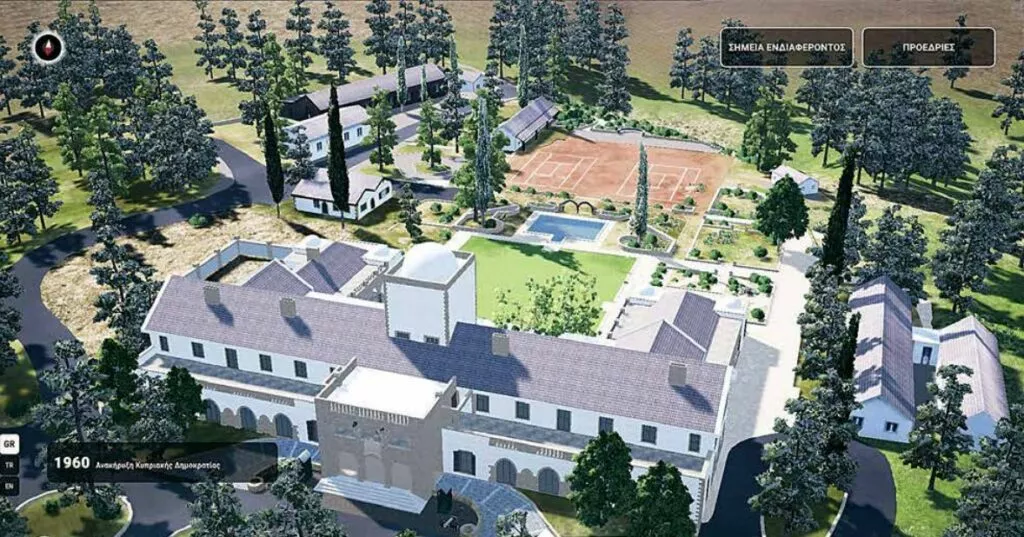
The Cyprus Institute’s Virtual Environments Lab has launched a digital “time machine” that maps the evolution of the Presidential Palace from 1878 to the present day. Researchers used 3D modelling and historical archives to recreate the original wooden Government House and the grand stone structure that eventually replaced it.
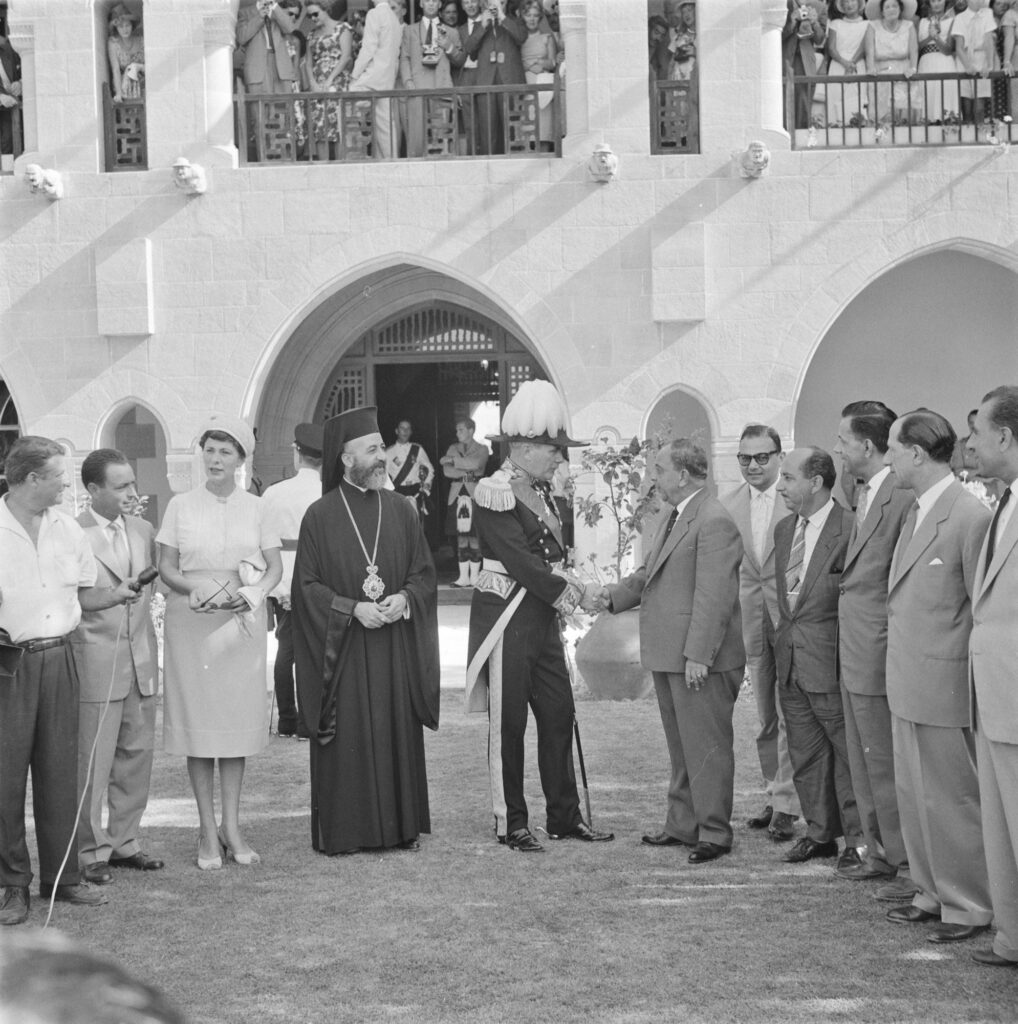
Sir Garnet Wolseley, the first British High Commissioner, arrived in July 1878 and initially stayed at the Metochi of Kykkos Monastery before moving into a prefabricated wooden residence imported from abroad. This building, renamed Government House in 1925, burned to the ground during the 1931 anti-colonial uprising. The British subsequently commissioned a new building that would celebrate local craftsmanship and traditional Cypriot architecture.
Architects toured the island to copy specific traditional motifs for the new design. The ground and upper-floor columns replicate those found at the Acheiropoiitos Monastery near Lapithos, while the central tower’s proportions mirror Kolossi Castle. Although the original plans featured a pyramid roof, a Byzantine dome was used instead to provide an additional ecclesiastical element. Eight unique gargoyles project from the southern facade: four represent the project’s lead craftsmen—the foreman, master mason, master carpenter, and the “unknown” labourer—while the remaining four depict the island’s primary animals: the ox, donkey, camel, and sheep.
Builders sourced soft grey-yellow sandstone from Gerolakkos for its durability and used Limassol limestone for interior fireplaces and stairs. The main entrance replicates the door of the Agios Chrysostomos Monastery on the Pentadaktylos range, featuring 288 interlocking wooden pieces from six different tree species joined entirely without nails or screws. Inside, the palace contains carved beams, cane-reed mats, and hand-embroidered curtains featuring traditional Cypriot patterns.
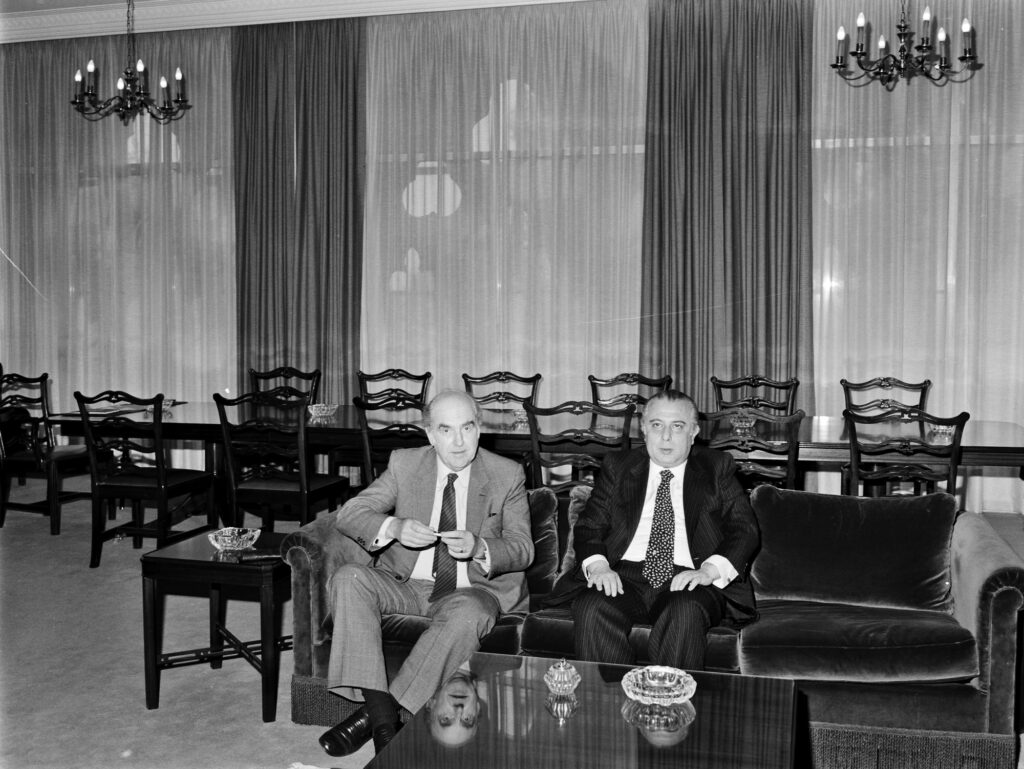
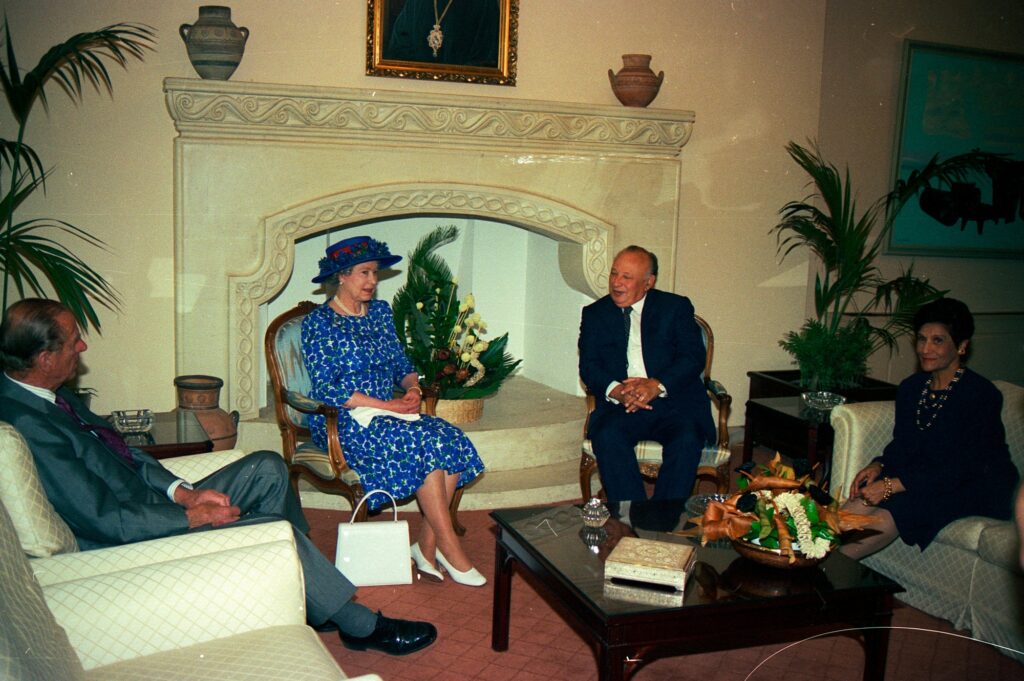
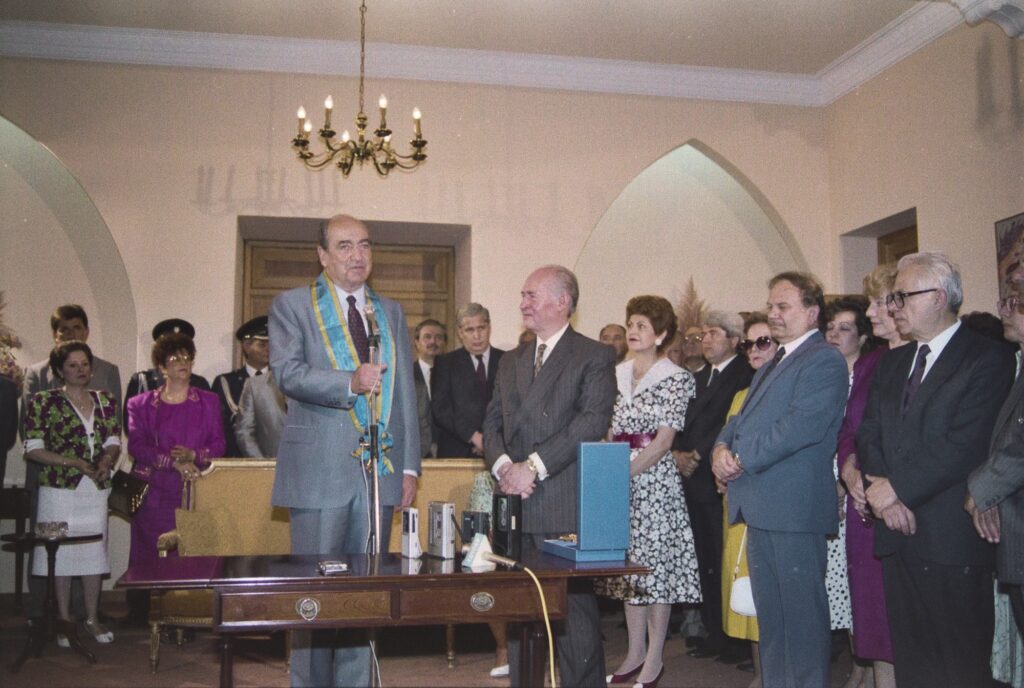
The palace hosted high-stakes superpower diplomacy on 7 May 1974, when US Secretary of State Henry Kissinger and Soviet Foreign Minister Andrei Gromyko met for three hours in what is now the Cabinet Room. Their negotiations over the Middle East crisis led to a regional agreement just days later. However, only two months after this historic summit, the 15 July 1974 coup d’état targeted President Makarios and reduced the palace to a shell. While the fire gutted the interiors, the external walls remained standing. Greece funded the subsequent reconstruction, and the palace reopened in 1979 as the official residence and office of the President.
First Lady Philippa Karsera Christodoulides initiated this interactive project to ensure every visitor—including students, citizens, and foreign leaders—experiences something substantial about the island’s heritage. Cyprus Institute President Stavros Malas described the palace as a “living witness” to modern history, noting that the platform creates a bridge between citizens and their history through virtual and augmented reality. The project’s completion coincides with the 20th anniversary of the Cyprus Institute and seeks to make the island’s complex history accessible to a new generation.