


A former finance minister who lived in old Nicosia and watched shops close around him had secured the historic Faneromeni school building for the University of Cyprus after enlisting a mediator to heal a rift between the church and university leadership.
Archbishop Georgios confirmed to Phileleftheros that he approved transferring the building to house the History and Archaeology Department, ending a negotiation that began with a 2021 agreement but took until 2026 to finalise.
The breakthrough came after former Finance Minister Konstantinos Petridis, who first raised the issue officially, found a solution to a critical obstacle: then-Archbishop Chrysostomos II had a rift with a former university rector who had shown interest in the project, leaving behind an unfavourable climate.
Petridis enlisted the late Zeta Emilianidou, and together they visited the Archbishopric to explain that the project would benefit the city and university whilst the church would have a building maintained at public expense running into millions and would receive income for charitable purposes.
The former Archbishop weighed the facts and said yes, according to the source material, but the original plan to house the Architecture School collapsed over the cost of constructing a new building behind the school. Interest rekindled after the University proposed moving the History and Archaeology Department instead.
Archbishop Georgios said he had contacts with the Nicosia Mayor, as well as the University Rector Tasos Christofidis, and the University’s proposal satisfied the church’s goals.
“Our goal was not exclusively the descent of the Architecture School but an entity of the University which would attract a significant number of students who would study but also live in the city,” the Archbishop said.
Christofidis said the History and Archaeology Department would have around 200 students including postgraduates – matching the Architecture School’s enrolment. The University also hosts 250 non-Cypriot students in the first semester of the ERASMUS programme and 150 in the second semester, many of whom wish to live in the walled city.
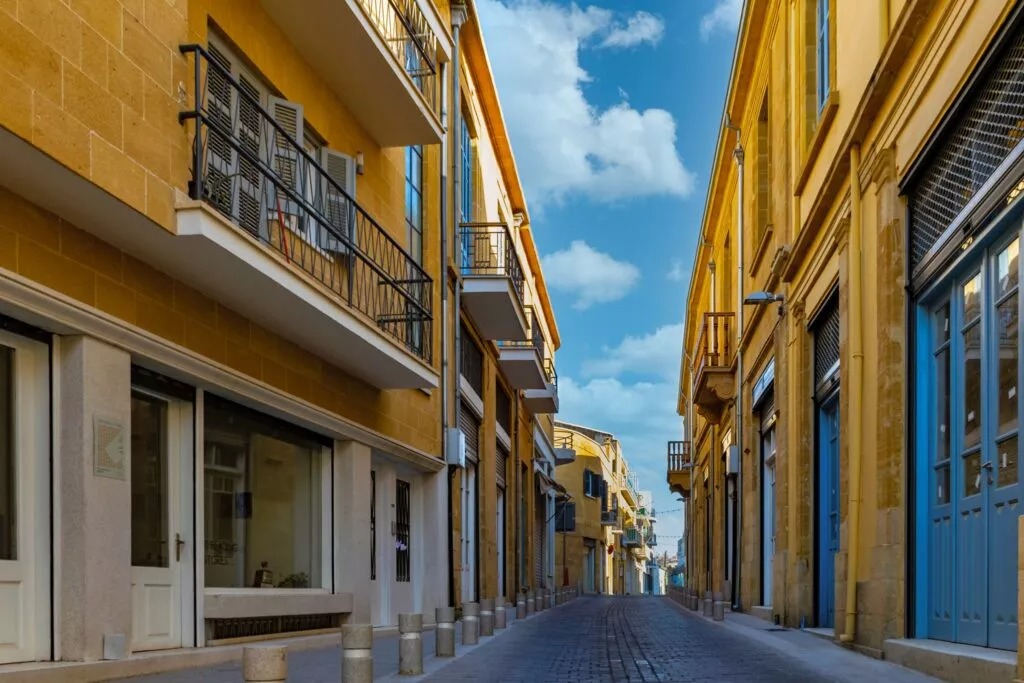
Petridis, who lived in old Nicosia, told Phileleftheros the city showed abandonment and ghettoisation, with many shops shut and a disheartening situation.
Beyond piecemeal infrastructure works such as road networks and pedestrianisation, something more comprehensive was needed to give the city prospects.
Money was allocated from the Recovery Fund, and the private sector built student residences nearing completion. Schools in the area were maintained for migrant children attending Faneromeni.
“The issue was for people to coexist, regardless of their origin, in an upgraded and humane environment,” Petridis said. From the start, the sign outside Faneromeni did not matter to him, but rather that the city would fill with students who would not just pass through during lectures but would live in the city.
Former Nicosia Mayor Constantinos Yiorkadjis welcomed the developments, which open the way for the 2022 agreement to proceed.
He referenced the strategy to attract university schools, including the Kapodistrian University which the municipality approached, research centres, student residences and entrepreneurship plans.
“I am certain that these developments, in combination with incentives for maintaining buildings, the Municipality’s interventions with facade and street renovations, as well as the creation of cultural spaces, will contribute to the substantial revitalisation of Nicosia’s historic centre,” Yiorkadjis said.
Read more:

