


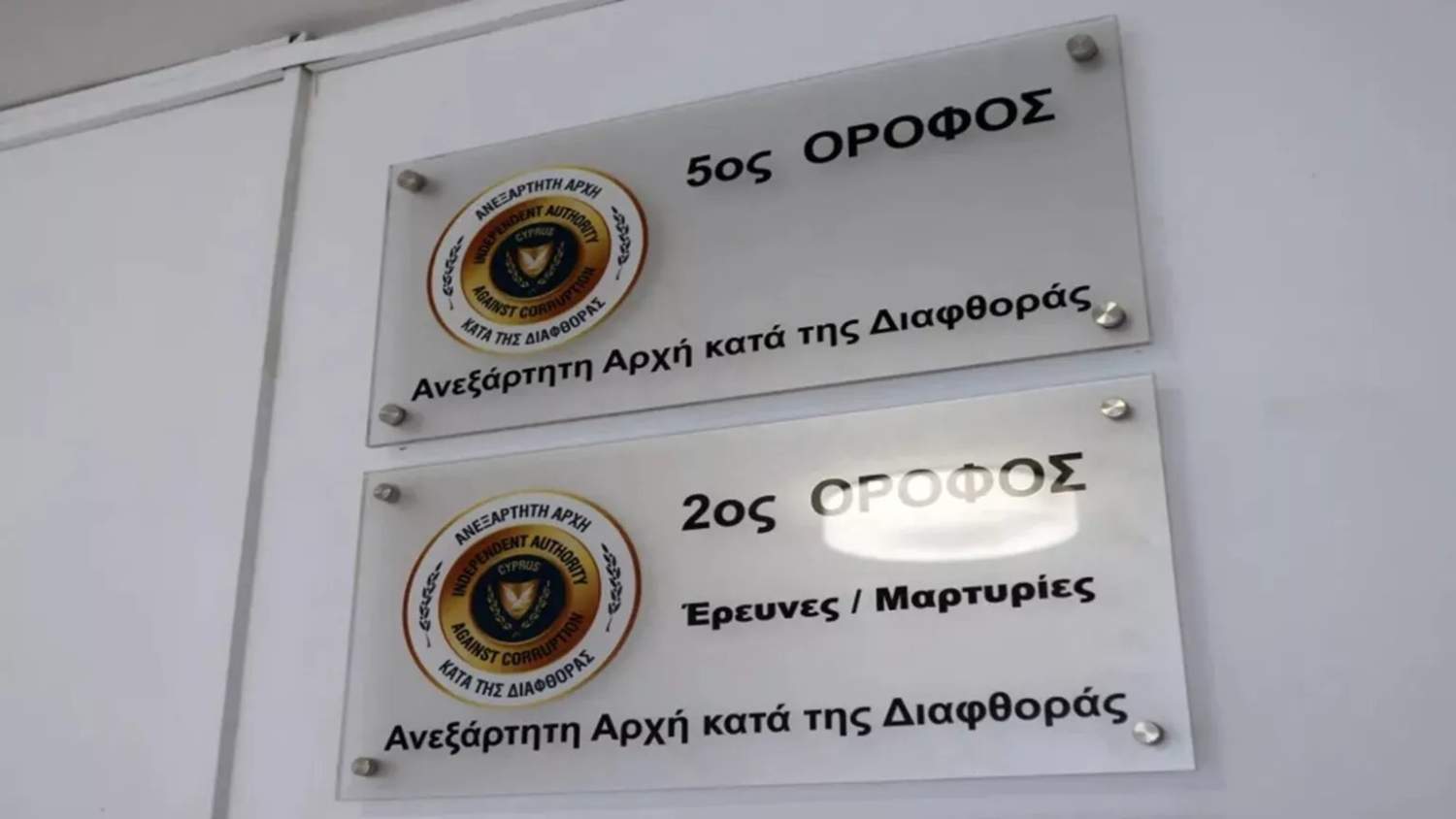
A bill that would let Cyprus’s Independent Anti-Corruption Authority appoint criminal investigators appears to be nearing its final form, after amendments to the draft were sent to the authority on Thursday, Phileleftheros understands.
After a series of consultations, the bodies concerned appear to have found common ground on an issue that has occupied them for months. Views are now converging on the framework for the new powers, despite earlier reservations about whether such a law would be constitutional and differing approaches to how criminal investigators should be appointed and supervised.
Under the current law, the authority carries out preliminary inquiries and refers a case to the Attorney General if it finds that criminal offences may have been committed, authority member Nikos Zampakides has explained. Under the planned amendment, it would be able to appoint criminal investigators and, once an investigation is complete, send the file to the Attorney General, who would still decide whether to bring charges.
The amendments arrived four days before the deadline set by Justice Minister Costas Fytiris for putting the bill out to public consultation, and work on examining them has intensified. Examining the provisions in detail is expected to take a few more days before the bill is finalised and published for consultation.
The authority’s main aim is to gain the power to appoint criminal investigators for corruption cases, Phileleftheros reported on 26 October, after the authority presented its 2027 budget to the House Finance Committee. Zampakides gave his explanation at the time.
Timetable
In a written reply dated 6 November to a parliamentary question from parliament member Irene Charalambides, Fytiris said his ministry had drawn up a working document with proposals to amend the ‘Establishment and Operation of the Independent Authority against Corruption Law of 2022’.
The ministry sent the document on 4 September to the Deputy Attorney General and the Transparency Commissioner. The institutions involved met on 12 October to discuss the proposed provisions and exchange views.
Fytiris said the ministry aimed to finalise the bill by the end of November and put it out to public consultation for four weeks. Once the consultation is over and submissions have been assessed, the Law Office will vet the bill’s legal drafting. It will then go to the Cabinet for approval before being tabled in parliament.
Differing proposals
The House Legal Affairs Committee discussed the issue on 1 July, during its examination of law proposals from DISY and the ALMA movement. The main difference between them was how criminal investigators would be appointed. DISY proposed choosing them from a list drawn up by the Cyprus Bar Association and approved by the Attorney General, while ALMA proposed that the authority itself directly authorise a criminal investigator.
The authority had opposed both appointing investigators from a predetermined list and having the Attorney General supervise criminal investigations, saying both raised concerns about its independence.
For the Law Office, Deputy Attorney General Savvas Angelides had stressed the need to ensure the investigation was impartial, that evidence would be admissible and that the right to a fair trial was protected, without overlooking the Attorney General’s constitutional role.
At the 1 July session, Giorgos Panteli, director general of the Ministry of Justice and Public Order, said the government intended to bring forward a comprehensive bill, as it judged the law proposals insufficient to achieve their aim.

