


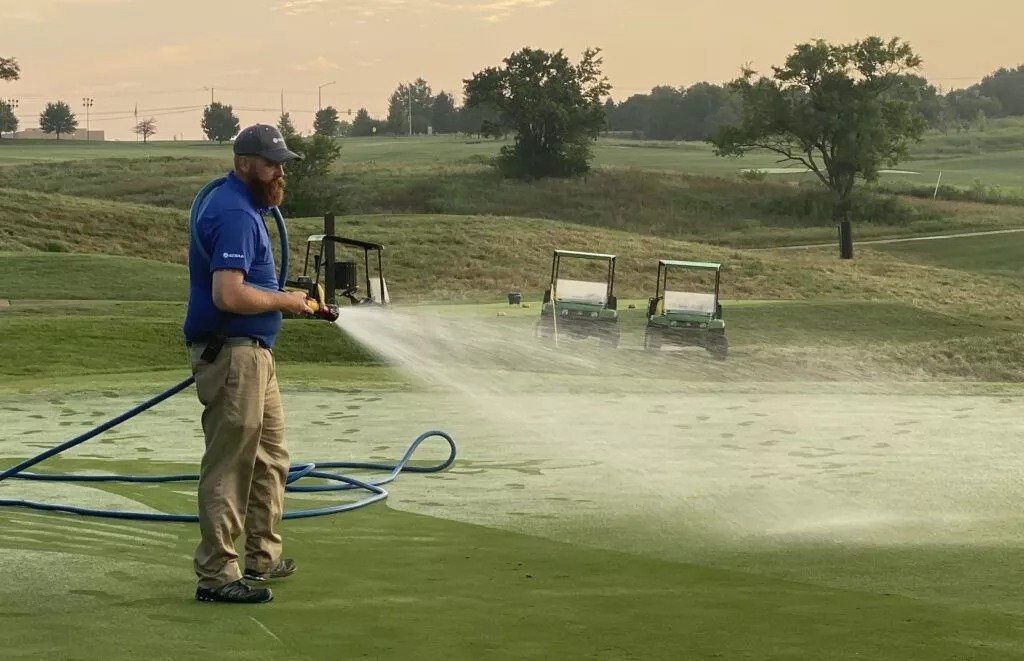
Golf courses will use 400,000 cubic metres of recycled water this year for the purpose of watering and maintaining the grass, amidst water shortages and drought.
According to the Water Development Department (WDD), in the Paphos region, where golf courses are located, recycled water undergoes natural treatment through filtration and renewal via the Ezousa aquifer before distribution.
However, a report by philenews highlighted that despite water scarcity and the need for potable water, recycled water is sometimes discharged into the sea. The WDD intends to address this issue, at least in part.
In response to an inquiry, the WDD stated that “recycled water is discharged into the sea only during heavy rainfall when demand for irrigation or other uses is low, and not all produced quantities can be utilised.” The WDD said that the primary reason for this discharge is the lack of storage facilities with sufficient capacity.
The WDD also stated that projects are underway to end the disposal of recycled water, including the recently completed Tersefanou Dam with a capacity of 4.3 million cubic metres. The process of installing a pipeline to transport the water is currently in the tendering phase.
The department noted a continuous decrease in discharge volumes from 4.72 million cubic metres in 2021 to 1.45 million cubic metres in 2023, with the lowest volumes expected this year.
Between 2020 and 2023, approximately 8.8 million cubic meters of recycled water were discharged, incurring a treatment cost of approximately €7,040,000.
Paphos Mayor, Phedonas Phedonos, commented on the previous practice of discharging all treated water into the aquifer to prevent salt intrusion from the sea in the Mandria area. He considered it “unheard of” to pay approximately 80 cents per cubic metre for water treatment, only to discharge it into the aquifer or the sea, as decided by the WDD, which purchases the water from the Paphos Sewerage Board.
Currently, the Paphos Sewerage Board produces 6 million cubic meters of recycled water annually, all of which is discharged into the Ezousa aquifer after treatment at a cost of 75-80 cents per cubic metre.
In Larnaca, the situation is different, with 4 million cubic meters of recycled water produced and utilised for irrigation, agricultural, and industrial purposes. The president of the Larnaca District Administration, Angelos Hadjicharalambous, projected an increase in recycled water production and distribution to 6 million cubic metres over the next 2-3 years.
According to the WDD, between 2020 and 2023, approximately 106 million cubic metres of recovered water were produced, with 63.1 million cubic metres used for irrigation, 28.4 million cubic metres for groundwater recharge, 5.8 million cubic metres discharged into the Ovgos River, and 8.8 million cubic metress discharged into the sea.
With the addition of new treatment plants in Paralimni and Achna, along with the potential inclusion of the Mia Milia plant in the occupied areas, the total production is expected to reach 42 million cubic metres annually.
The WDD outlined that the primary uses of recycled water in Cyprus include irrigation of agricultural crops (olives, vineyards, citrus fruits, etc.), groundwater recharge, irrigation of urban and suburban areas, industrial use, and the maintenance of golf courses, which require substantial water quantities.
The potential inclusion of treated water from the Mia Milia plant in the occupied areas, producing 30,000 cubic metres of wastewater daily, could further enhance the system.
Currently, these quantities are going untapped due to unresolved issues regarding its transfer to the government-controlled areas, where 70% of the water is allocated.
Read more:

