


The Water Development Department has announced a 33% reduction in irrigation water compared to last year due to drought and poor water conditions, according to Senior Executive Engineer Gianna Economidou.
In response to farmers’ protests in Paphos over the reduced irrigation water, Economidou explained that the annual water distribution scenario was prepared earlier this year.
Available resources are allocated according to government policy, with the drinking water sector being fully satisfied at 100%.
Economidou noted that the remaining water is allocated for irrigation, but there were insufficient quantities this year.
“We had to reduce the quantities by 33% compared to last year, so it is a fact that we are providing reduced quantities this year,” she said.
She mentioned that farmers were aware of this since they must submit their irrigation water applications by a specific deadline each year (this year it was until February 29, 2024), declaring their crops.
This annual procedure allowed the Water Development Department to warn farmers that “reduced quantities would be provided,” so they needed to plan accordingly to avoid planting crops that could not be adequately watered.
Meetings with agricultural organisations also made it clear that reduced quantities would be necessary.
Irrigation water quantities are allocated to each farmer annually, and farmers must submit their needs. The Water Department then approves the annual quantity.
“Farmers are informed via invoices, so if any farmer exceeds the allocated quantity for the year, the water supply will be cut off,” she said.
When asked if the water supply is at risk for next year, Economidou warned that if there is no rainfall and conditions remain the same, there will be a problem next summer.
Dam capacity at 42.1%
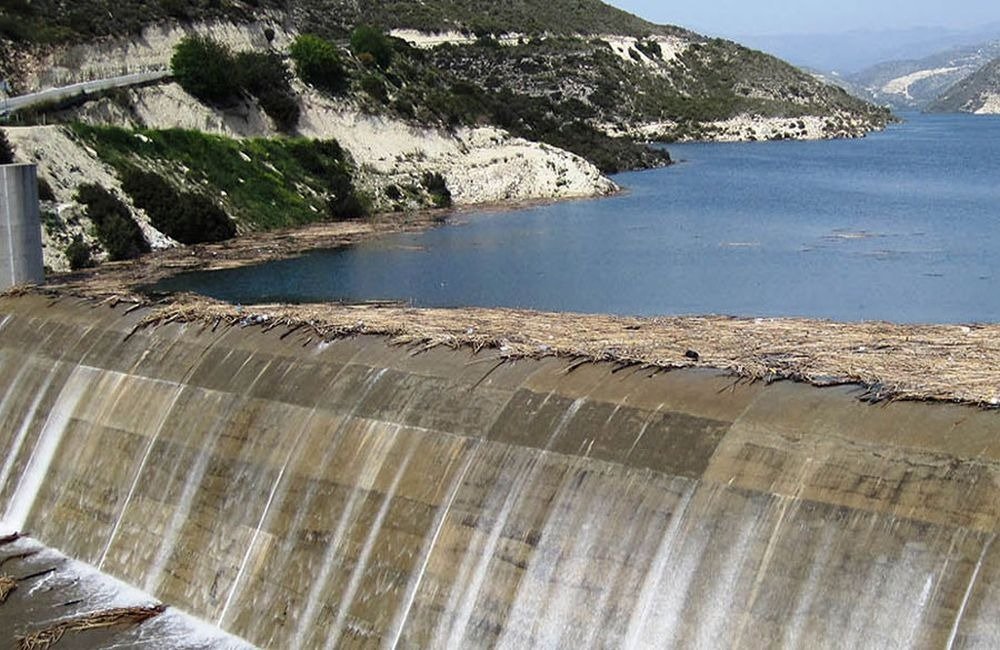
Currently, Cyprus’s main dams hold 122.4 million cubic meters of water, with a capacity of 42.1%, compared to 65.6% last year.
Practical tips for efficient irrigation
The Water Development Department is promoting efficient water use in agriculture and has issued a brochure with practical advice on irrigation methods during drought conditions.
Economidou highlighted that rational use of irrigation water can be achieved by controlling soil moisture with auxiliary instruments, implementing irrigation schedules, and avoiding irrigation during windy or very sunny conditions.
“There are practical solutions and methods to help farmers maximise the use of minimal water quantities. We should not use traditional irrigation methods but improved systems and drip irrigation where possible,” she emphasised.
She also urged the general public to conserve water, stating that “it is an issue that concerns everyone, not just a segment of the population.”

