


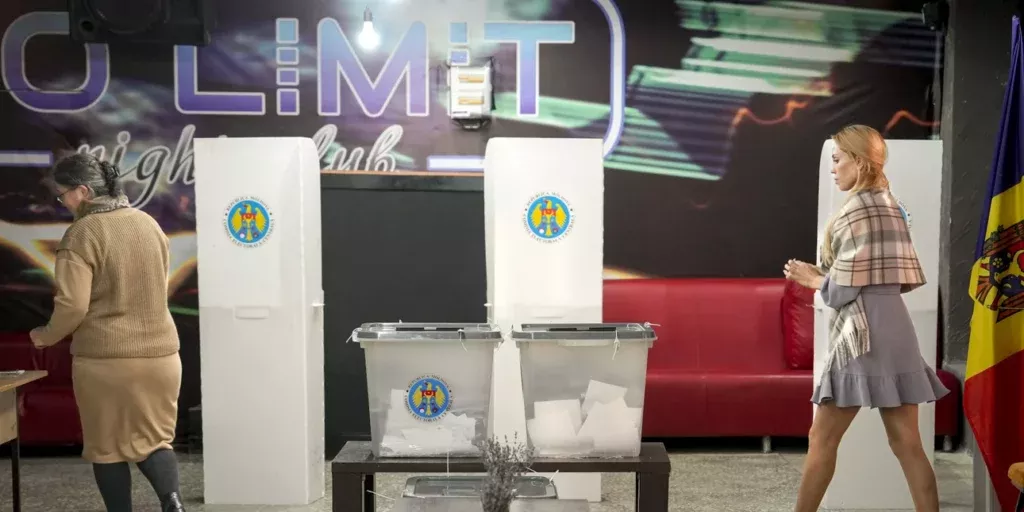
Two weeks after a narrow victory for pro-European forces in the EU referendum, Moldovans began casting their votes today to elect a new president and affirm their European aspirations. However, concerns over potential Russian interference loom large over the elections.
Incumbent president Maia Sandu, 52, a strong advocate for Western integration who has distanced Moldova from Moscow since the invasion of Ukraine, is facing off against Alexandr Stoianoglo, a former prosecutor backed by pro-Russian socialists.
Analysts have refrained from making numerical predictions but anticipate a tight race amid fears of Russian meddling, similar to the recent parliamentary elections in Georgia, another former Soviet republic, despite firm denials from the Kremlin.
Sandu emerged as the frontrunner in the first round of elections on October 20, securing 42.5% of the vote, while Stoianoglo garnered 26%. However, the 57-year-old candidate is likely to receive support from several lower-ranking contenders.
Polling stations opened at 07:00 local time and will close at 21:00, with initial results expected shortly thereafter.
In the lead-up to the second round, Sandu’s campaign has ramped up social media outreach and grassroots efforts in rural areas to combat widespread vote-buying, which authorities claim marred the referendum results, revealing a much tighter contest than anticipated (50.35% in favor of “yes”).
“Despite the uneven battle, we have taken the first step,” Sandu stated. “We still need to win the elections on Sunday and then move toward European integration by 2030,” she added, referring to the official opening of EU accession negotiations in June.
In her most recent message to the country’s 2.6 million residents, the former World Bank economist urged citizens to mobilize to ensure their true will is reflected in the vote.
“Don’t succumb to fraudsters” has been a prevalent message in the final days of a tense campaign. The police have warned voters against accepting money to vote against a candidate, with alerts disseminated via phone messages and loudspeakers in supermarkets.
Stoianoglo, in contrast, has promised to be “the president of all,” advocating for a balanced foreign policy that “will not divide society.”
Moldova remains deeply polarized, with urban populations and the diaspora predominantly supporting the European goal, while rural areas and two regions, the separatist territory of Transnistria and the autonomous Gagauzia, lean towards Russia.

