


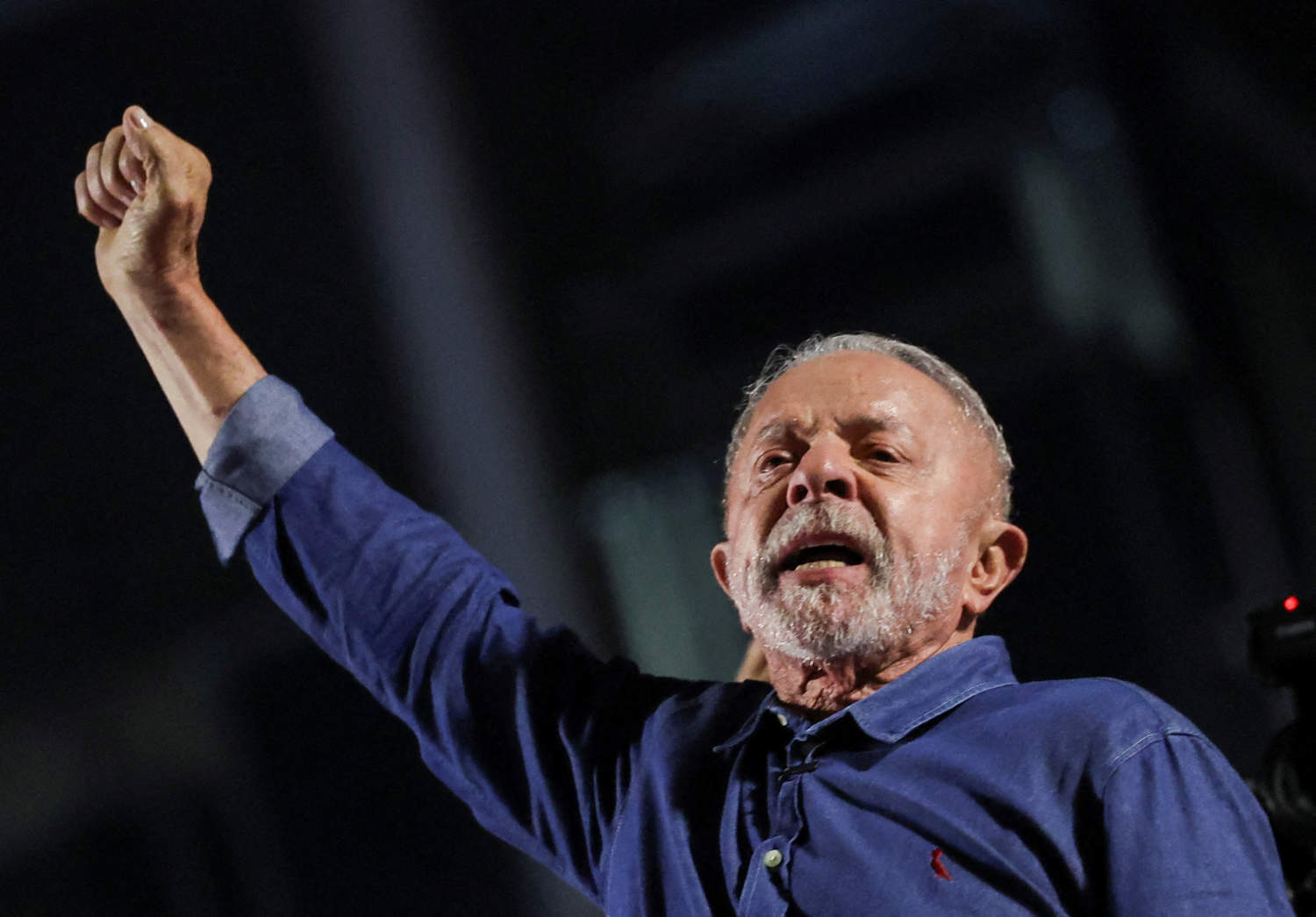
Brazilian President Luiz Inacio Lula da Silva won a fourth term in Sunday’s runoff, the country’s electoral court said, defying opinion polls and halting a run of right-wing election victories across Latin America, Reuters reported.
His opponent, Senator Flavio Bolsonaro, eldest son of former President Jair Bolsonaro, refused to concede and said he would seek to have the result annulled because a Supreme Court justice ruled on Sunday to extend voting by two hours.
Flavio Bolsonaro led the first round but lost the runoff by more than four million votes, more than twice the margin by which his father lost to Lula in 2022. Analysts said the size of that defeat, and the fact that his own campaign had also asked for an extension because of rain in the conservative-leaning south, made an annulment unlikely.
Mario Braga, a Latin America analyst at risk consultancy RANE, said right-wing protests were possible in the coming days, but “it’s very improbable that it will lead to the reversal of the result.”
Flavio Bolsonaro’s refusal to concede echoes his father’s response in 2022. Jair Bolsonaro never accepted that defeat and was later sentenced by the Supreme Court to 27 years in prison for plotting a coup to stay in power.
Markets
The result rattled Brazilian financial markets, which had bet on a Bolsonaro victory. A Tokyo-listed exchange-traded fund tracking Brazil’s Bovespa index fell nearly 15 per cent in Asian trading on news of Lula’s win, and the Brazilian real was set to fall sharply against the US dollar. Investors expect recent bets on a change of government to unwind in a volatile week ahead.
Another comeback
Lula, 80, is the first candidate since Brazil returned to democracy in the 1980s to win the presidency after finishing second in the first round.
The win is the latest comeback in a career full of them for Lula, an icon of the global left and the dominant force in Brazilian politics this century. He was jailed from 2018 to 2019 on corruption charges that were later overturned, clearing the way for him to beat Jair Bolsonaro in 2022.
His re-election at times looked a long shot. Voters had soured on him and his Workers’ Party after years of corruption scandals and rising prices, while sweeping social change left the former metalworker and union leader looking out of touch with an increasingly app-based economy and its growing number of informal workers.
Pollsters said a higher-than-expected turnout carried Lula to victory. Leonardo Barreto, co-founder of consultancy Think Policy, said voters had chosen Lula’s familiar embrace over Bolsonaro’s novelty, picking between “change, with some apprehension, and a known path, which guarantees certain rights”.
“He is a statesman, a giant,” left-wing federal lawmaker Erika Hilton, who was with Lula in Sao Paulo during the count, told Reuters.
The campaign
Lula campaigned on falling poverty and inequality, and on record lows in unemployment, illiteracy and deforestation during his third term. He warned that Bolsonaro would cut welfare spending, roll back social gains and hand Brazil’s sovereignty to US President Donald Trump, whose State Department led a campaign to return the Bolsonaros to power.
Mixing the pragmatism and populism that have shaped his half-century in national politics, he rolled out a series of reforms aimed at improving the lives of workers and poor Brazilians. These gained momentum with late pledges ranging from free nationwide public transport at weekends, which must still be formally submitted to Congress, to a 15 per cent increase in his flagship welfare programme, which is already being implemented.
He also championed a constitutional amendment that became Brazil’s biggest labour reform in decades, passed with broad support in Congress.
International reaction
Lula’s win denies Trump a major addition to a growing bloc of friendly right-wing Latin American governments that have embraced Washington’s agenda on security and migration.
Trump and the US State Department did not comment immediately, while Canadian Prime Minister Mark Carney and Latin American leaders were quick to congratulate Lula.
Celso Amorim, a former foreign minister under Lula, told Reuters the left-wing leader would be very important in establishing a point of balance in Latin America. “Lula is that balance,” he said.
Challenges ahead
Lula’s fourth term could still be his most difficult yet, after Brazil elected its most conservative Congress since the return to democracy.
Bolsonaro’s Liberal Party and its allies could together control more than 280 seats in the lower house and up to 50 in the Senate, comfortable opposition majorities in both chambers. That may deepen a recent trend of presidents ceding power to Congress on the budget, major legislation and key appointments.
His government forecasts growth of just 2.3 per cent next year, adding to fiscal concerns over high interest rates and public debt, which has risen past 82 per cent of GDP, its highest since the pandemic.
Goldman Sachs said it expected Lula to make modest progress at most in containing spending during a fourth term, as he remains committed to a state-led growth model.
Economists are also concerned about surging household debt. During the campaign, Lula introduced a provisional ban on online betting and unveiled a new debt relief programme to tackle the problem.
Experts say the incoming right-wing Congress will try to pass business-friendly structural reforms, prompting spending cuts that could trigger a popular backlash.
(Reuters)

