


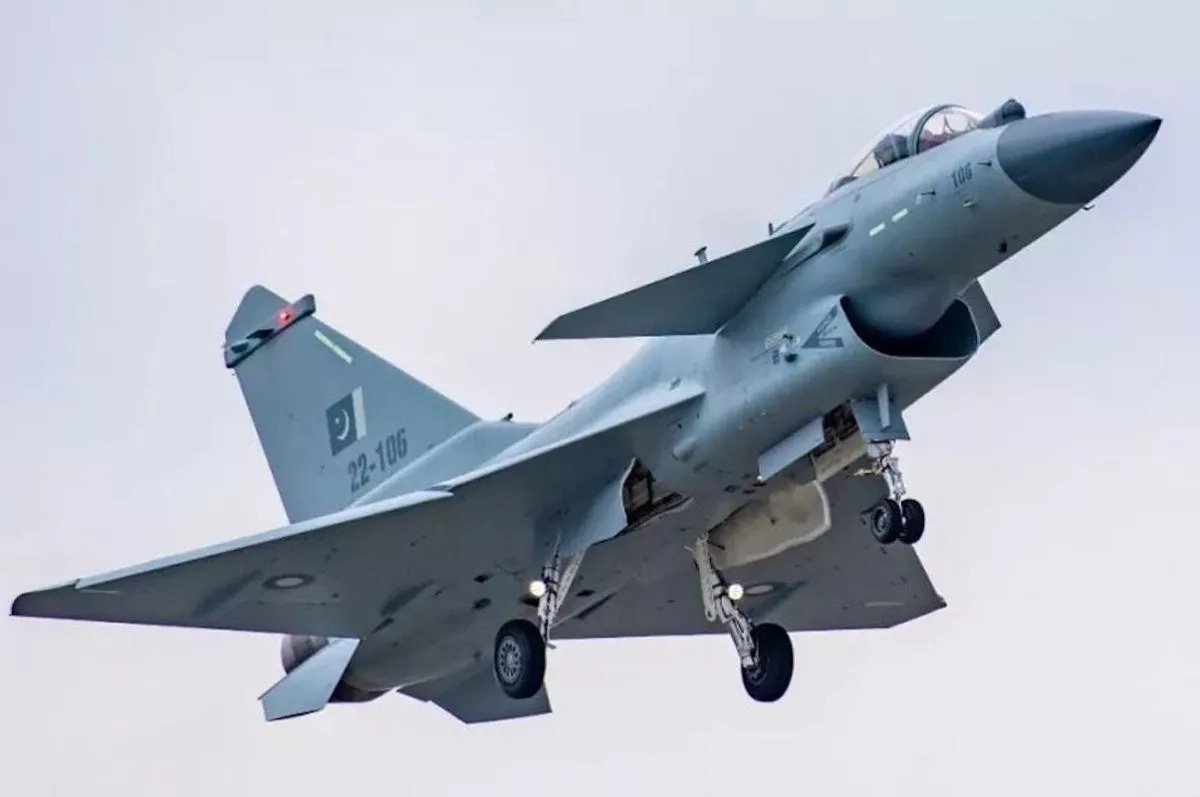
Iran is examining the possibility of purchasing modern fighter aircraft from China for its air force following the ceasefire that ended the 12-day war launched by Israel against Iran, according to the Entekhab newspaper.
The country is specifically interested in the export version of the J-10 (Chengdu) fighter aircraft, examples of which engaged in aerial combat with Western and Soviet-designed fighters earlier this year during the India-Pakistan conflict.
It remains unclear whether China is willing to supply Iran with fighter aircraft.
According to the report, a recent visit to the Chinese coastal city of Qingdao by Iran’s Defence Minister, within the framework of the Shanghai Cooperation Organisation (SCO), aimed partly to discuss this possibility.
Iran’s most obvious military disadvantage in the war with Israel was its air force’s outdated equipment, modernisation of which is considered almost impossible.
Many of its aircraft, particularly the F-14 (Grumman) fighters, are remnants from the Shah’s era, whose regime had close relations with the United States. They were acquired long before the 1979 Islamic Revolution and their maintenance has become increasingly complicated.
US armed forces retired these aircraft from service almost 20 years ago in 2006. It is unclear how many Iranian fighters of this and other outdated types remain operational.
Iran’s collaboration with Russia to acquire modern Sukhoi aircraft, specifically Su-35 fighters considered “generation 4.5”, has not progressed in recent years.
For its defence, Tehran has focused on developing ballistic and other missiles and drones, as well as strengthening relations with regional movements in the so-called “axis of resistance”.
Sanctions affecting Iran’s economy have critically excluded the country from the global financial system. Its main revenues come from oil exports, with China considered the primary buyer, though unofficially.
According to the Entekhab report, a deal is therefore theoretically feasible.
Israel launched an unprecedented air campaign against Iran in the early hours of 13th June, striking military installations, nuclear facilities, killing senior armed forces officers, nuclear scientists and civilians.
Netanyahu’s government proceeded with the attack arguing that the Islamic Republic was approaching nuclear weapons acquisition, which Iran has denied pursuing for decades.
The Islamic Republic retaliated with missile and drone barrages, most of which were intercepted.
The 12-day war ended on 24th June when a fragile ceasefire imposed by US President Donald Trump took effect, two days after his decision for American strategic bombers to strike three key Iranian nuclear facilities.
According to the most recent official Iranian casualty count, at least 935 people lost their lives in the war, including 132 women and 38 children. On the Israeli side, 28 people were killed, according to the most recent figures from Netanyahu’s government.
(information from in.gr)

