


A year ago, as Bashar al-Assad’s regime was collapsing, Syria’s Kurds appeared closer than ever to realising their long-held dream of autonomy. However, clashes in recent weeks between Kurdish forces and government troops have dramatically altered the picture.
The ceasefire agreement that has been reached—if fully implemented—will most likely mark the definitive end of Syrian Kurdish hopes for political autonomy and represent a major political victory for the country’s leader, Ahmed al-Sharaa.
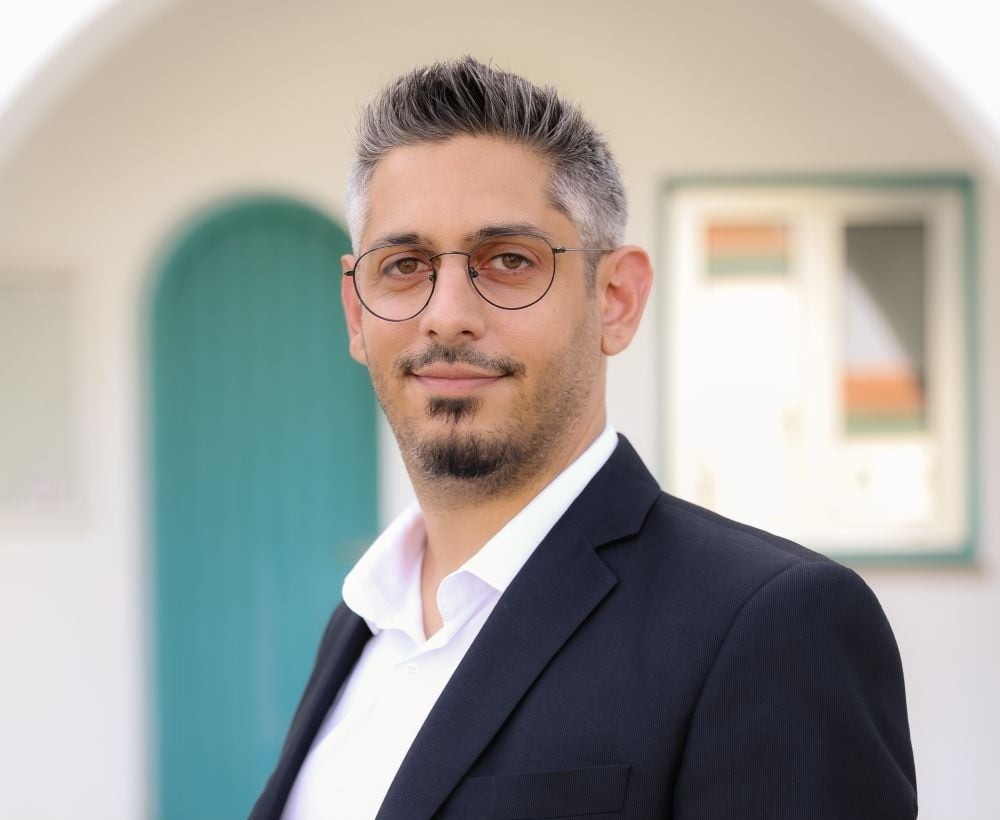
In an interview with Phileleftheros, Zenonas Tziarras, Lecturer at the Department of Turkish and Middle Eastern Studies at the University of Cyprus, explains how the Kurds have reached the point of withdrawing from areas previously under their control.
As he notes, despite initial integration agreements following the fall of Assad’s regime and US mediation efforts, negotiations between the two sides collapsed due to conflicting demands, pressure from the PKK, and internal fractures within the Syrian Democratic Forces (SDF) themselves.
This led to armed clashes, territorial losses for the Kurdish forces and, ultimately, an agreement tantamount to their capitulation and the consolidation of Damascus’s control. Moreover, the risk of a new cycle of violence remains very real.
This is a major development with repercussions for the entire region. Instability in Syria is reshaping the balance between Turkey, Israel and the United States, with Ankara indirectly supporting developments in favour of Damascus and Israel exploiting gaps in state sovereignty.
These developments also have indirect consequences for Cyprus, which is being forced to balance its relations with the US and Israel while simultaneously monitoring the risk of new refugee flows should Syria become further destabilised.
Ahmed al-Sharaa has now been in power for a year. What is the situation in Syria today? Have Syrians’ hopes for better days after Bashar al-Assad been fulfilled?
More than a year after the overthrow of Bashar al-Assad, Syria remains in a post-war, transitional and highly unstable state, with significant gaps in authority and legitimacy.
Despite the lifting of sanctions, the economy remains fragile, with high levels of poverty, poor humanitarian conditions and food insecurity, among other problems.
For the Sunni majority—and not only them—the fall of Assad brought a sense of hope and change which, for many, has already altered the psychological and social climate.
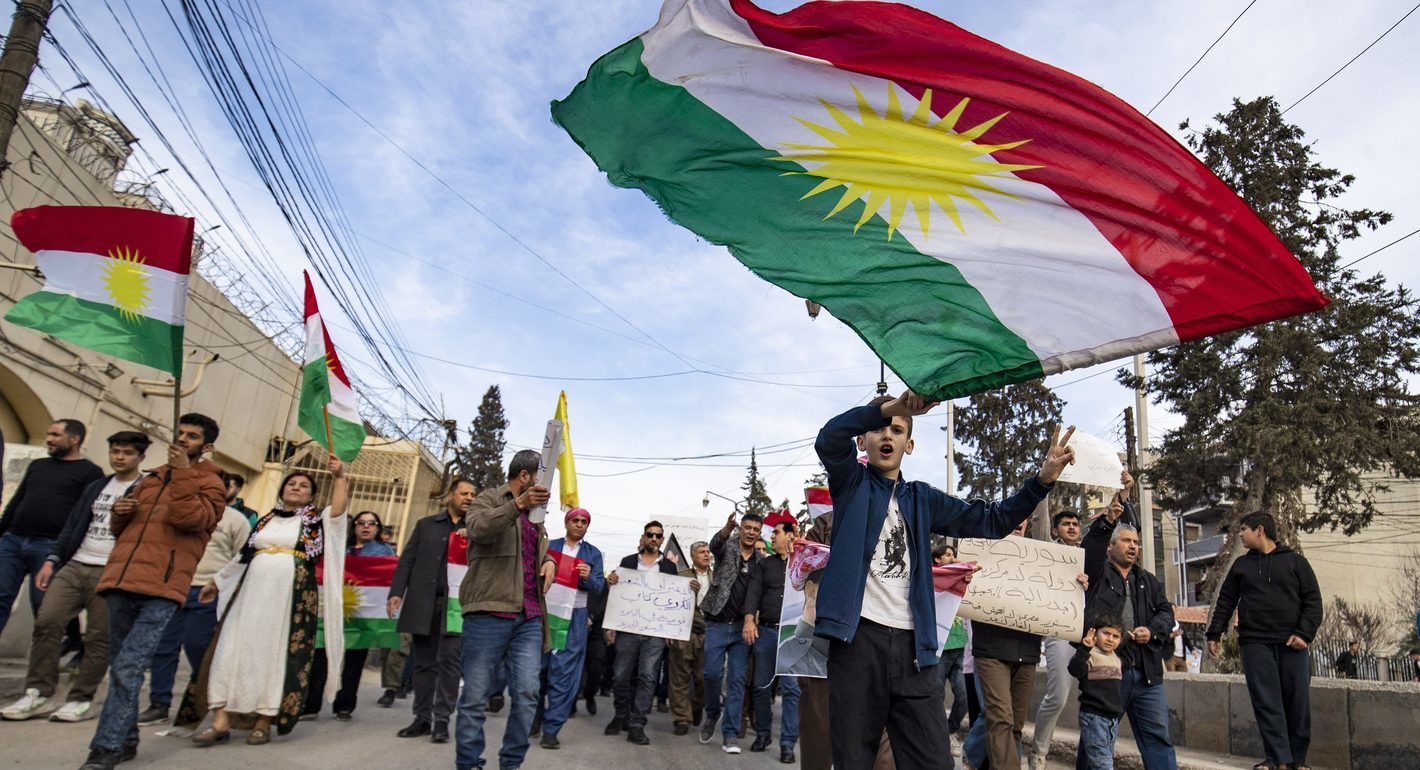
For other Syrian communities, such as the Kurds, Druze and Alawites, the situation remains insecure. Tensions and clashes between the new regime and both regime-aligned forces and these communities have led many to question the transitional government’s declared commitment to building an inclusive state.
That said, despite periodic outbreaks of violence, the new regime has so far acted more pragmatically than many expected, repeatedly signalling a willingness to engage with the leaderships of other communities.
However, destabilising and unpredictable factors remain. First, pro-regime jihadist groups, which in most cases are not under the regime’s control and act in a criminal and violent manner.
Second, the sectarian decentralisation trends that emerged during the war, were reinforced by the involvement of external actors such as Turkey, Russia, Iran and Israel, and now obstruct the reunification of Syrian sovereignty.
There is still a long way to go before we can speak of a stable, prosperous Syria with positive prospects.
At the start of the Syrian civil war, many analysts spoke of the country being partitioned into three or even four regions. How likely is that scenario today?
Despite the rapid developments, nothing is over yet—the situation is extremely fluid. That said, the likelihood and scale of territorial fragmentation are now more limited than they were a year ago. This is primarily due to the collapse of the Kurdish-controlled Autonomous Administration of North and East Syria (AANES), also known as Rojava.
While the possibility cannot be ruled out that some Kurdish-controlled administrative structure may survive in certain north-eastern cities, the dream of autonomy as the Kurds envisaged it within a federal system no longer exists. Of course, decentralisation dynamics persist among other communities as well, particularly the Alawites in the west and the Druze in the south.
The stated aim of the new regime, as well as of external powers such as the US and Turkey, is to prevent the federalisation of the country. However, no one can guarantee that unresolved intercommunal issues will be settled easily, peacefully or in line with plans for a unified Syria. The clashes between regime forces and Kurdish units already point to a difficult road ahead.
What is the background to relations between the new regime and Syria’s Kurdish forces? Were the recent clashes out of the blue?
The clashes between the Syrian Democratic Forces (SDF) and (pro-)regime forces did not come out of the blue. In March last year, with American and French mediation, the new transitional government and the SDF signed a preliminary agreement. This provided for the integration of the AANES autonomous region into the new Syrian state, including the SDF’s military and political structures, while allowing them to retain de facto control over border crossings and oil fields in Kurdish areas.
A supplementary agreement in April, again with US involvement, established a joint security framework for two Kurdish enclaves in Aleppo province, which would remain under AANES security control.
Although the implementation deadline was August 2025, negotiations failed, mainly due to pressure from the PKK and its Syrian offshoots for greater demands and their refusal to integrate into the new state.
Convergences were nonetheless reaffirmed in a new agreement last October, which envisaged the protection of Kurdish political rights and recognition of Kurdish as a national language through constitutional revision, alongside arrangements for integrating SDF structures and AANES security forces into the Ministries of Defence and Interior.
However, the SDF returned with new demands: no regime personnel in north-eastern Syria, independent recruitment for their forces, control of the borders with Turkey and Iraq, and responsibility for the Ministry of Defence’s communications. These demands created conditions of intransigence, divergence and competition.
How did negotiations over integration turn into armed conflict?
When the 25 December deadline for implementing the integration agreement expired, clashes broke out in Aleppo between regime forces and the SDF. US mediation led to an understanding for the SDF to evacuate the city, but local Kurdish units, operating largely autonomously, refused to withdraw. This was followed by a regime advance and the complete capture of the Kurdish enclaves.
Subsequently, under the same agreement, the SDF withdrew entirely from territories west of the Euphrates, which came under regime control. Regime forces then pushed further east, capturing major oil fields.
These developments were accelerated by internal dynamics within the SDF. Formed in 2015 with US support as a “rebranding” of the PYD/YPG (the PKK’s Syrian branches) to ease Turkish objections to US-Kurdish cooperation against ISIS, the SDF included Sunni groups and Arab tribes, largely motivated by salaries, training and shared threat perceptions.
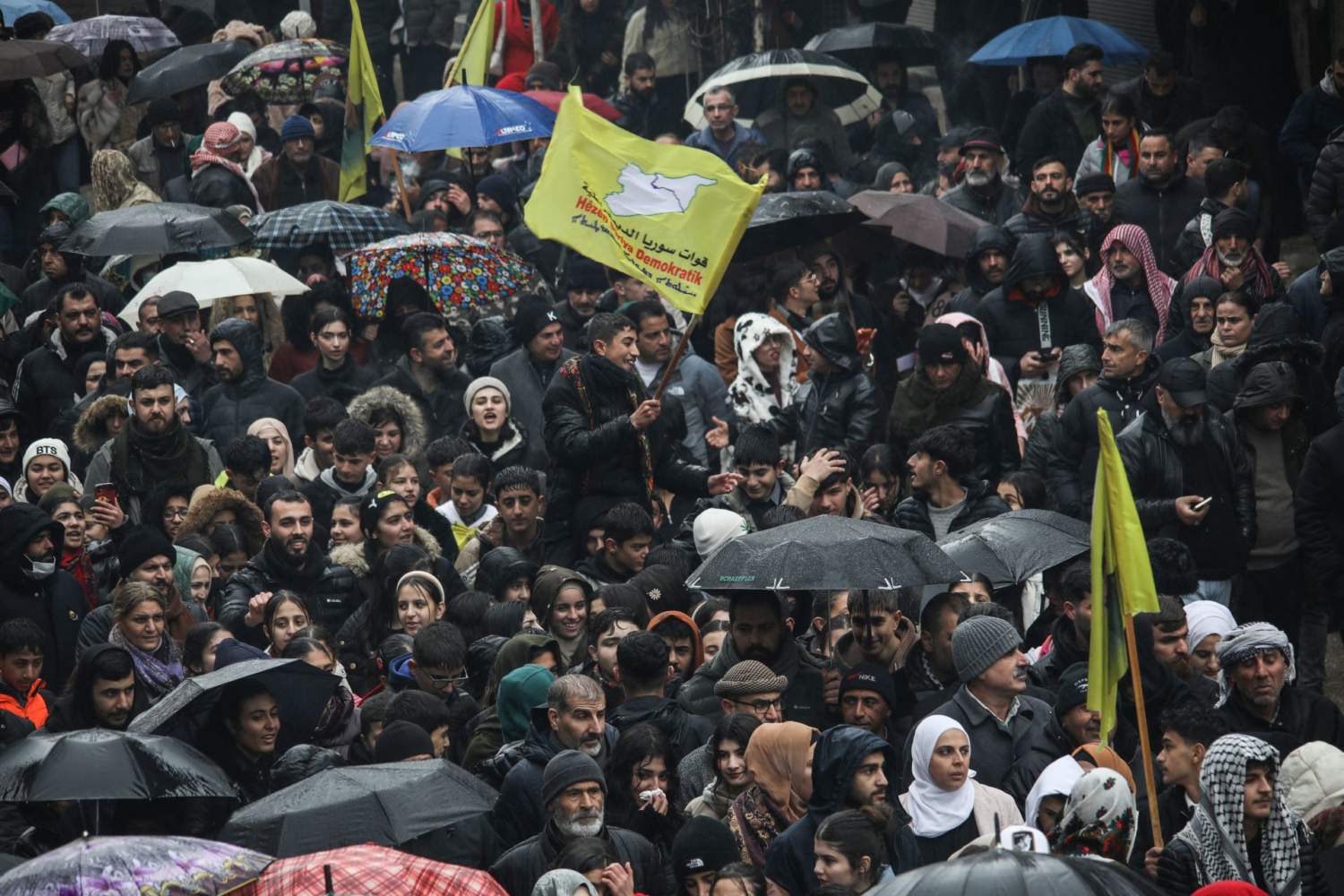
Recent events exposed rifts between hardliners and pragmatists, as well as between Kurds and Arabs. Crucially, Arab tribes—numbering thousands of fighters—defected from the SDF to side with the regime. Given that many SDF-controlled areas were predominantly Arab (with exceptions such as Kobane, Qamishli and Hasakah), regime forces were often warmly welcomed.
Finally, the regime has begun coordinating the return of displaced Arabs from north-western Syria (such as Afrin and Idlib) to their places of origin in eastern Syria.
Is there any truth to the claim that the Americans abandoned the Kurds?
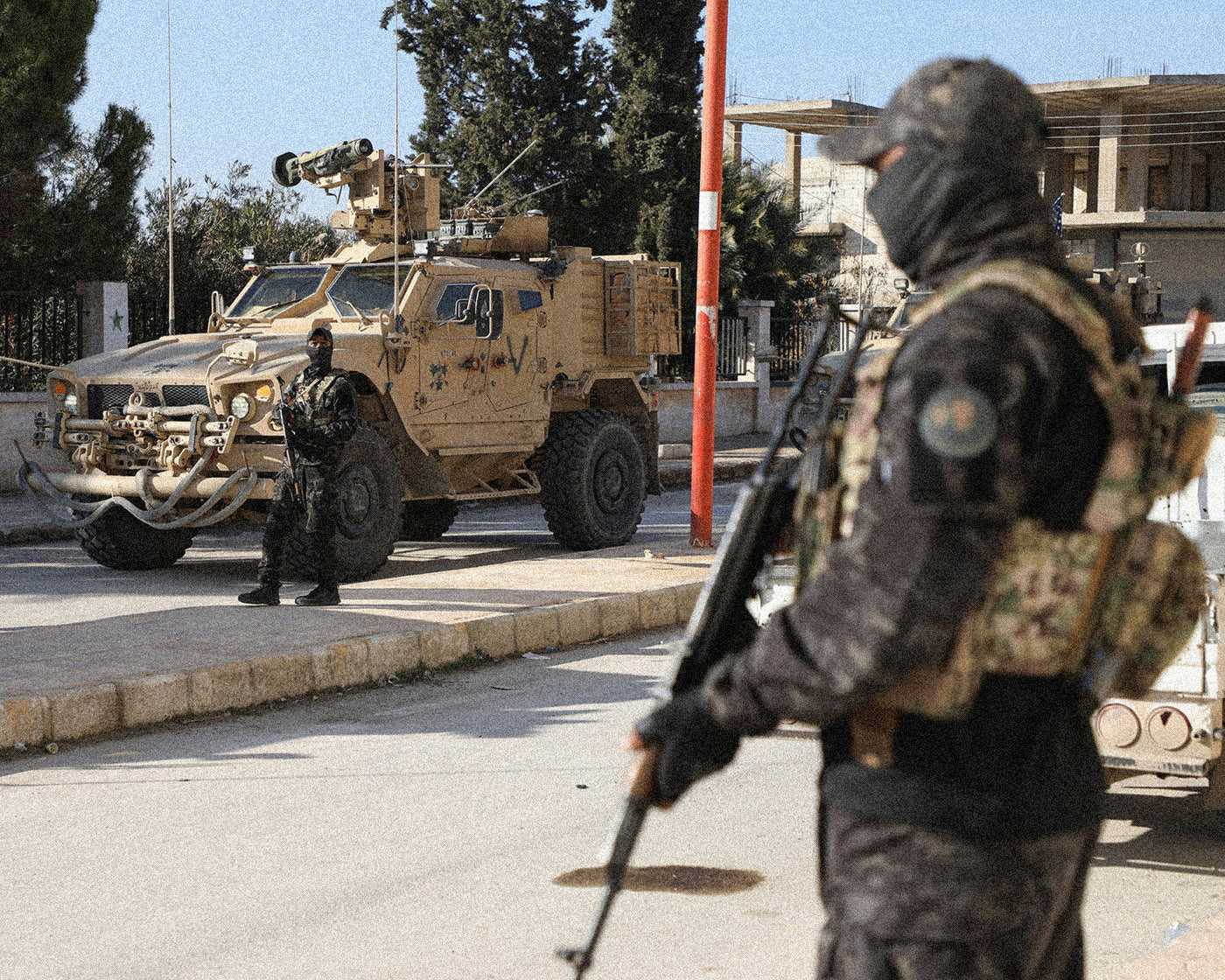
Both yes and no. The US made significant efforts to persuade the SDF to implement what had been agreed and informed them as early as January that they would need to leave western Syria and withdraw eastwards. From Washington’s perspective, however, from March 2025 onwards the SDF acted counter-productively, backtracking on agreements and pressing for more.
At the same time, the SDF has long displayed ambivalence towards US interests. It developed ties with Iran and procured weapons from it, while reportedly integrating up to 10,000 personnel from Assad’s army. During the fighting in Aleppo, the pro-Assad Azrael Regiment announced the deaths of four of its fighters who were fighting alongside the SDF.
Given the US desire to disengage from Iraq and Syria and its relationship with Syria’s new transitional regime—due to its role, alongside Turkey, in curbing Iranian-Shiite and Russian influence—the SDF’s federalisation goals did not align with those of Washington, Damascus or Ankara.
Moreover, for the US the PKK is a terrorist organisation, and its interference caused serious problems with Turkey, which repeatedly threatened new military intervention.
The SDF’s failure to distance itself from the PKK and to moderate its demands contributed—alongside the above factors—to the US, through its special envoy Tom Barrack, declaring that its role had “run its course”.
A new cycle of violence is possible
How did the most recent agreement come about and what is its significance? Can it last, or are new clashes likely?
The advance of regime forces—heterogeneous and not fully controlled by Damascus, and including jihadist groups—combined with US pressure, led to the 14-point agreement of 18 January.
It provided for a ceasefire and the withdrawal of the SDF east of the Euphrates, with Raqqa and Deir ez-Zor (along with their institutions) coming under full Damascus control, as well as border crossings and key oil and gas fields.
It also envisaged individual, vetted integration of SDF members into the Ministries of Defence and Interior, the transfer of responsibility for ISIS detainees to Damascus, recognition of Kurdish cultural and linguistic rights, the removal of non-Syrian PKK cadres, and steps towards the return of displaced persons.
In essence, it amounted to a capitulation and a clear demonstration of the SDF’s failure to safeguard its interests.
Two days later, at a meeting between Damascus, the SDF and US envoy Tom Barrack, SDF leader Mazloum Abdi refused a deputy defence minister post or to nominate a governor for Hasakah, citing PKK pressure, and requested a five-day extension, which al-Sharaa rejected.
Fighting continued with ceasefire violations on both sides, followed by a new truce granting the SDF four days (until 24 January) to present an integration plan for Hasakah, with guarantees of non-intervention by regime forces in Kurdish villages and the cities of Hasakah and Qamishli.
If implemented, the worst may be avoided, although a Kurdish insurgency by dissenting factions cannot be ruled out. If rejected, a new cycle of violence is likely, with a more active Turkish role.
Cyprus faces difficult choices
How does Turkey’s involvement affect Israel’s security calculations in Syria? Does Israel exploit the absence of Syrian state sovereignty, and if so, how?
Notably, on 6 January a meeting between Israel and Syria took place in Paris under US auspices. The two sides agreed to avoid hostilities and explore cooperation on security and trade.
According to reports from multiple sources, Damascus received US and Israeli consent at that meeting to advance into SDF-controlled territory. Israel denies this, yet it has shown no reaction to events in eastern Syria, despite viewing the SDF as an allied force—unlike its decisive intervention in southern Syria in support of the Druze community.
If these reports are accurate, questions arise about possible concessions Israel may have received from Damascus, potentially relating to southern Syria, the Golan Heights and beyond. Israel has exploited sovereignty vacuums by expanding its military presence in the Golan Heights, along the Lebanese border and inside Syria, supporting certain Druze armed groups against the new Syrian regime.
In any case, while developments in eastern Syria—which favour Ankara—fuel existing Turkish-Israeli rivalry, it is clear that the US is making intensive efforts to normalise Syria–Israel and Israel–Turkey relations.
How, and to what extent, is Turkey involved in the recent clashes?
Paradoxically, Turkey’s involvement has so far been limited to political-diplomatic engagement and drone support at various stages of operations. However, mobilisation of PKK/YPG fighters from Syria and northern Iraq could trigger a more active and forceful Turkish intervention.
And how does instability in Syria affect Cyprus?
To the extent that developments destabilise Syria and intensify Turkey–Israel regional tensions, Cyprus continues to face difficult dilemmas. On the one hand, it seeks to maintain good relations with the US, which supports the regime; on the other, it has strategic ties with Israel, which is in competition with it. Nicosia’s role needs to be constructive, but the balancing act will be extremely challenging.
On the humanitarian front, the clashes have caused some internal displacement, most of which has already reversed. A further deterioration could generate new refugee flows at a time when many Syrian refugees worldwide had already begun returning home.

