


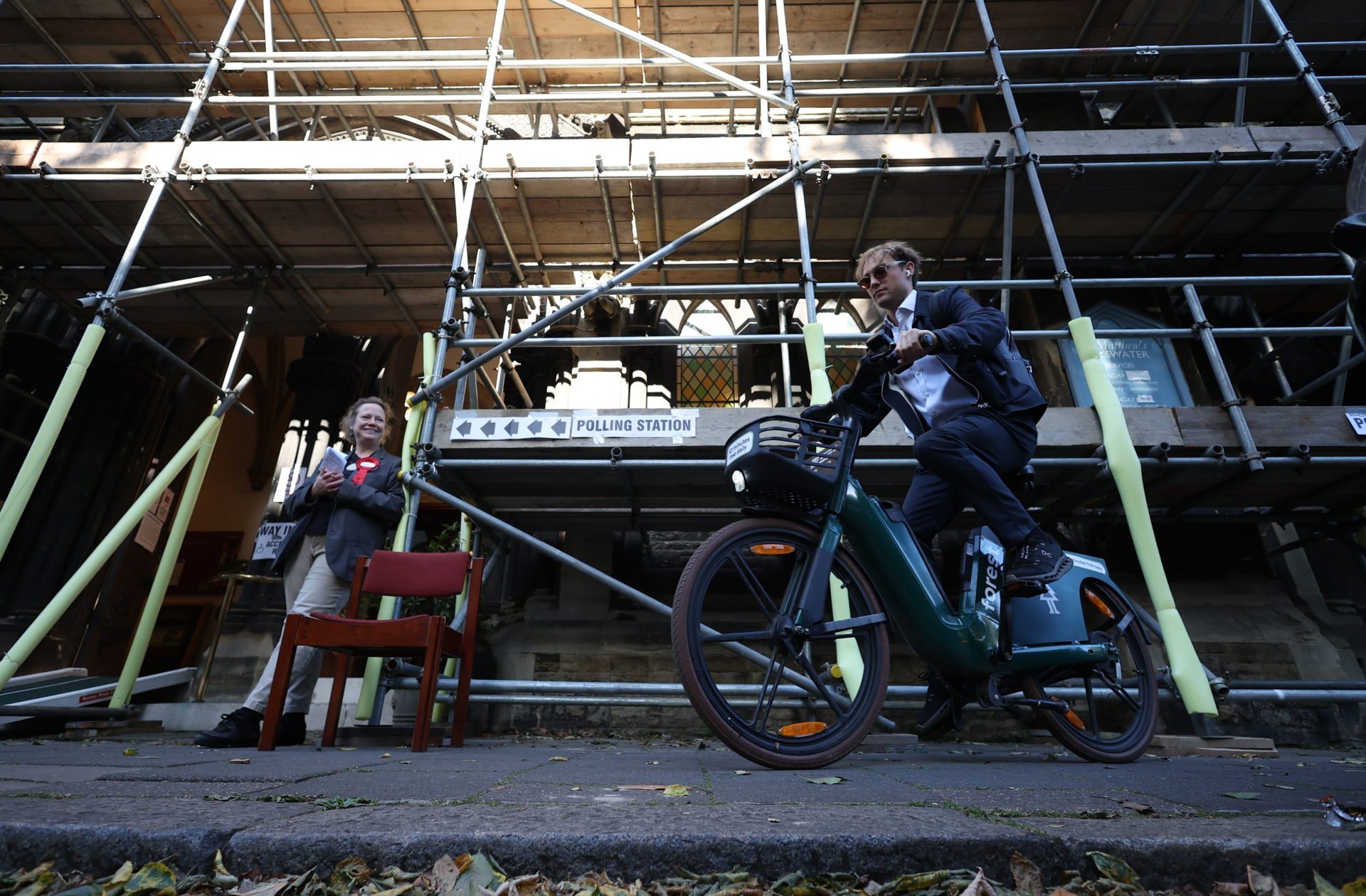
Polling stations opened at 7 am (local time, 09:00 in Cyprus) for the UK parliamentary elections. Approximately 46 million voters are eligible to cast their ballots.
Voting will conclude at 10 pm (local time, midnight in Cyprus), when the first exit poll, commissioned jointly by the BBC, ITV, and Sky News, is expected to be released.
After 14 years of Conservative governance, all indications suggest a significant lead for Labour’s Keir Starmer. Polls have consistently shown Labour with a stable lead of up to 20 percentage points.

Polling data reflects public dissatisfaction with the Conservative Party, driven by issues such as the cost-of-living crisis, immigration, degradation of the National Health Service, and rising crime rates. These concerns have led to a significant shift in voter sentiment.
In the final days of the campaign, Conservative candidates have focused on warning against a ‘Labour landslide victory’ rather than presenting their policies. The Conservatives are losing votes to both the far-right Reform UK party led by Nigel Farage and the Liberal Democrats, who are positioning themselves as the potential main opposition party.
The latest YouGov poll for Sky News predicts Labour will secure 431 seats, the Conservatives 102, the Liberal Democrats 72, the Scottish National Party (SNP) 18, and Reform UK 3.
For the first time since 2005, The Sun has endorsed the Labour Party, with the front-page headline, ‘It’s Time for Change.’ The Sunday Times and the Financial Times had already expressed their support for Labour.
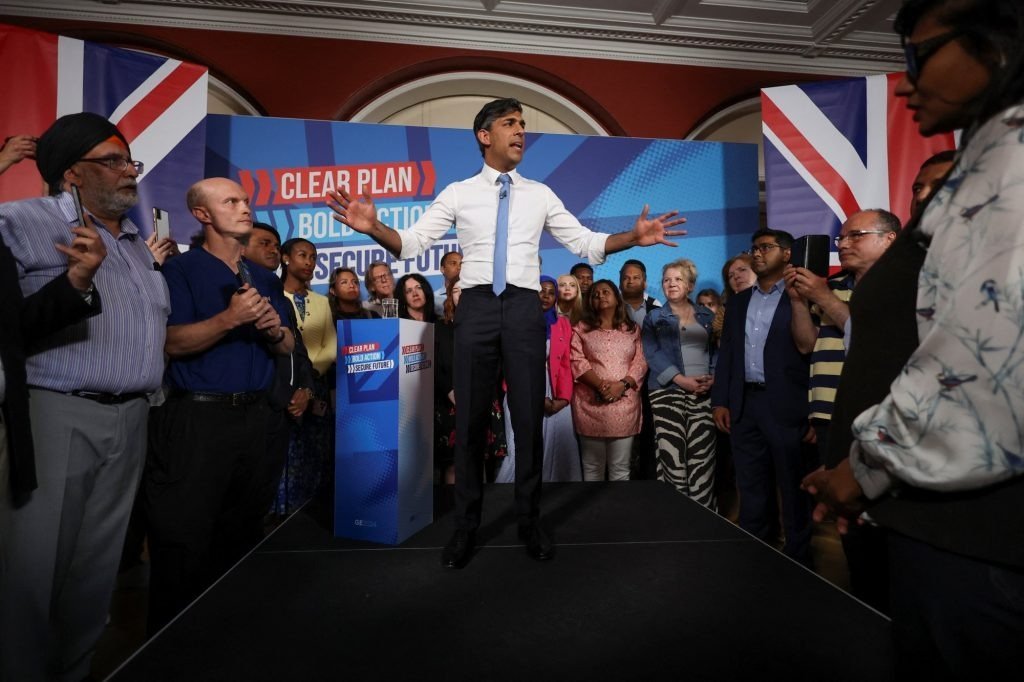
Senior Conservative officials have conceded that Labour is likely to achieve a ‘landslide victory.’ According to the Guardian, Prime Minister Rishi Sunak has expressed concerns to close associates that he may lose his seat, a historic first if it occurs.
The UK parliamentary system consists of 650 single-member constituencies. Of these, 533 are in England, 59 in Scotland, 40 in Wales, and 18 in Northern Ireland. An MP is elected if they receive more votes than any other candidate in their constituency, resulting in 650 separate electoral contests. Thus, national vote percentages do not always correlate with the number of MPs elected.
In the 2015 election, UKIP secured 12.6% of the vote but won only one seat, while the SNP received 4.7% of the vote and won 56 seats. For the first time since 2005, the boundaries of 584 constituencies have been redrawn to ensure equal population distribution, approximately 72,000 voters per constituency.
If no party wins an outright majority of 326 seats, the largest party must seek to form a coalition government, as occurred in 2010 with the Conservatives and Liberal Democrats, or operate as a minority government with support from smaller parties, as the Conservatives did with the DUP in 2017.
The first official results are expected in the early hours of Friday.
Read more:

