


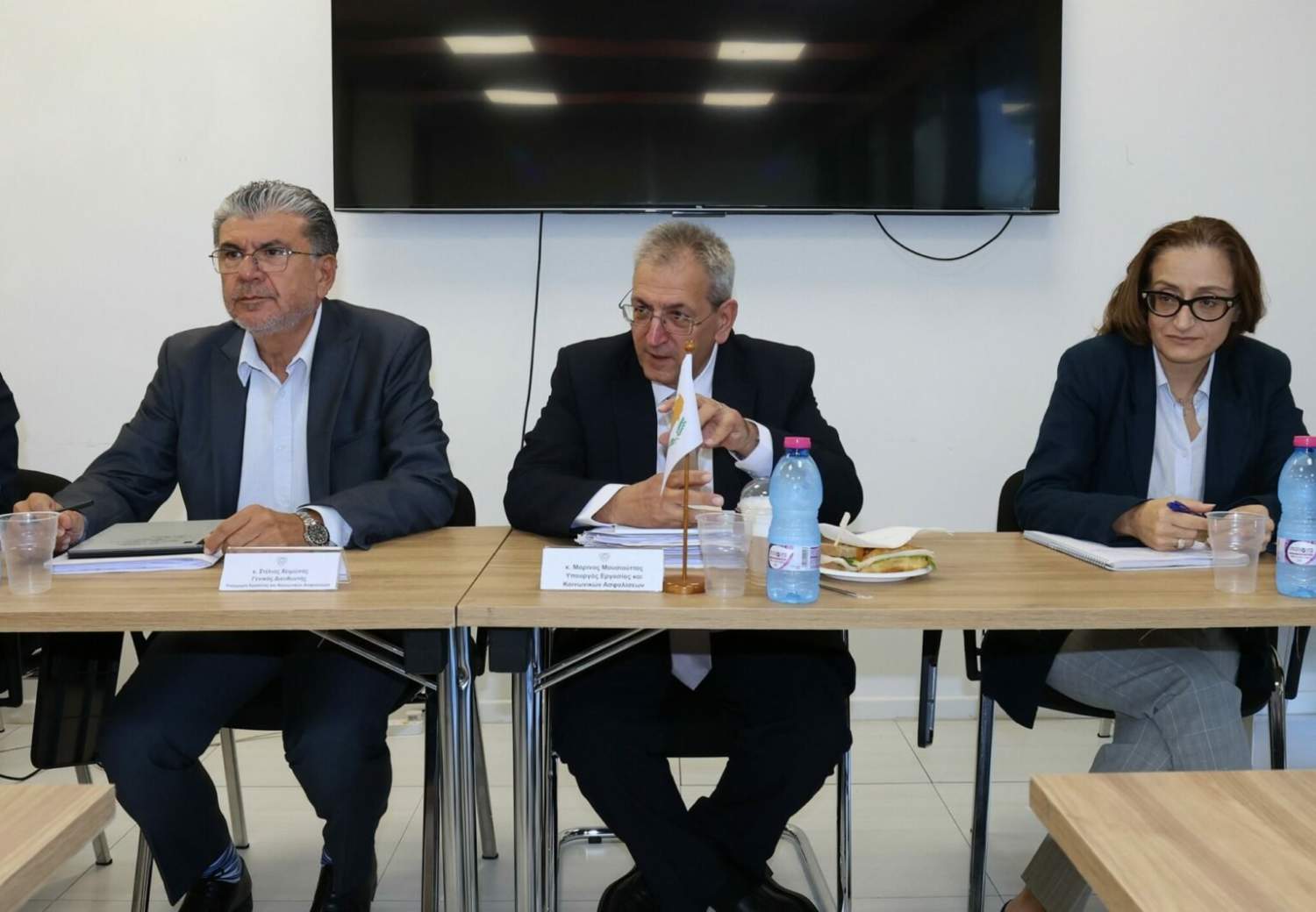
Joining a provident fund, the second pillar of Cyprus’s pension system, could become mandatory by law under a proposal Labour Minister Marinos Moushouttas set out on Monday. That would happen if 50 to 60 per cent of employees and businesses had not signed up voluntarily within three to four years. He also said the government wants pensioners to receive their provident fund savings in monthly payments rather than as a lump sum.
Moushouttas presented what he called a proposal in principle to the Labour Advisory Board on Monday morning. He then outlined it to the House Finance Committee during its examination of the Labour Ministry’s 2027 budget. Under the plan, provident funds would start on a voluntary basis, and businesses that joined during that period would gain strong compensatory benefits, unlike those that joined later.
Phileleftheros understands that the social partners do not see the minister’s plan as a proposal, but as an initial idea put forward orally for discussion. They note that Monday’s board meeting was short because the minister had to attend parliament. They will wait until the board meets again next Monday to hear his ideas in detail before taking an official position. Trade unions support mandatory provident fund contributions, while employers regard them as a red line.
Legal hold-up
Asked why the government’s pension reform bill has been with the Law Office of the Republic for more than a month, Moushouttas told the committee there was a problem with increases in benefits for people with disabilities, carers, students and mothers. The difficulty concerns those who no longer live permanently in Cyprus.
The bill makes no provision for increases for these people, as they received what they were due while they worked in Cyprus but did not continue contributing. The issue must be resolved either by redrafting the provision or by some other legal means. Otherwise, if increases had to be granted to these people, the cost would exceed 100 million euros. Moushouttas warned that this would open a Pandora’s box.
Tight timetable
Committee members asked Moushouttas what the government expected parliament to do to pass the bill in less than a month, in the middle of the budget debate. He acknowledged the tight timetable but said agreement could still be reached.
The question of whether pension increases would be backdated if the bill passed later than planned was also raised. The minister did not address it, and repeatedly stressed that the aim was to pass the legislation before the end of the year.
Retirement and pensions
Moushouttas said the government does not favour incentives to retire at 63. For that reason, he said, the reduction in the early retirement penalty is small, and provisions discouraging early retirement will be introduced over time. Instead, people who wish to keep working beyond retirement age will be able to do so until 67, increasing the pension they receive.
He said low pensions remain below the poverty line even after the reform for purely financial reasons, as there was no room for larger increases. The same reason explains why other demands, including those concerning widowers, were not met.

