


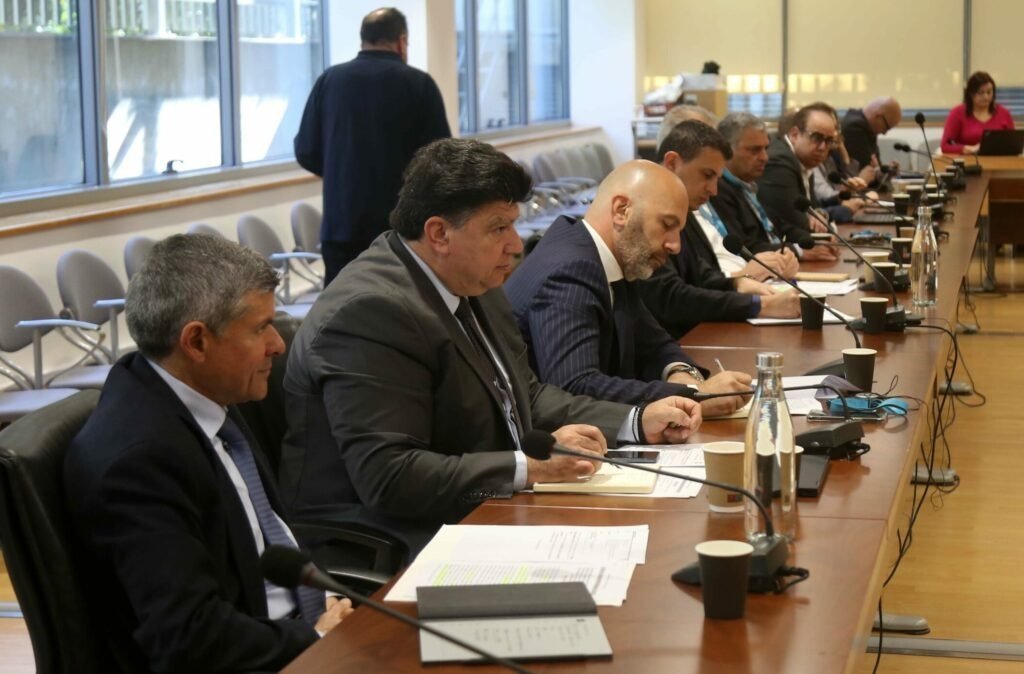
Energy minister George Papanastasiou said yesterday that a formula is being considered to reduce windfall profits from renewable energy companies, during his ministry’s budget discussion at the House Finance Committee.
The minister clarified that this would not involve imposing a tax or fee on these companies but rather exploring a different, specific model. “We are at a very early stage”, he said.
According to Phileleftheros sources, the Energy Ministry is considering drastic changes to the renewable energy trading system, viewing it as the only feasible and efficient solution at present to significantly reduce electricity costs while limiting profits earned by private producers and green electricity suppliers.
The ministry is examining options including abolishing the current Transitional Regulation for the electricity market, which ensures excess profits for photovoltaic producers and energy suppliers.
Officials are also considering requesting a derogation from the European Commission to delay implementing the Target Model for competitive electricity markets, scheduled for late 2025.
The potential derogation request is linked to implementing a single-buyer model, which would require all private electricity producers to sell their output to a central supplier (EAC Supply in Cyprus’s case) through a tender-like process. This aims to prevent overpriced green energy while benefiting household consumers.
If approved by the EU, even temporarily until the electrical interconnection with Crete becomes operational, technocrats estimate this could significantly reduce electricity costs for household consumers (currently excluded from the Transitional Regulation) and commercial users who largely lack access to private generation.
Government and civil service officials reportedly share concerns raised by Cypriot and European energy and economic experts about serious market distortions allowing clear profit-seeking trends among private producers and suppliers.
These distortions in Cyprus are directly linked to the Transitional Regulation established by CERA in 2017, which continues to enable significant excess profits for private participants while offering only small discounts of 8-10% to some industrial and large commercial consumers.
The ministry’s consideration of requesting a derogation from the EU’s energy model comes amid growing criticism across the EU against the Target Model, which faces blame for evident overpricing of green energy and its connection to more expensive fossil fuel-generated electricity prices.

