


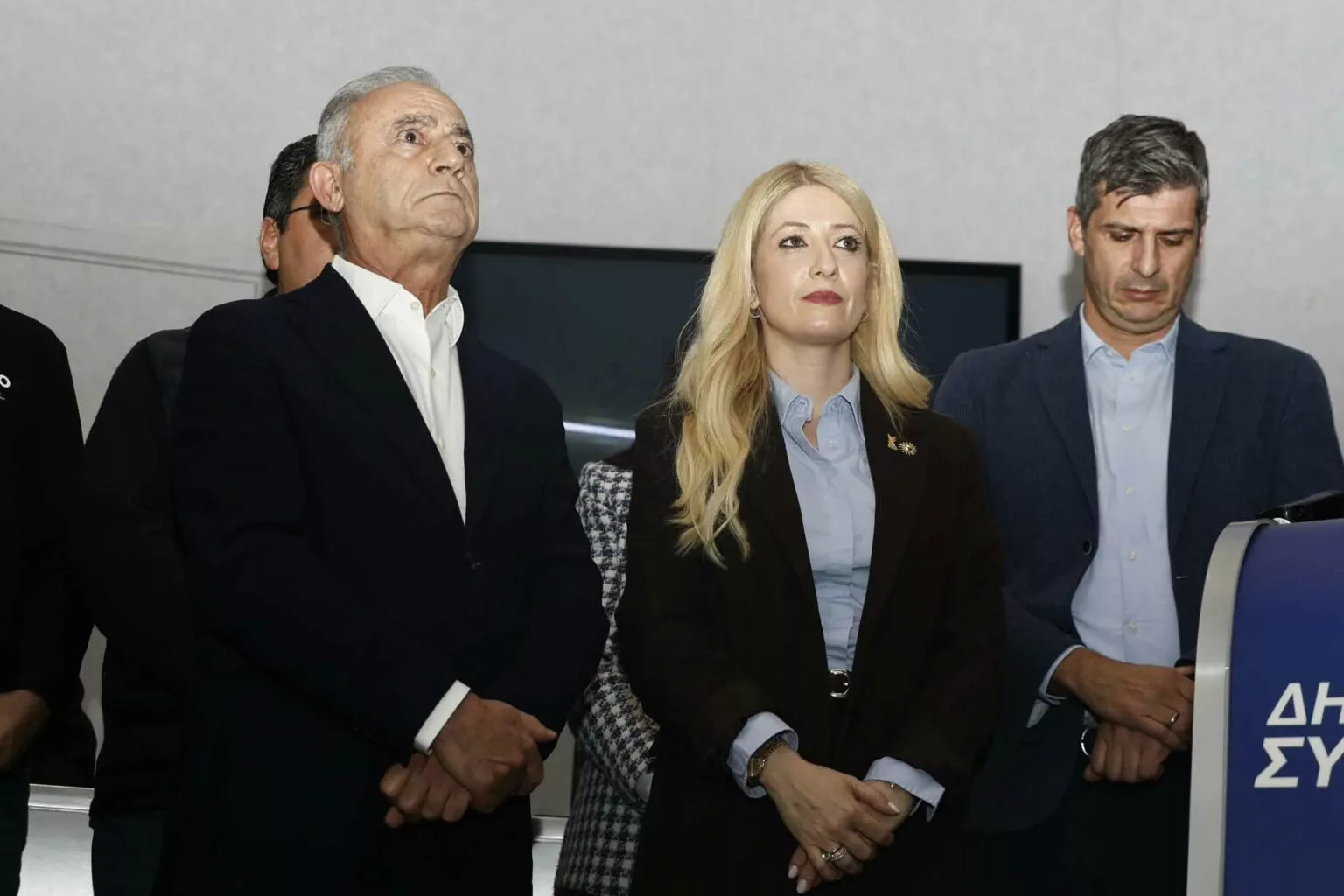
The Democratic Rally (DISY) has its candidate for the 2028 presidential election. Averof Neofytou secured a strong mandate from party members on Saturday night, although the low turnout in the internal election remains an important factor in assessing the result.
The party’s presidential campaign officially begins on Monday. As DISY president Annita Demetriou said on Saturday, the candidate and the party leadership will meet to begin jointly drafting a government programme.
Her remarks open the first major chapter in DISY’s presidential campaign: how the party leadership and its candidate will work together on the road to the election. It is a test both sides need to pass.
Another notable aspect of Saturday night’s announcement at DISY headquarters was the contrast between the statements made by the two candidates following the result.
Neofytou, as expected, called for unity and urged party members to rally behind the campaign.
“I want you by my side,” he told Giorgos Pamboridis. He also said there were no winners or losers and that together they would formulate a proposal for the presidential election.
Pamboridis responded to Neofytou’s remarks with a polite smile. The exchange offered little indication of whether the two would work closely together during the presidential campaign.
Pamboridis, who spoke first after his defeat, thanked his campaign team and those who had worked for him before wishing Neofytou and DISY good luck.
His remarks went no further. He did not speak of unity, call for a DISY victory or declare his readiness to stand alongside the candidate and work towards winning the presidential election.
That omission is worth noting and may offer an indication of the difficulties facing DISY in the aftermath of the internal contest.
Neofytou takes responsibility and reaches beyond DISY
In his statement, Neofytou appeared to take personal responsibility for both the presidential campaign and its eventual outcome, saying it was his responsibility to earn the public’s trust.
His remarks also addressed concerns among those who believe DISY could once again be left carrying the burden of an electoral defeat.
Neofytou also made his first overtures beyond the party, calling on left-wing voters, centrists and socialists to join him in tackling society’s major problems and responding to its challenges through a new model of government.
The appeal signals his intention to reach beyond DISY’s traditional electorate and build the broader support he is seeking to reach the second round of the presidential election. It could also help compensate for weaknesses and the loss of DISY voters to other political camps.
For Neofytou, there are two major challenges.
The first is to unite DISY supporters and secure a high level of support within the party while limiting the loss of voters to President Nikos Christodoulides, who, according to opinion polls cited in the original analysis, retains a consistent level of support among DISY voters.
The second is to navigate internal divisions and guard against efforts to undermine his candidacy. This may prove the more difficult of the two.
Will the entire DISY leadership rally behind Neofytou?
Another question is whether the party leadership as a whole will embrace Neofytou’s candidacy and work hard to support it.
As recently as the beginning of last week, Annita Demetriou was referring to comments that had caused hurt within the party. Questions also remain unanswered about the circumstances leading to her decision to withdraw from the nomination contest.
There is also the publicly stated position of Harris Georgiades, who said he would not support Neofytou if he became the presidential candidate because his positions no longer reflected those of DISY.
Georgiades had also accused Neofytou of politically blackmailing the party.
The government programme and electoral alliances
Work on drafting the government programme begins on Monday, alongside a new round of contacts over potential electoral alliances.
The candidate and the party must agree on whether to conduct these discussions jointly and which political forces to approach. Will dialogue be open to everyone, or will certain political parties be excluded?
The presidential campaign will be a long one, and both sides will have numerous issues to address along the way as they await the final shape of the political landscape.

