


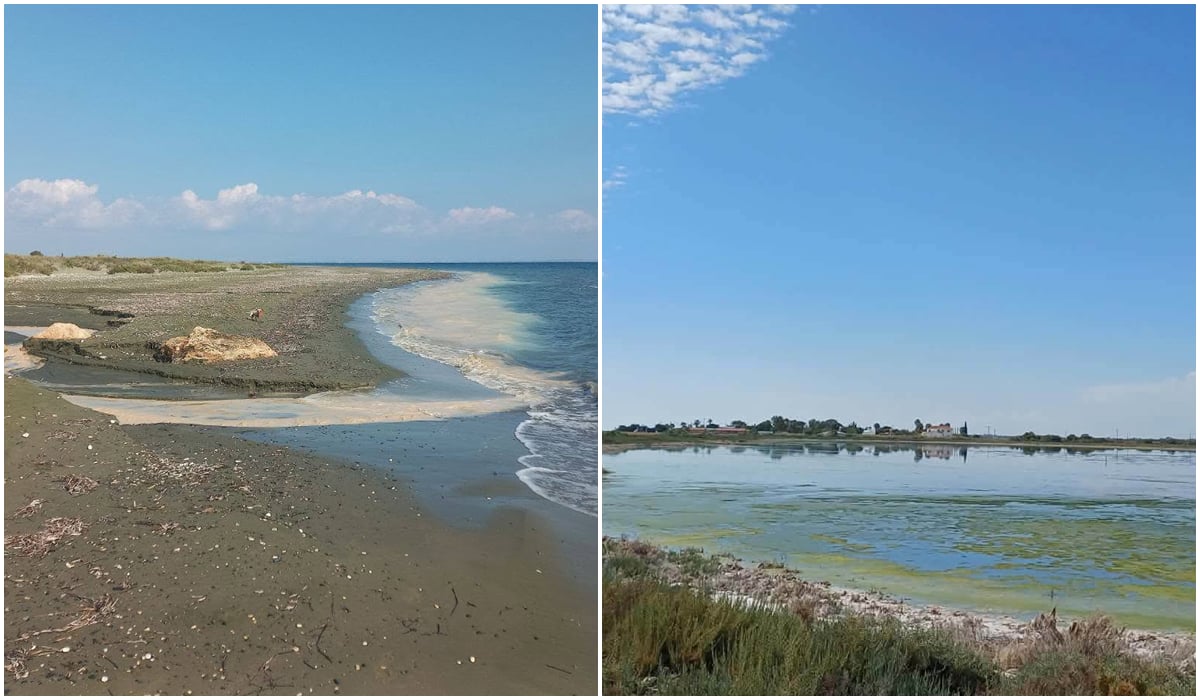
Serious questions have been raised over the management of the Natura 2000 protected area encompassing the Larnaca Salt Lakes, a wetland of international importance, following three separate complaints received by Phileleftheros about possible pollution at one of the lakes, known as Spyros Pool.
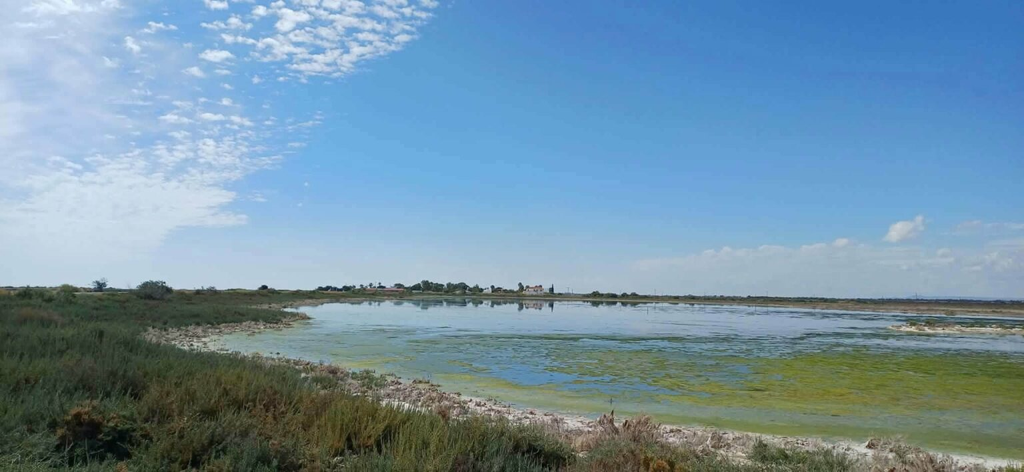
The complaints, from independent sources, raised concerns about eutrophication, commonly known as algal growth, as well as water being discharged into the sea at two locations in the area.
The responses received by Phileleftheros have done little to allay those concerns and have raised further questions about activities that could threaten the protected wetland. The information gathered indicates that the condition of Spyros Pool is linked to the overflow of reservoirs operated by the Water Development Department (WDD), which store tertiary-treated water from the Larnaca Wastewater Treatment Plant.
Eutrophication poses a serious threat to the ecological balance of wetlands. It can cause oxygen depletion, deteriorate water quality, disrupt food chains and lead to biodiversity loss.
Although the Environment Department’s initial response did not clearly explain the cause of the algal growth at the lake, Phileleftheros repeatedly sought clarification. The department’s acting director, Elena Stylianopoulou, said on-site inspections had established that the eutrophication resulted from the overflow of WDD reservoirs. She also maintained that the material entering the lake did not contain sewage.
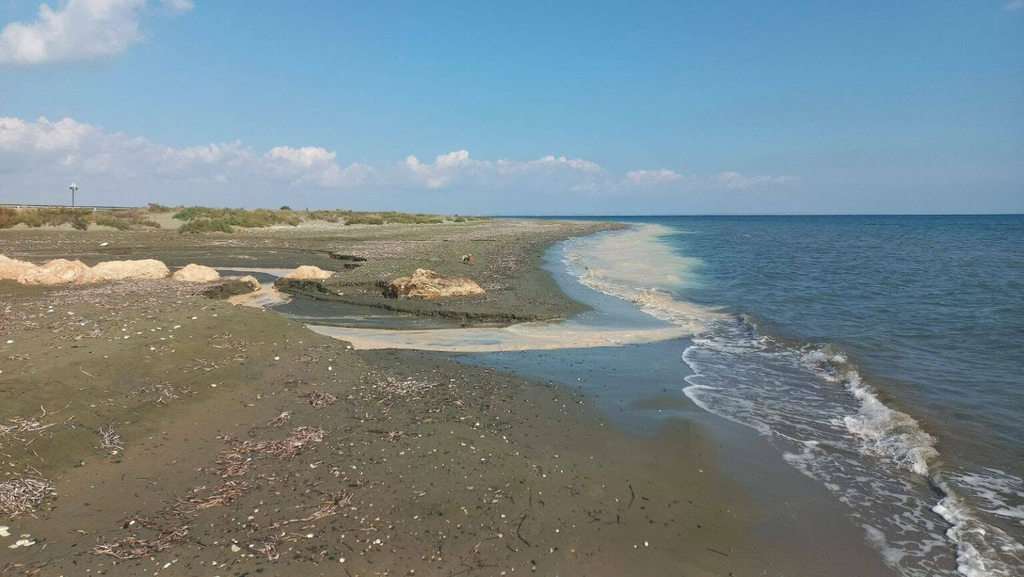
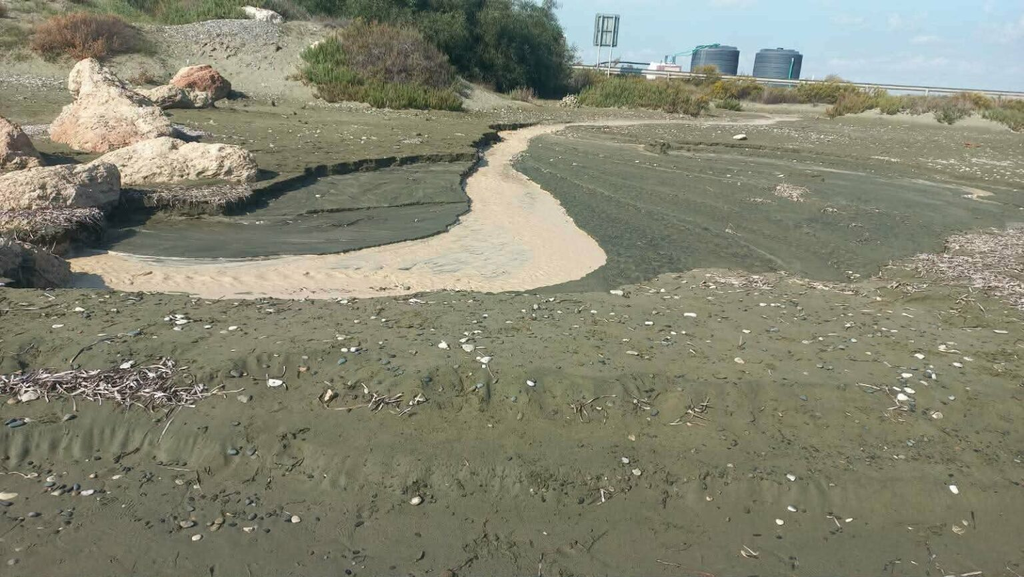
In its written response, the Environment Department said permission had been granted for treated water to be discharged into the sea at predetermined locations selected by the competent authorities.
The measure, it said, was intended to protect the sensitive salt lake ecosystem from reservoir overflow incidents and mitigate their effects on the lakes’ hydrological and nutrient cycles.
The permit for the discharge, the department explained, covered emergency environmental protection needs until the WDD completed a pipeline network to transfer the recycled water to Tersefanou reservoir, where it would be properly managed and used mainly for agricultural purposes.
Larnaca District Local Government Organisation president Angelos Hadjicharalambous said the leakage did not originate from the wastewater treatment plant.
“Overflow incidents usually occur during the winter months at the WDD reservoirs,” he said.
Asked whether the organisation had raised concerns about the situation, he replied that it had.
“We have repeatedly stressed how urgent it is to transfer the water to the Tersefanou reservoir. What puzzles us and concerns us is how, when the reservoir was completed in 2023 and could now be storing water, which is so valuable given the serious problems we face, we have reached 2026 without a pipeline to store it,” he said.
Drainage water from pipeline works also discharged into the sea
Meanwhile, with the Environment Department’s permission, material pumped from underground at another location along the same stretch of coastline is also being discharged into the sea. The work is being carried out by a company contracted by the WDD to install pipelines connecting to Tersefanou reservoir.
The €5.3 million pipeline project began in February 2025 and is expected to be completed in March 2027.
The WDD described it as a high-priority project because it would increase the use of non-conventional water sources to meet agricultural needs.
In its response to Phileleftheros, the department added that, following additional conditions imposed by the Environment Department to protect the Larnaca Salt Lakes, a temporary pumping system and flexible hoses had been installed to remove water encountered during excavation work.
The Environment Department said the water was being discharged at Meneou beach, near the desalination plant. It described the operation as an authorised and controlled discharge following the dewatering of underground water from excavation works.
The works form part of the WDD’s recycled-water pipeline project and Phase Three of the Larnaca sewerage system, both within the protected Natura 2000 network.
“Groundwater is pumped from the excavation substrate and, following analysis, was assessed as not causing pollution to the sea, since it does not contain sewage or wastewater contaminants. Therefore, there are no grounds for prohibiting its discharge into the sea,” the department said.
It also emerged that, when construction work began, the outlets of the stormwater drainage network in the area surrounding the salt lakes were found to lead into the lakes.
“Taking into account the sensitivity of the salt lakes’ ecosystem, and because adding water beyond the annual volume expected from rainfall could have significant effects on the plant communities that are among the features protected under the Natura 2000 designation, the Environment Department and the other competent authorities decided that drainage water should be channelled towards the sea through temporary pipes (hoses), while maintaining the original intention for its management,” the department said.
It added that a programme of physicochemical water testing was also under way. Samples were taken on 24 November for quality analysis, following the full operation of the system.
The department stressed that both the discharge of water from the dewatering works and the release of water from the treated-water storage reservoirs were under the continuous supervision of the competent authorities.
Environmental organisations also raise concerns
The eutrophication at the salt lake was first highlighted by environmental organisation Terra Cypria in a social media post on 14 October, which included photographs documenting the situation.
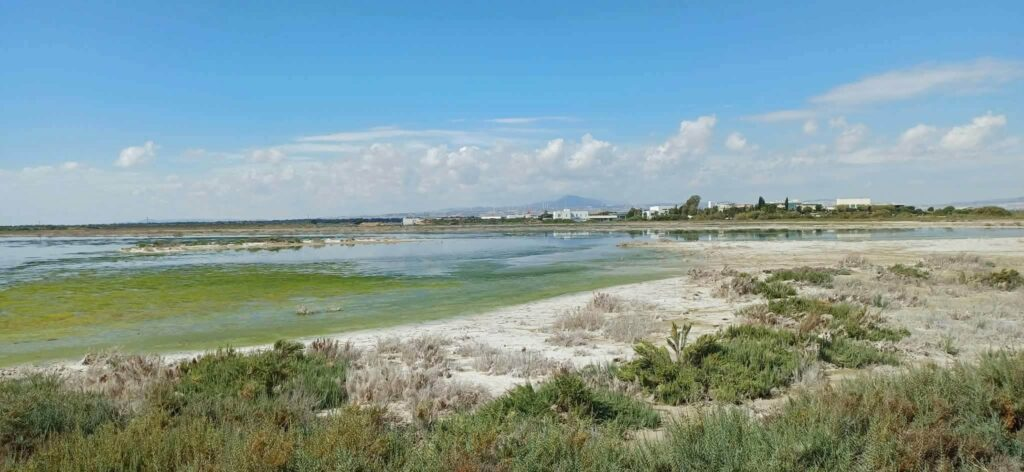
Warning that the ecological balance was being disrupted, potentially affecting species dependent on the lake, including waterbirds, the organisation raised a series of questions.
Phileleftheros contacted Terra Cypria and was told that it had never received a response to those questions.
BirdLife Cyprus subsequently raised the issue. In a letter sent to the Environment Department on 26 October and copied to other relevant authorities, the organisation called for an investigation into possible sewage discharges into the salt lake.
The letter sought information about the possible discharge of wastewater during dewatering and pumping operations at the lake.
BirdLife Cyprus also said volunteers had visited the area on 22 October and found that birds were absent from the lake, unlike on previous days.
“The departure of the birds raises alarm bells about poor water quality, given that we are in the autumn migration period and the beginning of the wintering season, when flamingos and various waterbird species arrive in the area,” the organisation said.
BirdLife Cyprus also told Phileleftheros that it had received no response to its letter.
Phileleftheros also received a complaint from a member of the public about hunting near the salt lake and piles of rubbish behind the large lake, close to the Kamares area.
There have also been almost daily complaints about people entering the main salt lake without facing penalties.
Taken together, these reports raise serious questions about the effectiveness of the protection measures in place at one of Cyprus’s most important wetlands. The situation warrants immediate attention from the political head of the Agriculture Ministry.

