


The Democratic Rally (DISY) and AKEL said nine of the 12 measures in President Nikos Christodoulides‘ 65-million-euro Christmas support package were recurring benefits, and called for permanent action to tackle the high cost of living.
Both parties welcomed the financial support for households but said there was no comprehensive plan to deal with rising prices. They also noted that parliament had already approved the extension of the lower tax on motor fuels, which will now run until 31 March 2027.
The package opens state support to the middle class by extending a one-off payment to families with children earning up to 100,000 euros a year. It also introduces a prepaid bank card, the CY ONE CARD, starting with low-income pensioners.
DISY welcomed the package’s two new measures. However, it criticised the lack of measures to increase the student grant and to raise child benefit permanently, and called for “a comprehensive plan to tackle high prices, with permanent and structural interventions” that would substantially cut the cost of living.
AKEL pointed to the state’s fiscal capacity and demanded more permanent interventions on wages, pensions, and energy and housing costs. What mattered, it argued, was “the size of the support that society receives”, not how much publicity the announcements received.
Christodoulides points to the economy
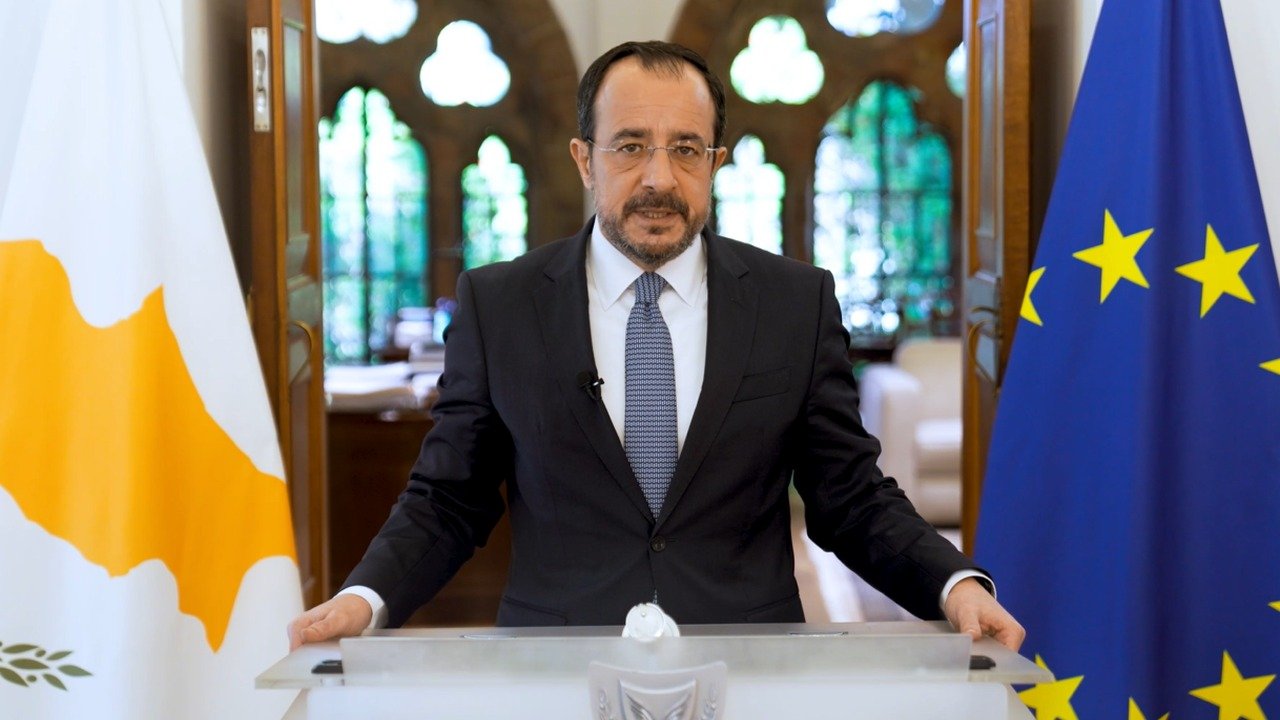
In a televised message, Christodoulides defended his government’s fiscal policy. He said the Cypriot economy’s resilience in the face of international challenges was what allowed the government to pass the benefits on to society.
With a specific framework and planning, he said, “economic growth translates into a benefit for society as a whole”.
Christodoulides said total support exceeded 1 billion euros once measures on electricity costs, fuel and the taxation of basic goods were included. He also pointed to the relief the tax reform would bring to household incomes and to pension increases under the pension reform.
He said the government would keep intervening wherever and whenever necessary with measures that were substantive, socially fair and fiscally responsible, and free of populism and wishful thinking. In a jab at previous governments, he criticised irresponsible past policies which he said had led to social grocery stores.
Payments for families
The payment rises with the number of children. Families will get 100 euros for the first child, 150 euros for the second and 200 euros for the third, with the amount rising by 50 euros for each additional child. A family with two children will receive 250 euros, one with three 450 euros, one with four 700 euros and one with five 1,000 euros.
Recipients of the single-parent family allowance, families with three or more dependent children and mothers of large families who receive the honorary allowance will get an extra 100 euros.
Pensioners and benefit recipients
Low-income pensioners will receive 200 euros through the new card to buy heating oil or fuel. They will also get an extra payment equal to their monthly low-income pensioner allowance, with a minimum of 100 euros.
Recipients of the Guaranteed Minimum Income (GMI) and public assistance will receive an extra payment equal to 80 per cent of their family’s basic needs for December. The enclaved will receive a payment equal to their December allowance, and their children will receive the same support.
How the card will work
The CY ONE CARD will allow the state to decide where the money it gives beneficiaries is spent. It will start with the low-income pensioners’ 200 euros, which can be spent at petrol stations.
Speaking on the programme ‘Alpha Enimerosi’, Nicodemos Damianou, Deputy Minister of Research, Innovation and Digital Policy, said applications were expected to open on 7 December. Bank of Cyprus, Eurobank and Alpha Bank will take part in the first phase.
The Deputy Ministry of Social Welfare will write to each beneficiary, who will then apply online through the bank where they receive their benefits. The card will carry the holder’s name and will be sent by post. Pensioners who cannot use the card will have the money paid directly into their bank account.
Damianou did not rule out that some low-income pensioners might not receive the card before Christmas. The government plans to extend the card in future to other groups, including single-parent families and child benefit recipients.
Other reactions
The Union of Cypriot Pensioners (EKYSY) said only 30,000 of the roughly 180,000 pensioners in the Social Insurance Fund would benefit from the new 200-euro payment. It called for a review of the income criteria for the Low-Income Pensioner Support Allowance, which it said had remained frozen at 2013 levels. “Full state coffers are not enough when pensioners’ pockets remain empty!” the union said.
The Cyprus Consumers Association described the measures as welcome. Marios Drousiotis, of the association, told OMEGA’s ‘Enimerosi Tora’ programme that this was the first time a package of entirely targeted measures had been announced. He welcomed the CY ONE CARD and said it should have been introduced earlier.
However, Drousiotis sharply criticised the decision to tie the pensioners’ 200 euros to fuel and heating oil. He argued that a large share of low-income pensioners did not drive and estimated that much of the money would go unused. He suggested the payment should go towards food instead, and questioned whether part of the money would return to the state. “Why did the government choose this way to take half the money back through VAT?” he asked.
At a news conference held before the announcements, the Pancyprian Organisation of Large Families (POP) called for the income criteria for child benefit to be abolished and warned it could take protest action. Citing figures, it said the number of large families entitled to child benefit had fallen to 3,166 from 10,065.
POP called on Christodoulides to honour his pre-election pledges. As an interim solution, it proposed raising the income threshold to 150,000 euros and the asset threshold to 2.4 million euros. It also linked support for large families directly to tackling Cyprus’s low birth rate.

