


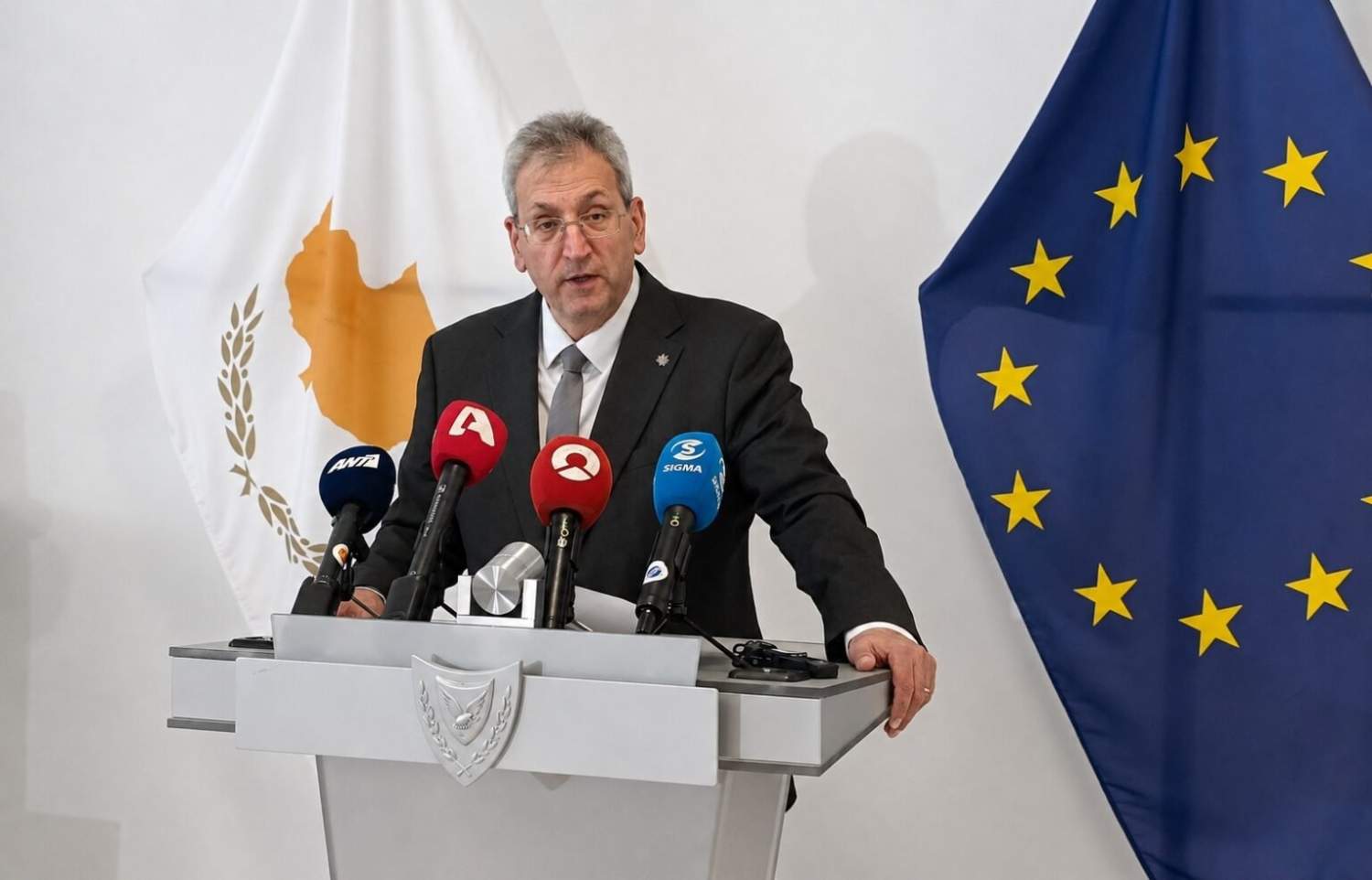
Nothing has yet been decided on provident funds, Labour Minister Marinos Moushouttas said on Tuesday, as the government aims to give every worker in Cyprus a second pension income on top of their social insurance pension. Without referring to a proposal for provident funds to be paid out monthly, which had drawn widespread criticism, he said serious questions still needed discussion and clarification.
Speaking about pension reform at the ‘Trust’ youth union, Moushouttas said discussions were focused on three questions. These are whether participation will be mandatory or based on automatic enrolment with the right to opt out, whether it will involve a lump sum or a monthly income, and how to protect funds already operating successfully.
How the second pension income will be achieved is still under discussion, the minister added, and he did not wish to prejudge any decision. Only one in four workers currently has a provident fund, he told the audience, and usually not those who need one most, such as low-paid workers and those employed by small businesses.
Pension increases
Pension increases under the reform will range from 5 per cent to 55 per cent, with the biggest rises going where the need is greatest, and will be paid over three years, according to Moushouttas.
Pensioners receiving up to 600 euros will get a guaranteed increase of at least 30 euros a month as soon as the reform takes effect.
About 123,000 current pensioners will see their pensions rise, the minister said. More than 50,000 will get an increase of over 100 euros a month, and more than 10,000 an increase of over 200 euros.
In one example, a low-paid worker with 35 years of insurance who now receives about 640 euros will get about 830 euros. A middle-income worker, also with 35 years of insurance, will see their pension rise from about 850 euros to about 1,000 euros, while a low-to-middle earner with 42 years of contributions who receives 760 euros will get about 980 euros, an increase of about 30 per cent.
Contributions for those out of work
For the first time, the state will pay contributions for people out of work for justified reasons, Moushouttas said. These include parents who stay at home with their children, people caring for an elderly parent, students, people with disabilities and young people taking their first steps in the labour market.
The actuarial reduction in the basic pension for those who chose to retire at 63 instead of 65 will be cut from 12 per cent to 7.5 per cent, and the change will also apply to those retiring over the next five years, he added.
Social Insurance Fund
The reform also safeguards the Social Insurance Fund itself, the minister said. State borrowing from the fund will stop and “the state begins gradually repaying the debt”, he said, adding that the fund will have real invested capital, with transparency and governance rules that meet international standards.
Moushouttas also said the labour market was at full employment, with unemployment steadily below 4 per cent. He pointed to two major agreements reached recently, on the Cost-of-Living Allowance (COLA) and the minimum wage, and said workplace accidents had fallen by a cumulative 32 per cent over the past five years.

