


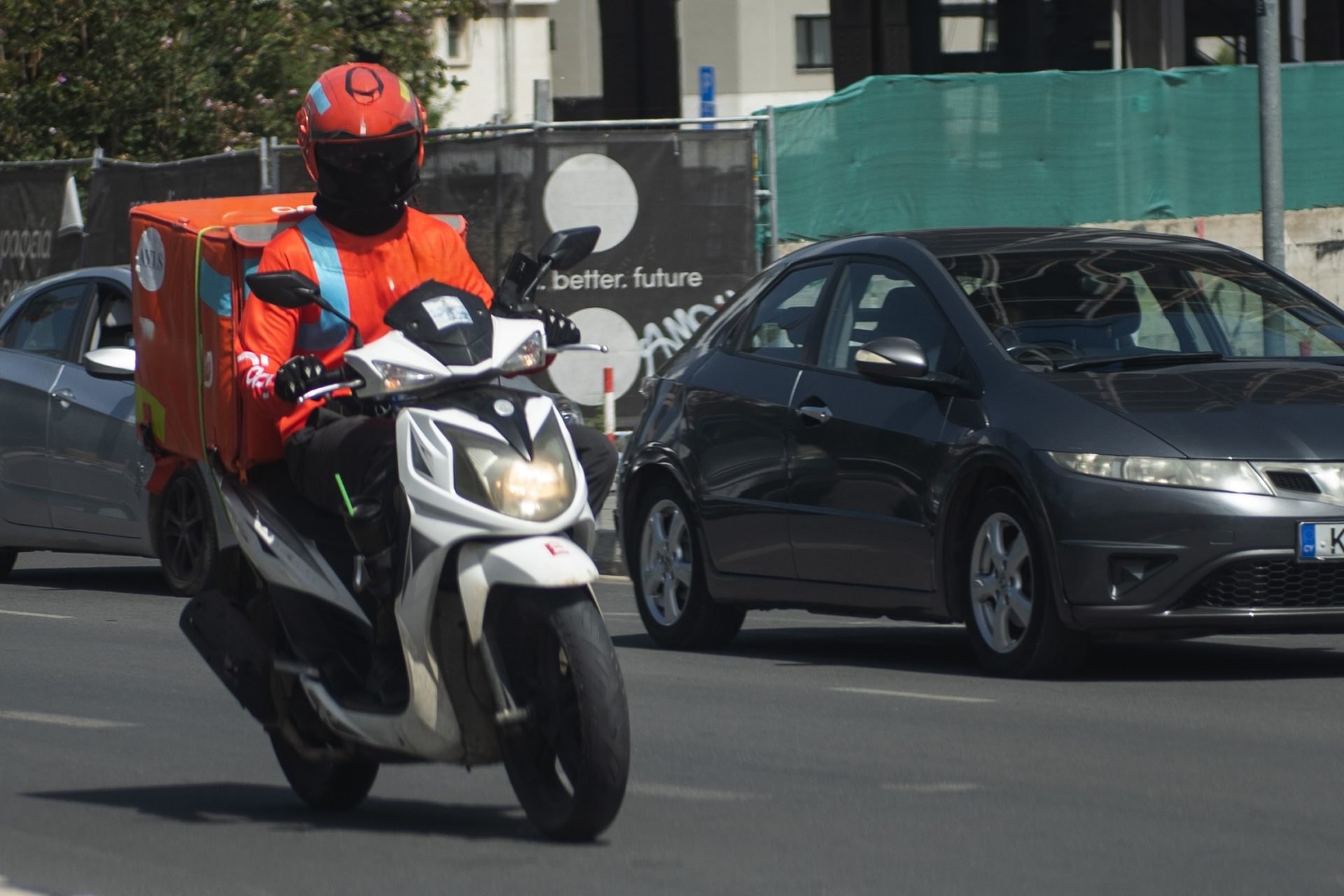
Delivery riders using e-bikes and e-scooters would need third-party insurance, registration with the Road Transport Department and an identification plate under a bill tabled in parliament by far-right ELAM parliament member Sotiris Ioannou.
Riders caught without insurance or registration would be committing a criminal offence. On conviction, they would face a fine of up to €3,000, up to three months in prison, or both, and their vehicles could be impounded.
Ioannou, who chairs the House transport committee, submitted the private member’s bill to the plenary. It has been referred to the committee for discussion.
The insurance requirement would apply to anyone using an e-bike or personal mobility device to deliver food, drinks, goods or parcels. That includes contracted workers, the self-employed, people who make deliveries on their own initiative and even those who do so unpaid.
The bill aims to close a gap in the law. Because insurance for e-bikes and e-scooters is not compulsory, people injured in accidents involving them are not entitled to compensation.
Under the proposal, the Road Transport Department would set up a dedicated register for vehicles used for delivery work. Owners would have to apply and pay a fee, and the department would check that each vehicle is suitable and complies with the law before approving it.
Each registered vehicle would receive a registration certificate and identification details, which would be shown on a plate fixed to the bike or scooter. The owner’s name and identification details would be recorded in the register. The registration fee, plate specifications and other procedures would be set later by ministerial decree.
Police, authorised municipal and community traffic wardens and other competent officials would be able to impound e-bikes and scooters if they found breaches of the insurance or registration rules.
The bill also sets out what would count as proof that someone is working as a delivery rider. This includes carrying food, parcels, mail, equipment or other goods to be handed over to another person, and markings on the vehicle showing the employer or business the delivery is made for.
If an offence involves a rented scooter, the rental company would be required, on request, to give police and local authorities the user’s full details, subject to data protection law.
Read more:

