


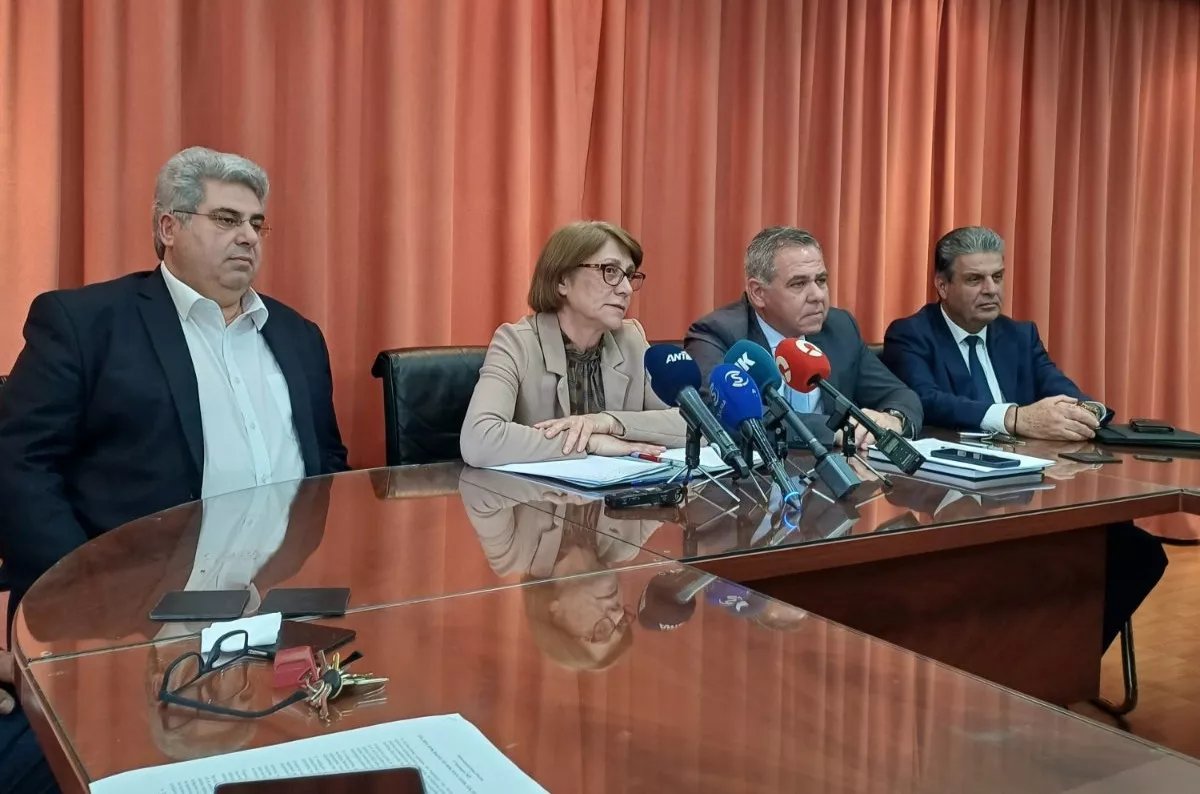
Trade unions told Labour Minister Marinos Moushouttas on Monday that the monthly provident fund payouts he has spoken of should be only one part of the decisions on pension reform, Phileleftheros understands.
Moushouttas said last week that the government wants pensioners to receive their provident fund savings in monthly payments rather than as a lump sum, remarks that have been widely debated since. Under a proposal in principle he set out at the time, joining a provident fund, the second pillar of Cyprus’s pension system, could become mandatory by law if 50 to 60 per cent of employees and businesses had not signed up voluntarily within three to four years.
Trade unions support mandatory provident fund contributions, while employers regard them as a red line.
The meeting with the Cyprus Workers’ Confederation (SEK), PEO and DEOK focused on provident funds, and the unions were firm on one key point: “Don’t touch the existing funds.”
The unions want existing provident funds to remain and be expanded through collective agreements, paying workers a lump sum as a cushion for their needs after retirement. Separately, and independently of the existing funds, they want a new compulsory provident fund for all workers, which would supplement the monthly Social Insurance Fund pension so that the total exceeds the poverty line.
Low pensions and pillars
The unions also sounded out Moushouttas on whether he intended to reopen talks on pillars ‘0’ and ‘1’ of the pension reform, and came away with the impression that he does not, despite disagreements on key issues.
These disagreements concern whether the poverty line or the 900 euros proposed by the government will be the baseline for low pensions, and the government’s approach to the hurdles it intends to set for retiring at 63, Phileleftheros understands.
Safeguards
All sides appear to agree that safeguards are needed so that people cannot easily cash in their provident fund when leaving a job for any reason, or use part of it for loans, and that rules should ensure the money is used for its intended purpose.
Next steps
Although the Labour Advisory Body did not meet, Moushouttas held talks with the unions on Monday. A similar meeting with employers did not go ahead because they were unable to attend, but it is expected to take place as soon as possible. There has been no word yet on whether the body’s next session, scheduled for Monday, 30 November, will go ahead or whether separate meetings will continue.
Moushouttas will hear the employers’ side before deciding how to proceed. The government bill is still with the Law Office of the Republic, and debate in parliament has not yet begun.

