


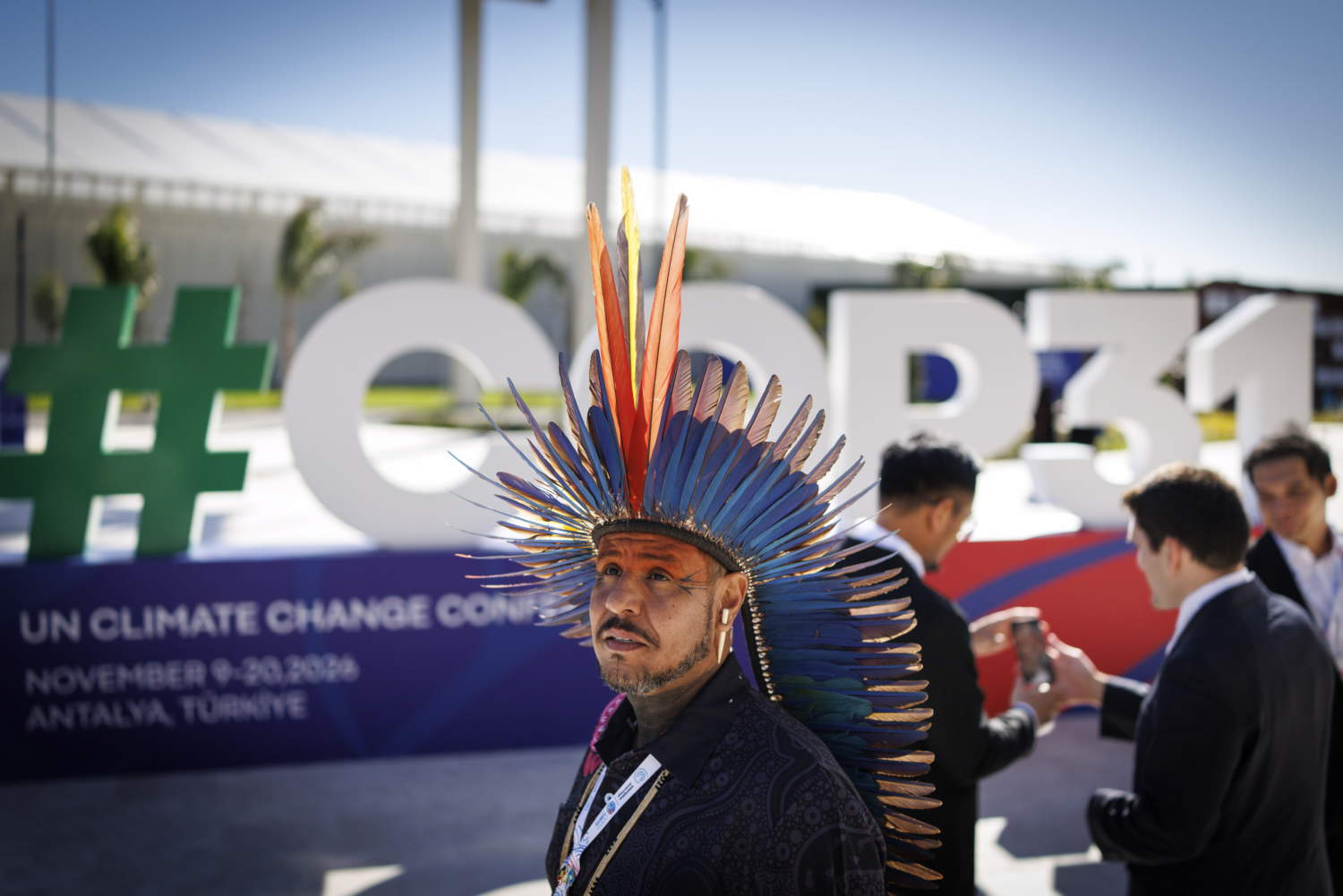
The EU wants countries to turn climate promises into action, but faces resistance over fossil fuels, disputes about who should pay for the transition and growing pressure to balance climate ambition with energy security and competitiveness.
What is COP?
COP stands for the Conference of the Parties: the annual United Nations climate summit where nearly 200 countries negotiate how to tackle global warming.
The process is based on the UN Framework Convention on Climate Change (UNFCCC), established in 1992. Its most significant achievement is the 2015 Paris Agreement, under which countries committed to keeping global warming well below 2°C and pursuing efforts to limit it to 1.5°C.
COP31 takes place in Antalya, Türkiye, from 9 to 20 November. Türkiye is hosting the conference and holds its presidency, while Australia will steer the formal negotiations under an unusual power-sharing arrangement agreed after both countries bid to host the summit.
What is the EU pushing for?
Brussels wants COP31 to focus on implementation rather than another round of promises. Its message is that countries must deliver on commitments already made under the Paris Agreement, particularly the decisions taken at COP28 in Dubai and COP30 in Brazil.
The EU’s position, agreed by member states in October, calls for faster emissions reductions, a transition away from fossil fuels, greater electrification and stronger climate resilience. But the bloc faces pressure on several fronts.
Fossil fuels: the biggest political battle
One of the main disputes is how quickly the world should move away from coal, oil and gas.
At COP28, countries agreed for the first time to transition away from fossil fuels in energy systems. But progress has stalled, with producing countries resisting binding commitments and arguing that energy security and economic development must come first.
The European Parliament is pushing further, calling for time-bound plans to phase out fossil fuel production and subsidies and urging Brussels to take a leading role in discussions on a fossil fuel non-proliferation treaty.
Türkiye itself remains heavily dependent on coal, highlighting the difficulty of reaching international agreement.
Clean energy and energy security
Türkiye has made electrification a central theme, promoting a proposed ’35-by-35′ target to increase electricity’s share of global energy demand to 35 per cent by 2035, from around 20 per cent today.
The EU supports faster electrification but argues that it must go hand in hand with clean power generation which will aim to replace petrol cars and gas heating with electricity will not deliver the same climate benefits if that electricity comes from coal and gas.
Brussels is also pushing countries to deliver on commitments to triple renewable energy capacity and double energy-efficiency improvements by 2030. Energy security has given the issue additional urgency amid geopolitical tensions and volatile oil and gas prices, which have reinforced the EU’s argument that reducing dependence on imported fossil fuels is both a climate priority and a strategic necessity.
However, this transition requires major investment in electricity grids, storage and infrastructure, while European industries are concerned about energy costs and international competitiveness.
Climate finance: who pays?
Money is expected to be another major fault line.
Developing countries argue that they need far more support to adapt to extreme weather, build resilient infrastructure and move towards cleaner energy. They point out that they have contributed relatively little to historic emissions but are among the most vulnerable to climate disasters.
At COP29 in Baku, developed countries agreed to mobilise at least $300 billion annually for developing nations by 2035, within a wider ambition of $1.3 trillion from all sources.
The EU and its member states contributed €32.3 billion in public climate finance in 2025 and mobilised another €9.3 billion from private sources, nevertheless, developing countries want clearer guarantees over who provides the money, how it is distributed and whether it comes as grants or loans.
The EU’s own credibility is under scrutiny
Brussels is asking other countries to raise their ambitions while facing its own challenge of delivering on climate targets.
The EU has a legally binding objective to cut net greenhouse gas emissions by 55 per cent by 2030, by 90 per cent by 2040 and reach climate neutrality by 2050. The 2040 target was formally adopted in 2026, with some flexibility through international carbon credits.
The European Parliament has nevertheless warned that global progress remains insufficient and that the EU must lead by example, particularly on fossil fuels, renewables and energy efficiency.
The absence of an official US delegation at COP31 is another setback for international cooperation, given the country’s position as the world’s second-largest greenhouse gas emitter.
What is Cyprus’s involvement?
Cyprus has become involved in a separate diplomatic dispute with Türkiye over its exclusion from two COP31 preparatory meetings in New York and Tokyo. Climate Commissioner Wopke Hoekstra warned Ankara that all 27 EU member states must be treated equally, pledging the bloc’s full solidarity with Nicosia.
Türkiye argued that the meetings were national-level preparatory events rather than official UN gatherings, and said Cyprus had access to UN-coordinated meetings.
Nicosia also raised concerns about possible exclusion from the leaders’ summit. The dispute has put EU solidarity and Ankara’s relationship with the bloc under additional scrutiny.
What happens next?
COP31 runs until 20 November, with governments expected to negotiate a package of decisions on climate action and implementation.
For Brussels, the test is whether it can secure meaningful progress on fossil fuels, clean energy and climate finance while maintaining its own credibility.
The wider challenge is whether international climate diplomacy can still deliver results when energy security, economic competitiveness and geopolitical tensions increasingly compete with the urgency of cutting emissions.
(Sources: European Parliament, European Commission, European Council, United Nations, COP31)
Read more:

