


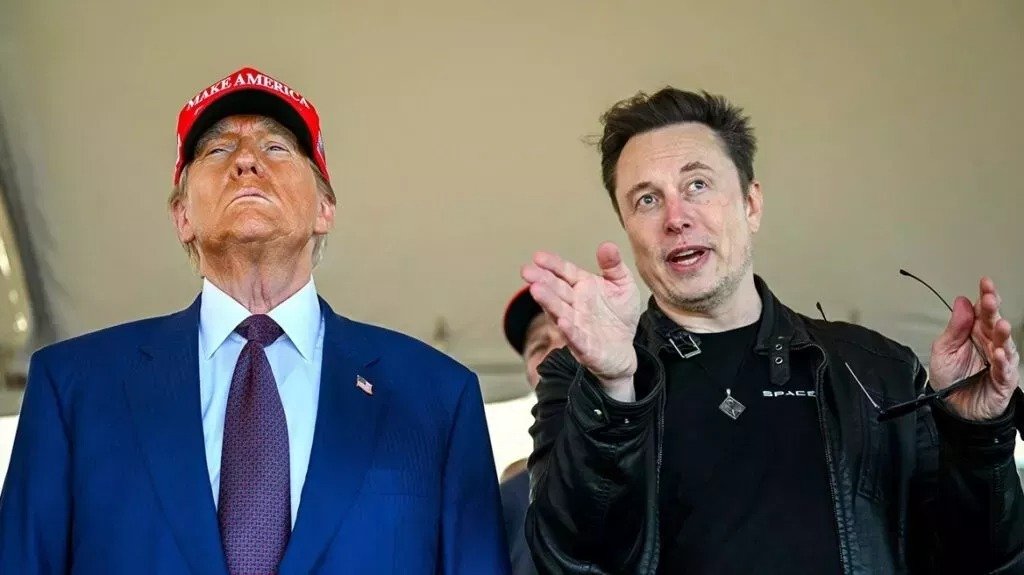
Imagine betting on a team and watching it go down 4–0 by halftime. Now imagine that happening 20 times in a single day, and you may begin to understand Elon Musk’s pain on the night of November 3. The man who, until recently, was the world’s first trillionaire lost about $447 million backing 20 Republican campaigns, all of them drowned in the “blue tsunami” that swept the US midterms. The defeat that hurt him most, without question, was the one in Texas.
Musk had already moved Tesla’s headquarters to Austin when, in July 2024, he announced that his other companies, SpaceX and X, would follow. From then on, Texas became his operational bet, starting with the Terafab semiconductor complex in Grimes County, an initial $16.8 billion investment by SpaceX and Tesla, and plans for new artificial-intelligence data centers. All of those investments assumed the backing of Republican power. On November 3, James Talarico beat Ken Paxton for the Senate, and Gina Hinojosa beat Greg Abbott for governor. Permits, tax breaks, and tolerance for the consumption of electricity and water are now up in the air.
The Democratic victory in the House and the Senate immediately delivered what Musk and his circle, the people who brought Trump to power, had feared. The election winners, without any delay, announced moratoriums on data centers and tighter scrutiny of their environmental footprint. Bernie Sanders called for an immediate national moratorium on data centers across the country, arguing that the facilities would consume vast amounts of electricity and water, at an incalculable cost to the environment. Analysts estimate that a large share of US economic growth is being planned in states that now want to hit the brakes. Panicked, the market began dumping AI-related stocks, sending the exchange into a mini-crash.
In that climate, the revelation of a scandal can hardly be treated as a coincidence. Nvidia’s chief executive, Jensen Huang, admitted to an extramarital relationship with a businesswoman who, according to reports citing US agencies, the United States believes was gathering information for Beijing. Nvidia’s board opened an independent investigation that could even lead to Huang’s removal. A personal relationship, an unproven espionage allegation, and an investigation are enough to make an entire industry look naive or exposed. Nvidia shares fell about 5% in Monday’s (2/11) premarket trading, while stocks had already taken a heavy hit on Thursday (5/11) and the Nasdaq recorded its steepest one-day drop in 19 months.
Elon Musk and the club of billionaires who backed Trump have a great deal of work ahead of them if they are to recover the influence and the money they lost. OpenAI, the company behind ChatGPT, has already begun talks with senior figures in the Democratic Party, according to Axios. One of their proposals is to rename “data centers” as “compute campuses,” with generous subsidies for the local communities that accept them. For Musk personally, who needs permits from the state of Texas to complete his investments, something more than a simple re-branding will be needed.

