


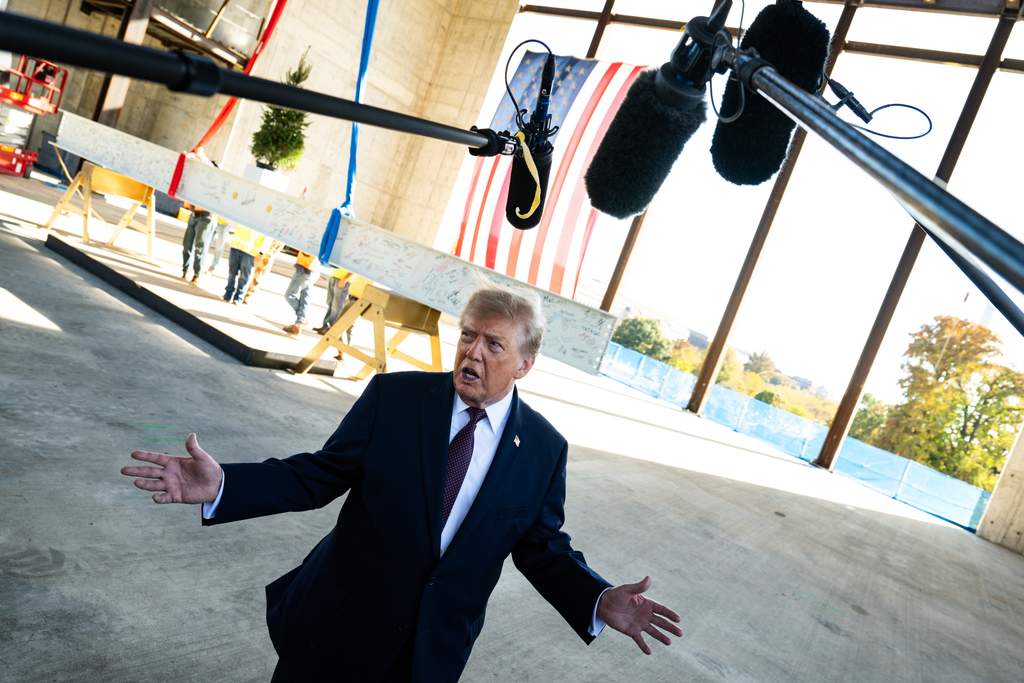
Donald Trump talks about the new White House ballroom and the Reflecting Pool in front of the Lincoln Memorial. Many Americans, meanwhile, are working out what it costs to fill the tank and whether the money for the supermarket will last until the end of the month. That gap decided the Republicans’ heavy defeat and the Democrats’ sweeping victory in Tuesday’s midterm elections. The elections became a referendum, exactly as the US president himself had asked, and the result, according to Nikolas Molfetas, showed that voters clearly reject his policies.
Speaking to Phileleftheros, the columnist and business consultant explains how the war in Iran, tariffs and Trump’s insistence on playing down the cost of living weighed on voters. The Democrats, for their part, capitalised on the discontent by choosing candidates who could speak to different audiences, even in traditionally Republican states. Texas stands out: if the shift there is confirmed in future elections, it could change the balance in a presidential race too.
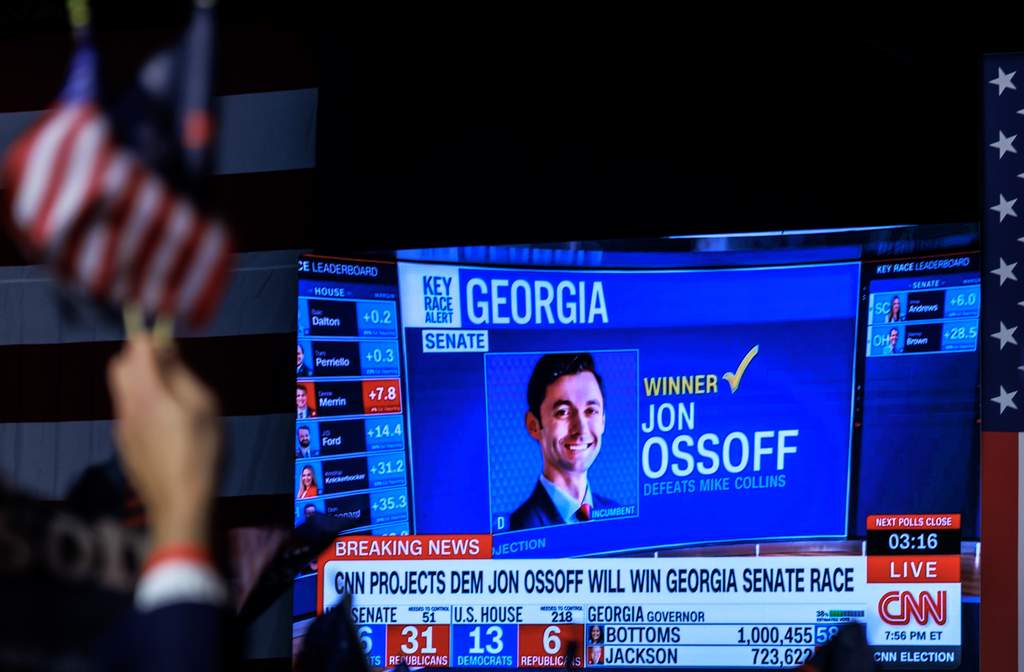
In Washington, control of the House and the Senate gives the Democrats more leverage over the budget, appointments and scrutiny of the administration, while the defeat opens a debate among Republicans over their path to 2028.
The question is how deeply the landscape will change. The return of younger voters to the Democrats and Republican losses in states they considered safe show how fluid some electoral coalitions have become. But Trumpism has put down deep roots in the Republican Party. “Trumpism is now so deeply embedded in the structure of the Republican Party and its officials that it will not be dismantled easily. They are not going to wake up tomorrow morning, change their minds and say, fine, we are changing course, especially those who benefited and won positions of power because they sided with Trump,” he says.

Was last Tuesday mainly a defeat for Donald Trump or a victory for the Democrats?
First of all, it was a defeat for Donald Trump, because he caused the scale of the defeat through his own actions. Losing by such a wide margin, and in states where his party had led for decades, is his own responsibility, because of the war in Iran, the tariffs he imposed and his rhetoric. On the other hand, the Democrats made the most of the opportunity they were given. This time they made sure that in every state they had a candidate who suited the electorate, for example deeply religious candidates in Kansas and Texas. They adapted to the needs of local communities and capitalised on Trump’s mistakes.
Apart from the war with Iran and tariffs, what other decisive factors helped the Democratic Party win so broadly?
I would say Trump’s rhetoric showed that he has lost touch with people’s problems. He kept talking about the much-talked-about White House ballroom, about how proud he was of repainting the Reflecting Pool in front of the Lincoln Memorial, about the triumphal arch he wants to build. He spoke in favour of data centres, which are causing a great deal of public anger. And most importantly, he denied there was a cost-of-living problem. Inflation went up, as did the price of petrol and diesel. Tariffs made goods more expensive and caused a trade war with China. Not only did the US president do nothing to tackle these issues, but in his speeches he kept saying there was no problem at all. But how do you convince voters of that when, in their daily lives, they feel their money is not enough to get through the month?
Of all the Republican strongholds that changed hands, which do you see as the most significant?
Clearly Texas, mainly because the consequences it may have in future could be enormous. It is the second most populous state, and if this shift is confirmed in the next elections too, the presidential race will be extremely difficult for the Republican Party, not necessarily in 2028 but in 2032. The Democrats would then be able to count on three of the four most populous states.
Do you see a political shift in some states that traditionally voted Republican? And if so, what does that mean for the 2028 presidential election?
In Texas there seems to be a change in voters’ preferences, or at least they are not as fixed as they were in the past. We used to talk about blue states, red states and five or six purple states in between. It now seems that things are more fluid than we thought. Where there is real change and where there isn’t will become clear in the next elections. In South Carolina there appears to be a shift. In North Carolina, the Democrats’ latest win there was probably down to circumstances. Every state has its own characteristics, and it is far from certain they will stay “blue”.
Beyond the obvious reasons of the economy, the war and fuel, do you see a fundamental difference in how the younger generation now votes, in the sense that it wants solutions to its own problems and dares to vote differently?
It’s a fair question. From the statistics I have seen, the younger generation seems to have swung back to the Democrats. But I should say that in the previous elections there was a big swing towards Donald Trump, so I wouldn’t prejudge what happens next. One key difference compared with 2024, though, is the split between young men, who voted for Donald Trump in large numbers, and young women, who stayed with the Democrats. Among young men, this has reversed in these elections, and they seem to have moved away from the Republicans.
What will change after the Democrats’ sweeping victory?
A lot will change. The campaign for the 2028 elections began the very next day. In the Republican Party, we are seeing significant tremors. Vice President JD Vance spoke out against the war. We know that discussions are taking place, and a challenge to Donald Trump may well begin, now that they have realised how much damage he can do to the Republican Party when left unchecked. On the Democratic side there is enthusiasm, but it remains to be seen how they will read the result, that is, whether they will go with a centrist or a left-wing candidate in 2028, and generally how they will handle the situation.
And in domestic politics?
By winning the House, the Democrats can block the budget and use that to pressure Donald Trump into changing some of his policies. In the Senate, they will have the power to approve appointments of cabinet members, judges, ambassadors and senior military officers. That is a powerful weapon, especially when it comes to the judiciary. Also very important is that they can now set up oversight and investigative committees and subpoena officials, business people, anyone, and question them under oath about, for example, their dealings with the Trump family. Legally, they cannot touch the president himself because of the immunity the Supreme Court granted him. But they can go after corruption around him. I don’t think a third attempt to impeach the US president is likely. They can, however, impeach cabinet members, starting with War Secretary Pete Hegseth.
And what could change in foreign policy?
The assessment before the elections was that Donald Trump, angered by defeat and unable to do much at home, would turn his attention to foreign policy, where he has more room for manoeuvre, since Congress cannot do much there. Only on the war in Iran can Congress apply pressure. We have heard that he might strike Iran again, undermine Ukraine, or even make some reckless moves on Cuba or with China. However, his reaction in the first few days was extremely calm: he did not dispute the result and showed signs of cooperation. We may well not see anything very different from what we have seen so far in Trump’s foreign policy.
Restoring trust will be hard
Can the whole system Donald Trump has built, of undermining institutions and laws and governing in an authoritarian way, be dismantled?
It is very difficult. On the one hand, when citizens’ trust in institutions is damaged, it takes a long time to restore, and both parties have to contribute. On the other, it has become clear that there are gaps in the protection of institutions that the US Constitution does not provide for, and it should be noted that it has been amended and modernised very little since it came into force.
In several cases, very wealthy candidates, or those generously funded by millionaires, have lost. Perhaps money is not as decisive a factor in politics as we think.
It’s true that we saw candidates and donors with deep pockets fail to achieve their goals. Suffice it to say that Elon Musk alone poured 500 million dollars into this campaign, more than George Soros has spent in his entire life. The Republicans spent more money in these elections and lost. That does not mean money does not play an important role in politics. It is a positive message that money is not everything. How it is used matters too: for example, an unknown candidate can gain name recognition, and it also matters whether the race is close and what the political climate is. The candidate’s personality is also an important factor, and that showed in these elections. Either way, at the moment the influence of money on politics in the United States is unlimited.
We have heard many times about the end of Trump and Trumpism, and it has turned out not to be true. Is the situation different now?
It is different because the shock the Republican Party suffered is very powerful; it was not just a defeat. On the other hand, Trumpism is now so deeply embedded in the structure of the Republican Party and its officials that it will not be dismantled easily. They are not going to wake up tomorrow morning, change their minds and say, fine, we are changing course, especially those who benefited and won positions of power because they sided with Trump. Trump is not only a cause of today’s political climate but also a product of what came before. Voters’ attitudes and sensibilities have changed a great deal. In 2001 he tried to get elected and failed miserably. That changed in 2016. Nobody expected that a candidate with such racist and vulgar rhetoric, with a past of so many documented immoral acts, could beat an experienced politician like Hillary Clinton, and yet it happened. Trumpism will take a hit, but we won’t forget it tomorrow or next year.

