


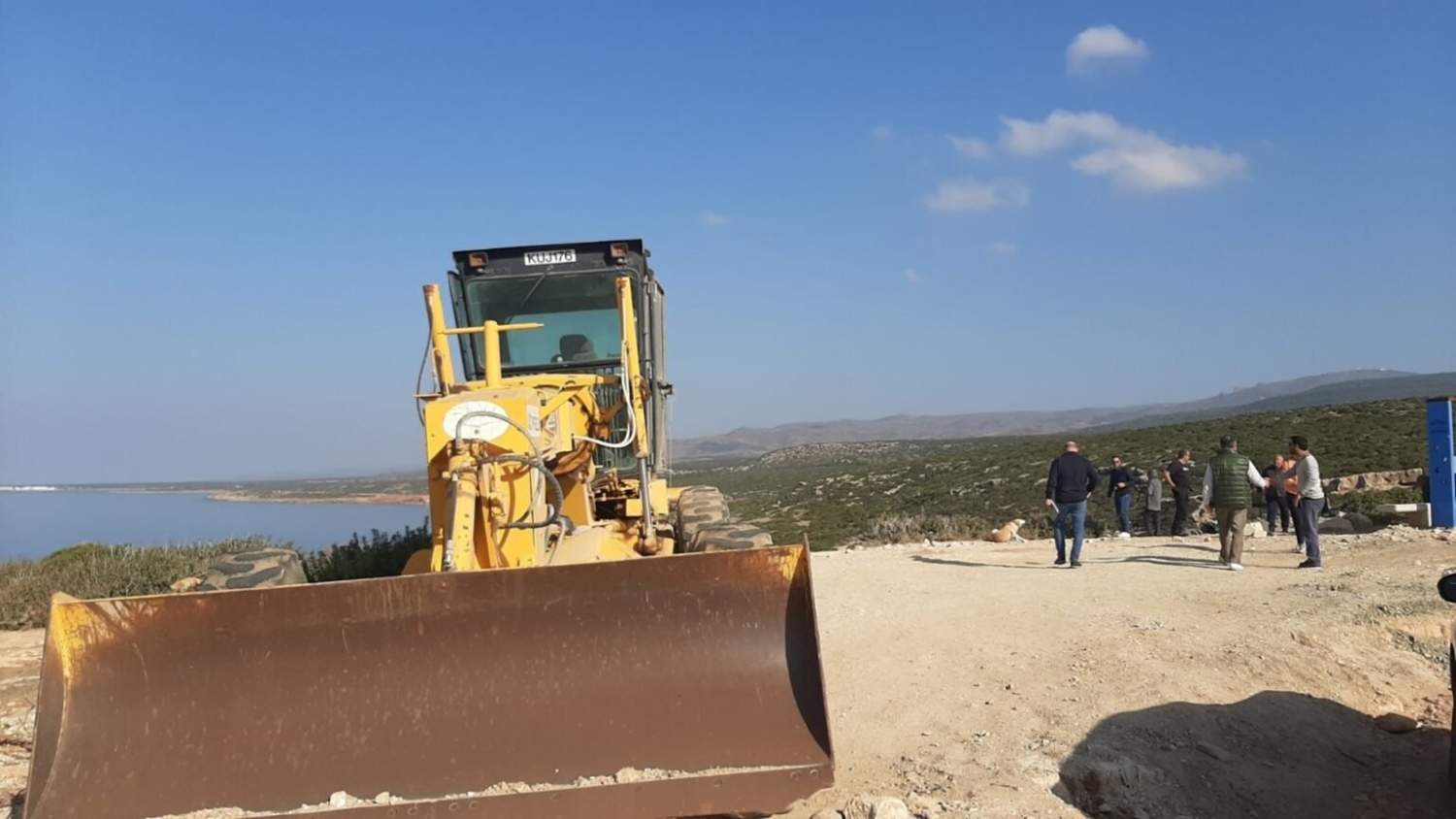
The government will soon re-tender the stalled works at the Akamas National Forest Park, Agriculture Minister Christos Senekis told parliament’s Audit Committee on Thursday, as the Law Office of the Republic examines whether an Audit Office report on the project points to criminal or other offences.
At the same session, Auditor General Andreas Papaconstantinou cited an online fundraiser to rebuild an illegal restaurant in the area that was destroyed by fire, saying that “from what it seems, the state is unable to enforce the law”.
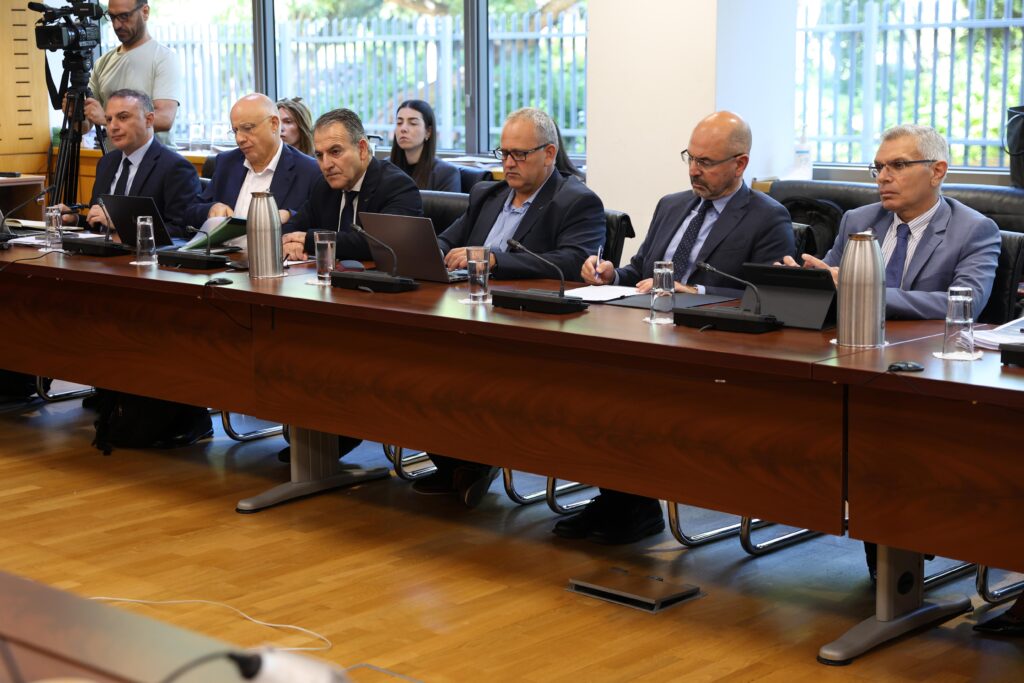
The session, which lasted about three hours, heard from state services, local authorities and environmental organisations. It focused on the years-long delays to the works, environmental violations, the handling of millions of euros, and who may be responsible.
Law Office review
Law Office representative Lina Hadjiathanasiou said the Audit Office’s special report was sent to the Law Office on 7 October 2026 and is being studied by a team of officers to establish whether there are grounds to investigate possible criminal offences.
She declined to go into detail despite repeated questions from MPs, mainly about possible responsibility and the out-of-court settlement between the state and the previous contractor, but said the questions would be passed on and answered in writing.
Both sides’ claims have been withdrawn under the settlement, but its financial terms were not disclosed. Kostas Konstantinou, director general of the Agriculture Ministry’s General Directorate of the Environment, said the agreement was reached through a pre-action protocol process, with the Law Office’s assistance and the Finance Ministry’s approval.
Investigation reports withheld
Papaconstantinou said the Audit Office had not received the full reports of four administrative and disciplinary investigations ordered after the works were suspended. Despite its requests, it had received only a summary of some conclusions, not the full findings, he said, adding that the Agriculture Ministry had not provided them and the Audit Office had to carry out its own investigation.
According to the special report, the weaknesses affected every stage of the project: the environmental assessment, the incorporation of environmental terms into the construction plans, and their implementation on site. The Audit Office recorded over-excavation, problems with hydraulic works and departures from binding environmental terms. Of 19 supplementary or amended terms imposed after work began, 17 had not been fully met at the time of the audit, while the environmental damage covered by the other two, which concerned over-excavation, could not be reversed.
Minister’s response
Senekis said the government takes the Audit Office’s recommendations seriously and has already taken or launched corrective measures. However, the ministry disagrees with some conclusions, mainly on technical and institutional issues, he said.
He said the ministry did not want to play down problems, but nor did it want to give the impression that the works had gone ahead without environmental assessment, insisting that the required studies had been carried out and environmental terms set. A distinction had to be drawn between environmental assessment, technical design and construction, he said, as not every technical adjustment amounted to a substantial environmental deviation.
He acknowledged weaknesses in monitoring, citing “the absence of a clear protocol for recording, assessing and reporting any deviations”, and said the gap would be addressed.
The amended construction plans for the first phase have been approved, and a new tender is expected soon, with a reduced environmental footprint and continuous supervision by an environmental inspector, he said. Visitor service points have been cut from 14 to eight, and further hydraulic and ecological studies are under way, focusing on the works at Toxeftra and Avakas. The new plans will be resubmitted to the Environmental Authority to check compliance with the environmental terms.
Senekis also said the decrees setting specific conservation objectives for the Akamas peninsula have been approved and are being forwarded for publication.
Illegal structures
The restaurant mentioned by Papaconstantinou, at the southern bay of Lara, was destroyed on 18 September 2026 by a fire that appears to have been caused by lightning. According to the Audit Office report, it stood illegally on state forest land, and a demolition order issued at first instance had not been carried out because of a pending appeal.
Senekis said the Forestry Department has closed about 80 per cent of illegal access routes, and surveillance will increase once the park and its rangers are fully operational. Cases involving illegal structures are pending before the courts, he added, and enforcement powers are divided among different authorities.
Environmental groups
Commissioner for the Environment and Animal Welfare Ilias Myrianthous said the long delay to the works was harming the natural environment and local communities, and depriving them of development opportunities.
Paphos District Local Government Organisation (DLGO) president Charalambos Pittokopitis also called for the works to proceed, saying the delay was causing problems for both the environment and local communities, and defended the work of the Forestry Department.
Polis Chrysochous mayor Giotis Papachristofi criticised environmental organisations, saying they had “found a reason to exist” through their opposition to the Akamas works. Representatives of the organisations objected, and committee chairman Zacharias Koulias intervened to ask members to focus on the substance of the session.
The organisations said the Audit Office report confirmed their complaints about violations in Akamas. The environmental organisation Terra Cypria called for the findings of the four administrative and disciplinary investigations to be tabled in parliament and made public, so that responsibility could be assigned where warranted. It also called for the works to be reassessed against the specific conservation objectives.
The Federation of Environmental Organisations of Cyprus said the Akamas peninsula must be protected as a single ecosystem and that the necessary protection decrees and restoration of environmental damage should come first.
The Friends of Akamas also expressed reservations about restarting the works. Kyriakos Tsimillis called for a full review of the plans and, referring to the minister’s pledge of a smaller footprint, asked: “If they can now, why hadn’t they aimed for a smaller environmental footprint from the start?”

