


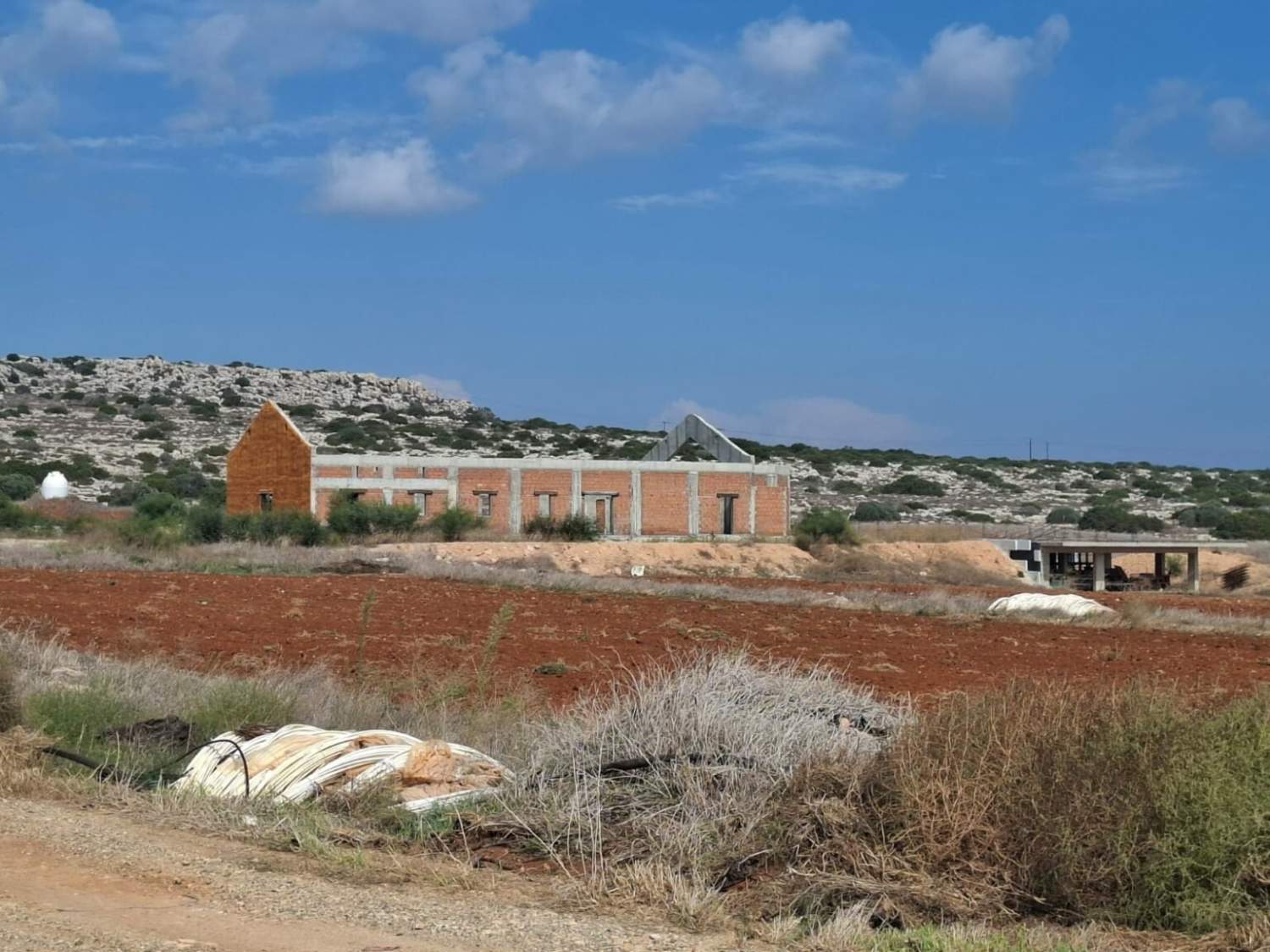
Cyprus’s Auditor General has warned the government against retroactively approving a monastery and a shelter for abuse victims that is being built without a permit in a protected Natura 2000 area in Ayia Napa. He said legalising the project would set a dangerous precedent.
Auditor General Andreas Papaconstantinou wrote to the Secretary of the Council of Ministers on 27 October. In the letter, he said that approving the project as a planning derogation would breach the EU Habitats Directive (92/43/EEC) and the corresponding Cypriot law (153(I)/2003).
The Holy Metropolis of Constantia and Ammochostos has applied for a planning permit as a derogation from the Paralimni, Ayia Napa and Deryneia Local Plan. However, the Audit Office’s letter notes that construction is already well advanced even though no legal permit of any kind has been obtained.
The plot lies within the Cape Greco landscape protection zone and a designated coastal and nature protection area. Under the local plan, these areas require absolute protection and no development is permitted. The site also falls within two Natura 2000 areas at Cape Greco: a Special Area of Conservation and a Special Protection Area.
In a letter to the Council for the Study of Derogations (SYMEPA) dated 4 September, the Environmental Authority said the works had already caused irreversible damage to the integrity of the Natura 2000 sites. It said the construction, the covering and sealing of the ground, and the continued human presence had all taken place without the required environmental assessment or any mitigation measures.
Authorities had issued an enforcement notice ordering the removal of the illegal works, together with demolition conditions. These were not carried out.
The Metropolis appealed against the notice to the Interior Minister, who rejected the appeal and gave it 15 days to restore the site. A separate court challenge and an application to suspend the notice were also dismissed.
As a result, the Environmental Authority told SYMEPA it would not assess the application and recommended that the derogation be refused.
Papaconstantinou said there were no documented imperative reasons of overriding public interest that could justify such an exception. He said that invoking the relevant provision would require a specific, clear and well-substantiated justification.
He also made a broader point about after-the-fact approvals. “The retrospective legalisation of unauthorised buildings, even if provided for in the relevant legislation, sends, in our view, very wrong messages,” he wrote. The Audit Office had raised the same concern in a recent special report on how SYMEPA operates, he added.
The letter was copied to the permanent secretaries of the Interior and Agriculture ministries and the acting director of the Department of Environment. It also went to the director of the Department of Town Planning and Housing and the chairman of SYMEPA.
The SYMEPA chairman told Phileleftheros that the minutes of the council’s last meeting, held on 16 October, were due to be approved at its next session, scheduled for Friday. That session has been postponed to 13 November because the monastery intends to submit additional information.

