


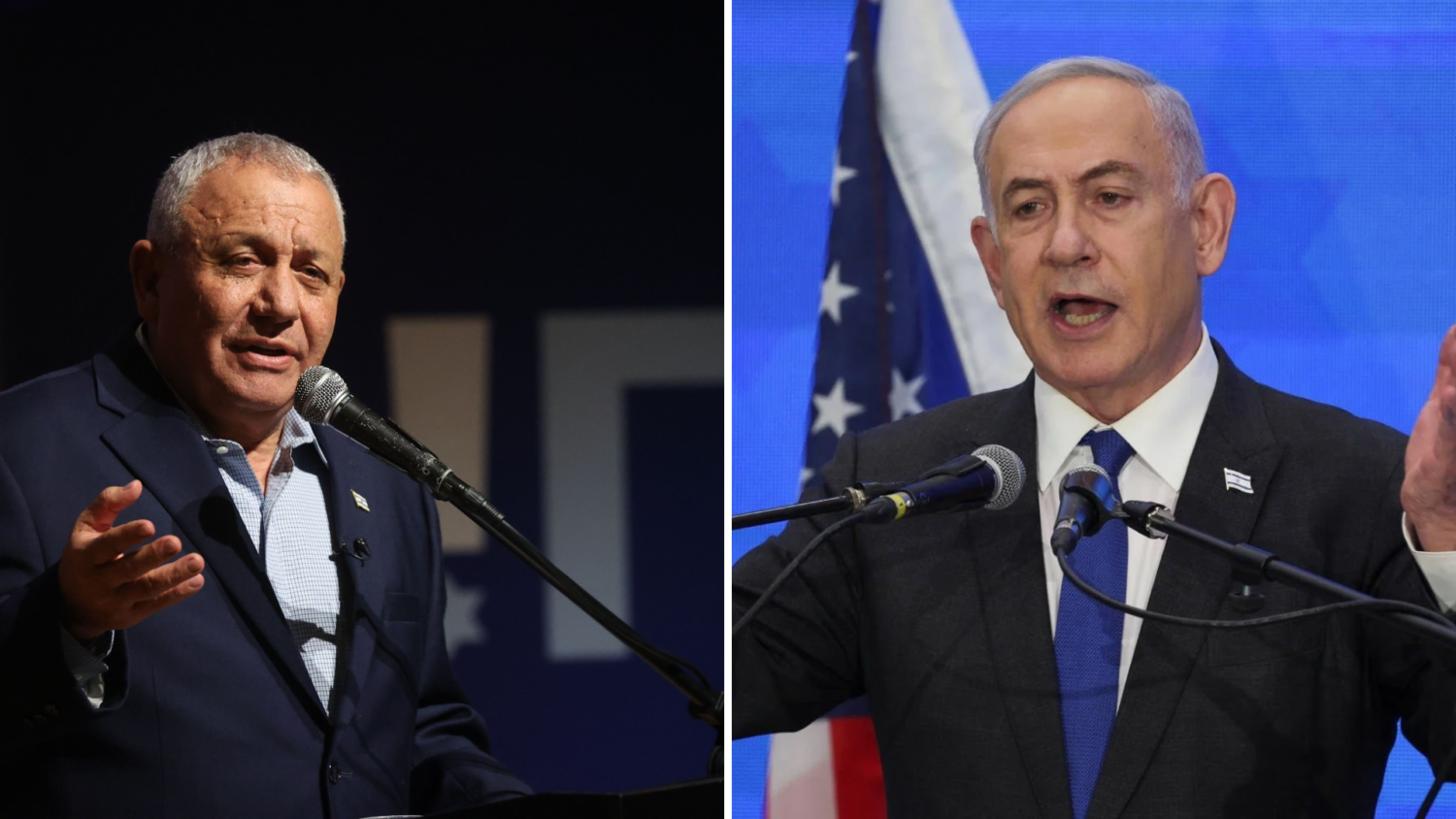
Israel’s election has produced a divided parliament, with no clear majority for either side and Arab-led parties gaining seats that could prove crucial in deciding whether Benjamin Netanyahu remains in power or the opposition can form a government.
According to its latest update, with 84.5% of ballot boxes counted, the results published by Israel’s Central Elections Committee showed Netanyahu’s bloc on 54 seats, the opposition led by Gadi Eisenkot on 49, and Arab-led parties on 17.
The results have left the country facing another round of difficult coalition negotiations, with the balance of power in the 120-seat Knesset potentially resting on parties that have long been marginalised in national government.
The contest has centred on Benjamin Netanyahu, whose right and far right coalition has dominated Israeli politics in recent years, and an opposition seeking to assemble a viable alternative. Neither camp has secured a clear majority in the emerging picture, leaving the next government dependent on negotiations that could expose deep divisions over security, religion, civil rights and the future of Israel’s political system.
Under Israel’s parliamentary system, winning the largest number of seats does not automatically confer power. A government needs the support of at least 61 of the Knesset’s 120 members. The decisive question is therefore not simply who came first, but who can persuade enough parties to join, or support, a governing coalition.
Arab parties emerge as potential kingmakers
One of the most consequential developments has been the improved performance of Arab-led parties, which represent the interests of Israel’s Palestinian Arab citizens, who make up roughly a fifth of the population.
Their gains are politically significant.
Arab citizens have the right to vote and stand for election, yet Arab-led parties have frequently faced exclusion from governing coalitions, reflecting longstanding tensions over national identity, security and the status of Palestinians.
Their increased representation could make their support crucial if neither of the main political blocs can reach the 61-seat threshold independently, and could have a significant impact on the war in Gaza and the Israeli settler expansionism in the West Bank. Furthermore, a larger parliamentary presence can give Arab-led parties greater bargaining power over public investment, housing, policing, discrimination and services in Arab communities.
However, this influence is not the same as executive power: whether they can translate seats into policy gains will depend on the willingness of other parties to negotiate with them.
The situation also presents a test for Israel’s opposition. If Arab-led parties hold the numbers needed to support an alternative government, opposition leaders will face a choice between political cooperation and maintaining traditional boundaries around coalition-building.
What happens next?
The immediate task is to finalise the vote count and confirm the distribution of seats. President Isaac Herzog will then consult political parties before asking a member of the Knesset judged capable of forming a government to attempt to do so.
That candidate generally has 28 days, with a possible 14-day extension, to negotiate a coalition. The resulting government must secure parliamentary confidence. If the first attempt fails, another candidate may be given the opportunity; a prolonged deadlock could eventually lead to another election.
For Netanyahu, the challenge is to assemble a coalition that can command sufficient support. For the opposition, it is to demonstrate that its parties can overcome their differences and offer a workable alternative.
The election has not, by itself, settled who will govern Israel. Instead, it has shifted the contest from the ballot box to the bargaining table. The final outcome will depend on the numbers, the agreements parties are prepared to make and whether Arab-led representatives can convert increased electoral support into tangible political influence.
(Sources: The Times of Israel, Euronews)
Read more:

