


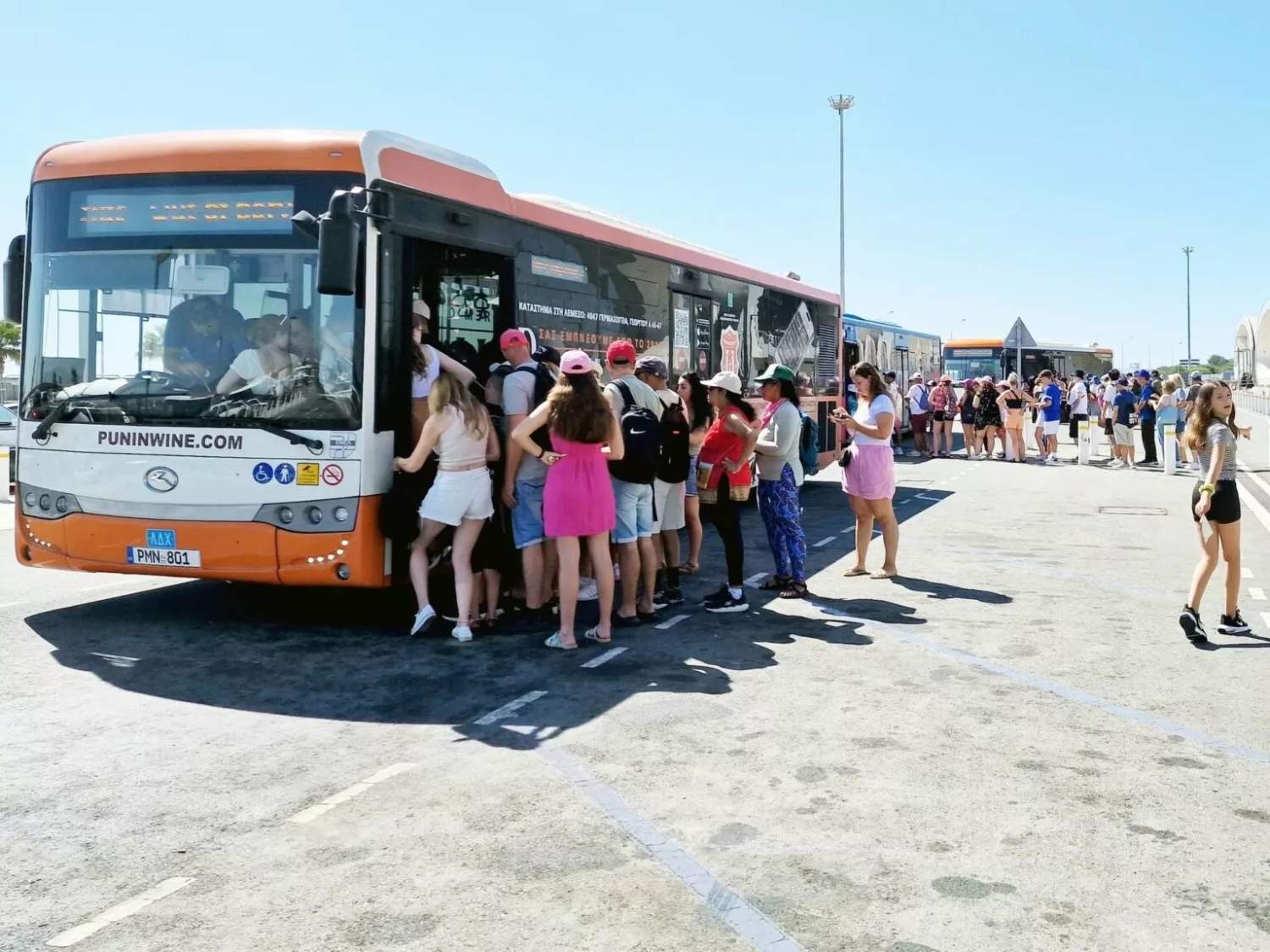
Limassol’s traffic gridlock is the result of decades of wrong planning choices, and the city no longer has the road space to fix it, the chief executive of bus operator EMEL, Giorgos Kyriakou, told Phileleftheros in an interview.
“Today we are paying the price for the wrong choices made 25 years ago,” Kyriakou said. He said the need for a change of policy is now recognised, but the space needed for the measures does not exist. He urged the state to speed up its decisions, warning that conditions on the roads affect every resident, the service passengers receive and the endurance of bus drivers.
“Our drivers are on the verge of a nervous breakdown, and I am not exaggerating,” he said. He warned that unless the state understands this soon, EMEL risks being unable to find people to drive its buses. Drivers cannot be treated as machines or blamed for delays caused by congestion, he added.
More passengers despite the traffic
EMEL carried around 5.14 million passengers in the first nine months of 2026, up from around 4.36 million in the same period of 2025, an increase of about 780,000. Kyriakou said this shows people turn to public transport when it meets their needs. The figures come from an independent company’s telematics system, which records each ticket issued or passenger card validated.
He said EMEL had managed to increase passenger numbers despite all the difficulties and the hours lost in traffic.
Congestion costs the company in two ways, he said. Passengers face delays and may blame EMEL for them, while buses lose time that could be used to run more services and carry more people. EMEL ran 293,368 trips in Limassol district in the first nine months of 2026.
Kyriakou acknowledged there is room for EMEL to improve, but said its performance should be judged against the infrastructure available to it. If Limassol had even half the infrastructure of other European cities, things would be different, he said.
Bus lanes
EMEL runs more than 200 buses in Limassol, and four to five accidents a day disrupt its services, Kyriakou said.
“We have one of the most modern fleets in Europe, we have top technology, but the buses move like tortoises,” he said. Delays carry over to later services and make it harder to keep to timetables.
He called for measures used in other European cities, such as bus lanes and priority traffic lights, to give public transport an edge over private cars and make it more attractive.
Kyriakou noted that bus lanes included in the Sustainable Urban Mobility Plan (SUMP) have been built but are not yet in use. He acknowledged the concerns of businesses and residents but said these should not lead to repeated postponements, since no project this complex wins full acceptance and nobody has a veto.
“If we wait for everyone to agree before something is done, nothing will ever get done,” he said, adding that EMEL is asking for no more than the infrastructure considered necessary.
He singled out the seafront bus lane, where he said 130 trips run daily, with an average of 48 passengers per trip and a bus every seven to ten minutes. The figures show the importance of the route and the need to make it more reliable, he said.
On Nikou Pattichi Street, he said a bus lane should come with proper planning of routes and connections so that passengers are served effectively.
Northern bypass
Kyriakou said the long-awaited Limassol northern bypass would not solve the city’s traffic problem on its own, even if it is built.
Planning for the existing motorway began in 1983, when the city’s population and layout were completely different, he said. At the time, around 20,000 people lived in the north of the city and the rest in the south. The priority was getting from Paphos to Nicosia, and the motorway achieved that, but nobody considered the people who would need to cross it.
The population of northern Limassol has since grown to 120,000, turning the motorway into an urban avenue. Congestion now affects journeys within the city, including for people living along the motorway.
Kyriakou described Limassol as a city divided by its planning. He joked that residents would soon need to show passports at roundabouts, because crossing a border takes half an hour, as long as it now takes to get from Agia Fyla to Kapsalos or from Agios Athanasios to Mesa Geitonia.
The bypass could take some of the traffic, mainly vehicles travelling between districts, but would not do much for daily journeys from the northern areas to the centre and other parts of Limassol, he said.
“I feel that, as Limassol, we have been defeated on this issue,” he said, adding that the bypass would only make sense if its opening date were already being discussed. He said he was not dismissing the project, but the city should have made the necessary changes in time.
The state’s role
Kyriakou said tackling Limassol’s traffic requires the state, the municipalities, EMEL and other bodies to work together. Municipalities are closer to residents’ needs but do not always have the money or the powers for projects on this scale, he said.
The state has the powers and the means to push through major infrastructure projects but cannot solve the problem alone, he added. It needs EMEL, the municipalities and the other bodies involved.
New central station
EMEL’s planning has been helped by an agreement with the Cyprus University of Technology (CUT), which has adjusted its plans for the old hospital site.
The Council of Ministers had already decided to locate the central bus station on Aiolou Street, Kyriakou said. The university is now giving EMEL a small space at the old hospital, so the company can use two sites to meet additional operational needs, including telematics, station masters and support facilities for staff.
EMEL has also planned routes from the Berengaria area to the university, giving students more options and reducing the need to drive.
Read more:

