


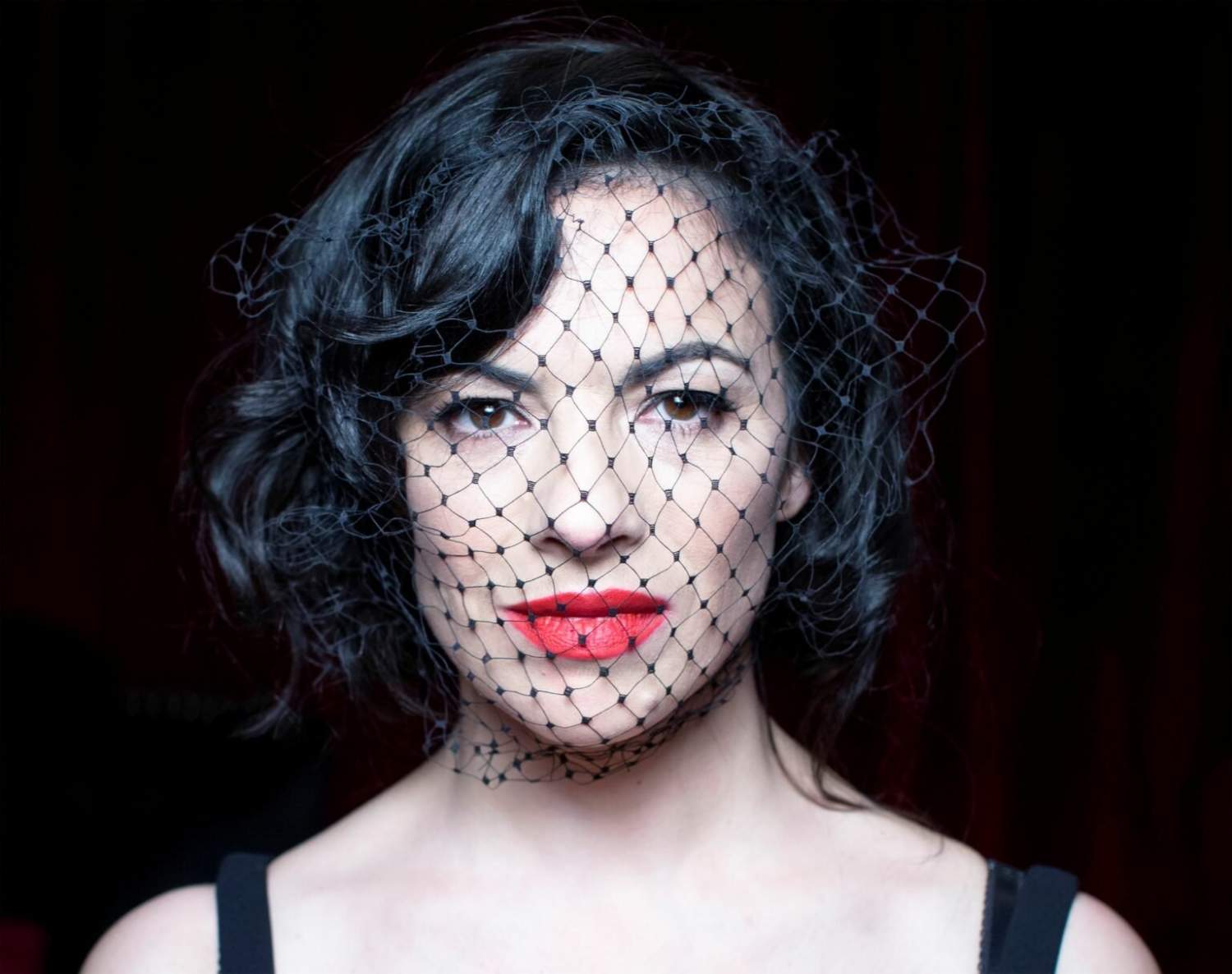
Mesmerising, entertaining, irrepressible. Just as she is on stage, where she gives free rein to her unpredictable, dark, sometimes tender and funny side. But however much you say about Camille O’Sullivan, it can only begin to capture who she is. In just a few days, she will introduce herself to audiences in Cyprus for the first time – something she is eagerly looking forward to.
Camille O’Sullivan is bringing a performance that moves between music and theatre to the Nicosia International Festival. Drawing on songs by David Bowie, Nick Cave, Radiohead, Jacques Brel and other great artists, she talks about the power of performance, the freedom she finds on stage, her cultural roots and the importance of holding on to our childlike spirit as we grow older.
Does performing for a new audience make you nervous? Do you wonder how they’ll respond to your show?
Absolutely. Because I have no idea how they’ll react. I hope they’ll discover I’m a little bit mad! (laughs) The closest experience I’ve had was in Greece, where the audience seemed to respond well to what I do. So I’d love the same thing to happen in Cyprus.
Over the years, I’ve learnt that every audience responds differently. But you can’t predict everything. You have to be yourself, be authentic and trust what you’re doing. Even when people don’t understand the language, they can still feel the truth of a performance.
How would you describe Loveletter to someone who has never seen you perform?
I’d say it’s a journey. There’s joy, fun, sadness, darkness, theatricality and moments of complete freedom. Sometimes I might sing a sad song without moving at all, just letting the lyrics speak for themselves. At other times, the stage becomes a completely different place, full of energy and madness. There’s even a moment in the show when I hula-hoop!
I want to surprise the audience, take them somewhere they don’t expect to go. I don’t want to walk on stage and say, “Hello, I’m Camille O’Sullivan, and these are my songs.” I want every song to be a different world, a different experience.
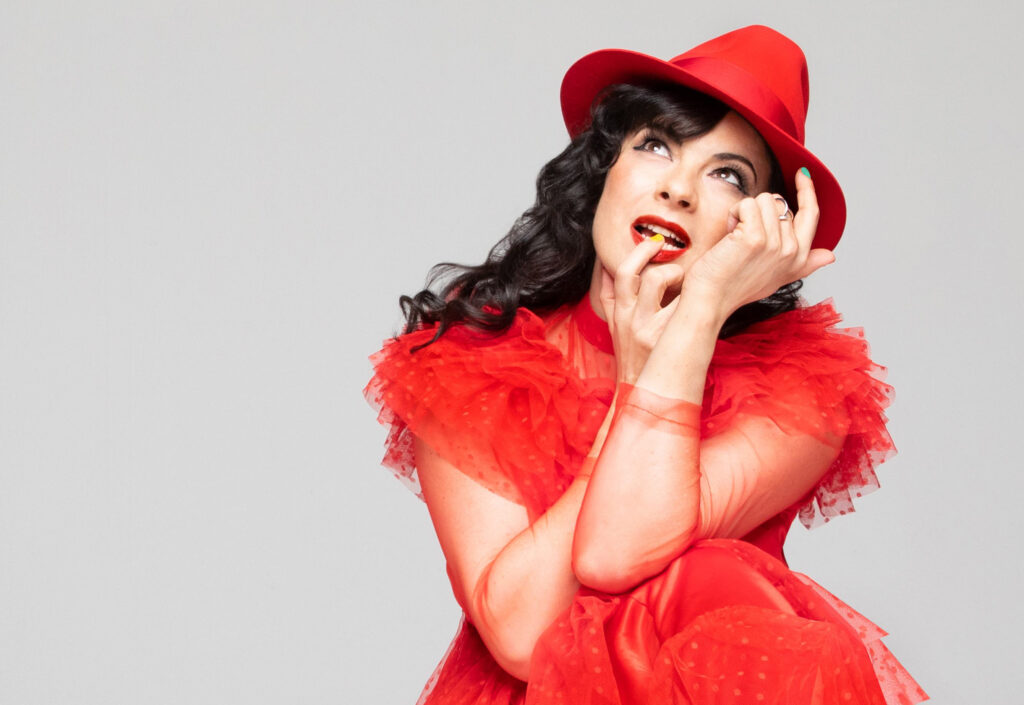
You’ve said that you feel most like yourself when you’re on stage. How does that work?
It’s something I find difficult to explain. In my everyday life, I’m not nearly as uninhibited. I have insecurities and struggles, just like everyone else. Before a show, I can feel terribly anxious.
And yet, the moment I step on stage, something changes. It’s as though another side of me comes out. It’s still me, of course, but suddenly I can express myself without any restrictions.
Maybe it has something to do with the fear you feel standing in front of an audience. Strangely enough, that fear sets you free. For a little while, you’re completely in the present. You’re not thinking about how you look or whether you’ve done something wrong. You’re simply there, living in the moment.
And that freedom means so much to me. On stage, I can be wild, sad, sensual, funny, even look utterly dishevelled.
You studied and worked as an architect. How did you make the transition to music and theatre?
Architecture was an important part of my life, but along the way I discovered that music allowed me to express parts of myself that I didn’t know how to express in any other way.
What’s exciting about art is that it allows you to transform yourself, try on different identities and discover sides of yourself you might never have known existed.
Your repertoire includes not only Brel, but also Nick Cave, Bowie, Radiohead, Dylan and Cohen. What connects such different artists in your musical world?
I think what connects them is their ability to tell stories and explore some of the most fundamental questions about being human: life, death, friendship, love.
I’m drawn to artists who aren’t simply interested in showing how well they can sing, but who use music to say something meaningful. Artists who can transport you into an entire world through their words.
At the same time, I love rock ‘n’ roll, the music of Bowie and Radiohead, but also hymns and the spirituality you find in church music. All those things coexist within me.
I think the contemporary songwriters I love are carrying on the tradition of the great storytellers in their own way.
What interests me is making the audience hear these songs as though they’re discovering them for the very first time.
How do you approach a song that’s already so closely associated with its creator and make it your own?
You have to inhabit the song. How? When I discover a song, I walk around singing it to myself. I repeat the lyrics, speak them rather than sing them, until I find my own way of interpreting them.
I want to understand what the words mean to me and how they might take on a different dimension.
The biggest compliment someone can give you is to ask when you wrote a song that actually belongs to somebody else. It means you’ve made it so completely your own that the listener associates it with you.
I don’t want to imitate the artists I love. I want to have a conversation with them through their music.
You mentioned your relationship with song lyrics…
It’s absolutely central to what I do. Sometimes, when you listen to a song, the music is so powerful that you don’t really pay attention to the words.
That happened to me with Shane MacGowan’s music. I’d known his songs for about 30 years, but when he died and I began reading his lyrics without the music, I rediscovered the poet behind them.
I realised how sensitive and romantic he was, and what a dreamer he had been. It really shook me.
I became aware of how much I’d missed because the driving rhythm and arrangements had overshadowed the words.
Ever since then, when I’m working on a song, I try to let the lyrics breathe. I want them to sound like a story one person is telling another.
Was it this desire to bring out the words that led to your collaboration with pianist Feargal Murray?
Yes, and our collaboration is something truly special. We’ve been friends for about 28 years. We’ve travelled together, worked together and learnt to communicate musically in a way that’s difficult to describe.
He knows when I’m about to take a breath, and I know when he’s going to play a particular note. It’s as though we’re both moving to the same internal rhythm.
In the early days, I was constantly telling him to play less. I’d ask him to stop the rhythm, leave some space, hold just one chord so that the words could be heard.
I may have got on his nerves back then, but today we’ve developed a language of our own.
We’ve discovered just how powerful a single voice and a piano can be. For years, we thought we needed a whole band. Eventually, we realised that sometimes simplicity is far more powerful.
So how did Loveletter come about?
It began with my need to express my love and gratitude to Shane MacGowan and Sinéad O’Connor, two artists who had a profound impact on me.
I’d sung with Mundy at Shane’s funeral, and I wanted to hold on to that feeling of saying goodbye.
I wanted to find a way to thank them, both as the teenager who grew up listening to their music and as the woman I am today.
Initially, the idea was to approach Shane’s songs as poems accompanied by piano. That’s how the show began to take shape.
Then we brought in other artists and songs I love, including Radiohead and David Bowie.
With Radiohead, for example, it’s very difficult to cover one of their songs without sounding like a terrible wedding band! (laughs)
But when Feargal started playing Paranoid Android in a classical style, really letting the piano take centre stage, I realised we could create something entirely different. And that discovery was liberating.
Your music has strong theatrical and spiritual influences. How important is that dimension to you?
It’s hugely important. I’ve even worked with the Royal Shakespeare Company, when we were asked to approach Shakespeare’s texts through music.
What we did was treat those texts as we would a song by Nick Cave or Radiohead: strip away everything unnecessary and find the heart of the words.
For me, a voice and a piano can create an entire world. It’s like telling a child a story and trying to enchant them, to draw them in.
I love taking an audience from darkness into light and back again. Making them laugh, moving them, making them feel uncomfortable, helping them relax.
I don’t want to give them just one emotion. I want to take them on a whole journey.
Have you noticed your interpretation of songs changing as you’ve grown older?
Of course! Your life experiences change the way you understand words.
I’ve noticed something rather strange, actually: when my personal life is difficult and my relationships aren’t going well, I often sing better.
It’s sad, but I think pain can bring greater depth to a performance.
Experience helps you recognise emotions you couldn’t understand before. So a song that once seemed simply beautiful can become something much more personal years later.
Earlier, you talked about childlike wonder and freedom. Do you think we lose some of that as we grow older?
We often think that as we get older, we become more mature, but really, we’re still children trying to find our way.
After the pandemic, I made a decision not to carry on as though nothing had changed. We’d all been through so much.
So I decided to embrace imperfection, to show that things aren’t always neat and tidy, and to accept that feeling of everything somehow falling apart.
Yes, for me, what matters is allowing ourselves to become big kids again, even if only for a little while.
Let’s throw maturity out of the window…
Event information: Camille O’Sullivan performs at Nicosia Municipal Theatre on 1 November at 8.30 pm as part of the Nicosia International Festival. Tickets: more.com.

